A.S.P. says excessive rain has destroyed more than half of its Ecuador crop, halfwheel reported on November 4. Cigar makers should cut new-release spending before cutting the wrapper reserves that protect their existing blends.
A damaged field exposes a warehouse decision
David Perez told halfwheel that many factories had reduced wrapper inventories because prices had risen. Those factories made their established blends more vulnerable to a failed crop. Paying less for storage looks efficient until the leaf you planned to buy stops being available.
The report puts expected deliveries to factories next year and consumer effects at least a few years further out, after processing and aging. That delay is the reason to protect reserves now. A stocked shop counter can hide a supply problem long after it starts in a wet field.
We want the next budget meeting to start with the wrapper needed for the cigars already selling. A new blend should earn its place after that requirement has been funded. Retailer excitement is useful; it cannot replace a missing harvest.
For the anatomy behind that priority, our wrapper, binder and filler guide explains the components. Here, the business obligation is straightforward: keep buying the material needed to make the product customers expect to reorder.
The warehouse belongs in the product budget
These company statements describe different responses to the time and cash tied up in tobacco. They aren't interchangeable inventory targets.
| Company and statement date | Inventory decision or operating measure | Source |
|---|---|---|
| J.C. Newman, October 28, 2019 | Announced a two-story PENSA tobacco warehouse to expand long-term inventory and support blend consistency | Company statement |
| Universal, August 5, 2026 | Reported slower purchasing amid flue-cured and burley oversupply and lower green tobacco prices | Quarterly results |
| Pyxus, August 5, 2026 | Reported a 173-day operating cycle, up from 160 days, primarily because of African processed-tobacco carryover | Quarterly results |
The warehouse statement linked the investment to growing sales of Brick House, Perla del Mar and Quorum. That is a useful definition of product development: spend money so a successful cigar remains reproducible. The leaf in storage belongs to the product just as surely as the tobacco on the rolling table.
We find a warehouse less exciting than a new box, too. That's a weakness in our attention, not a sensible way to allocate a factory's cash. Customers buying the same blend again deserve investment that survives the announcement cycle.
A reserve should be attached to a working blend and its expected demand. Buying random leaf because it might appreciate doesn't fulfill that promise. The useful inventory is tobacco the blender can actually use when the next shipment disappoints.
We would count reserve leaf by the blend it can protect, rather than by the space it fills. At the blending table, keep the usable lots tied to planned production. A crowded warehouse alone does not tell a retailer whether the next order can be filled.
The best case against this
The strongest objection comes from the maker trying to cover payroll. Years of wrapper in a warehouse consume money that cannot pay staff today. A new release can bring orders, introduce the brand to another retailer and generate the cash needed to buy the next crop. Cancel the wrong launch and the reserve gets smaller anyway.
Universal's results connect lower working-capital usage to purchase timing and lower green tobacco prices. Pyxus likewise reported lower unprocessed inventory from reduced prices and slower purchasing. Those are real reasons to buy selectively. Their broad leaf markets also show why a purchasing decision needs to reflect the particular tobacco involved.

These sources don't identify which factories cut wrapper reserves, disclose their launch budgets, or prove that a particular cigar will change. Our judgment is about which expense should lose priority when the same scarce cash must fund established blends and another launch.
We would protect the established blend. A maker should sell that cigar to more shops, trim elaborate packaging and defer an additional size before weakening its tobacco cover. Our boutique brands guide is a place to explore smaller makers; small scale doesn't make continuity less valuable.
A launch that genuinely finances the business deserves a hard cash calculation. Count the leaf, boxes, samples and sales effort it requires before counting the orders it might attract. Calling a release a revenue opportunity doesn't establish that it is the best use of working capital.
Cut the launch calendar at the sorting table
The PENSA expansion made long-term tobacco inventory an explicit investment in consistent blends. We would put that principle into the release meeting itself. Before approving another cigar, lay out the wrapper lots reserved for the core range and the leaf the proposed release would consume.
A sorting table makes the tradeoff tangible. A pile assigned to an established blend cannot simultaneously cover a new product. If both draw on the same scarce wrapper, the launch must pay for additional usable stock or wait. A glossy presentation should not decide which pile gets smaller.
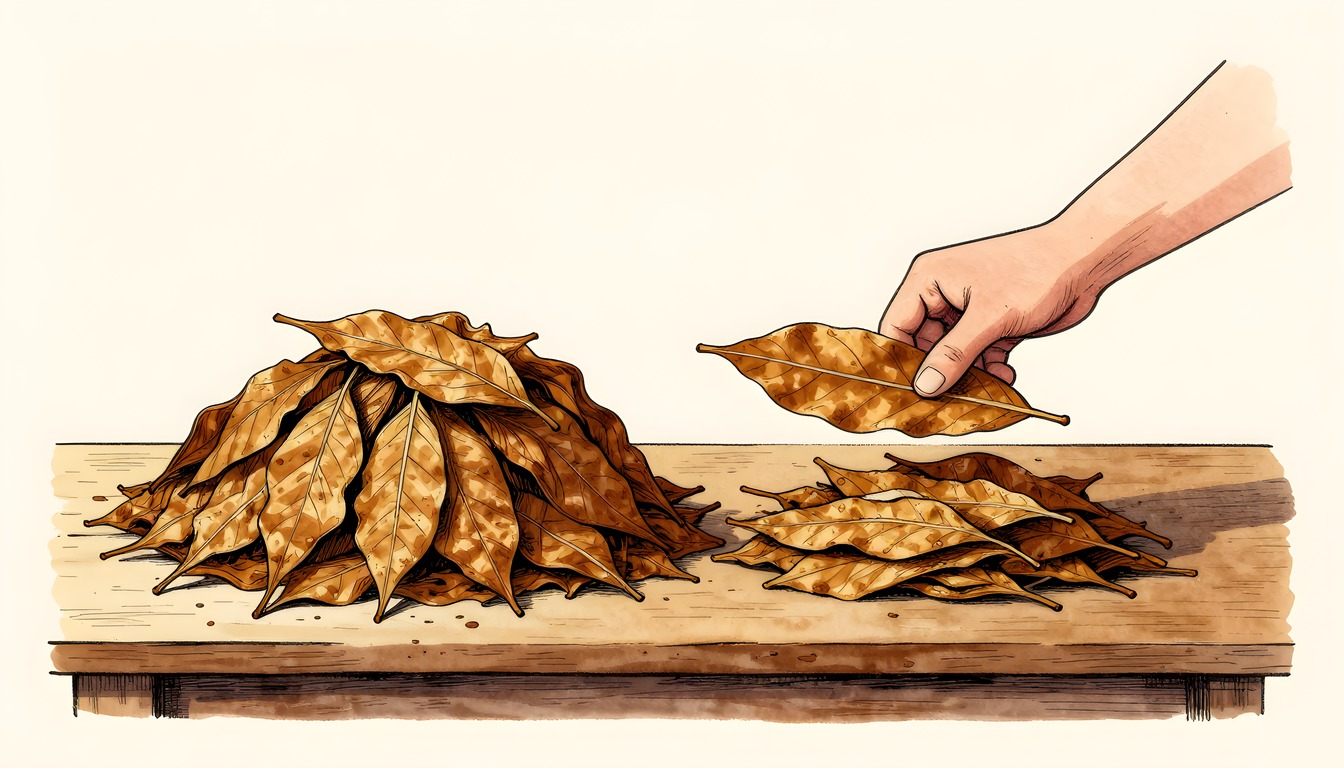
Our preferred order is simple:
- Fund usable wrapper cover for the established cigars that customers reorder.
- Price the proposed launch after accounting for the tobacco it removes from that cover.
- Delay the release if its budget depends on leaving the core range exposed.
That order would leave fewer new boxes on the counter. Good. A smaller calendar gives a maker room to explain and sell what it already makes. Repeated purchases of a familiar blend should count for more than another unveiling.
Ask about the next box of your usual cigar
A.S.P.'s warning separates reduced factory supply from the later effects smokers may encounter. Use that interval to press makers about continuity. Ask whether the wrapper for your regular blend is already secured and how a short delivery would affect production. A straight answer is more useful than a promise of another release.
We would change our spending recommendation for a maker that could show its existing blends were adequately covered and its next launch would add cash after all costs. Until then, protecting the reorder is the stronger claim on the budget.
At the shop counter, ask about your usual cigar before chasing the newest box. At the factory, fund the wrapper that keeps it recognizable. The next time cash is tight, cut the launch calendar, not the warehouse.
Sources
- A.S.P. Says Super El Niño Has Destroyed More Than Half of Its 2026 Ecuador Crop, halfwheel, 2026-11-04.
- Investing in the Future, J.C. Newman Cigar Co., 2019-10-28.
- Universal Corporation Reports First Quarter Fiscal Year 2027 Results, Universal Corporation, 2026-08-05.
- Pyxus International, Inc. Reports First Quarter Fiscal 2027 Results, Pyxus International, 2026-08-05.