
A handmade cigar has filler inside, a binder holding that filler together, and a wrapper on the outside. These are construction roles, not three tobacco species. Knowing the layers helps you read a blend description, handle a cigar carefully, and resist claims that one visible leaf explains the whole smoke.
Start with the three layers
The Spanish terms are tripa for filler, capote for binder, and capa for wrapper. Habanos describes these parts in its own Cuban production system. The names identify where a leaf works in the finished cigar, rather than where it grew on the plant.
| Component | Position | What the name tells you |
|---|---|---|
| Wrapper | Outer tobacco leaf | The visible finishing layer |
| Binder | Around the filler | The leaf supporting the bunch |
| Filler | Inside the binder | The tobacco making up the interior blend |
A sales card might identify only countries. That is useful, but it does not disclose crop years, leaf positions, processing, proportions, or how the bunch was assembled. Treat a three-line specification as a starting point for questions, not a complete recipe.
Wrapper: the visible finishing leaf
Wrapper selection involves appearance, texture, elasticity, combustion, and sensory contribution, according to Tobacconist University's anatomy curriculum. It is understandable that the outer leaf gets attention: it is the part you can examine without opening the cigar.
Look at the leaf itself, rather than treating a color name as a strength rating. A darker surface does not disclose the hidden filler recipe. Nor does a smooth, attractive wrapper certify the construction underneath it. Appearance and blend information answer different questions.
Follow the seam without peeling it
On a finished cigar, you may be able to trace the wrapper's overlapping edge around the body. Leave it in place. Peeling back the wrapper to inspect the binder sacrifices a cigar you could otherwise use, and it does not reveal the proportions of the filler blend.
A leaf's visible veins and seams are also different from a tear. Inspect under good light before deciding that an irregular line is damage. If you are buying in person, ask the tobacconist to examine anything uncertain instead of squeezing or scraping it.
| Visible feature | What an inspection can establish | What remains unknown |
|---|---|---|
| Wrapper seam | The outer leaf overlaps here | The filler proportions |
| Surface color | The visible shade under this light | Nicotine strength |
| Obvious split | A break in the outer leaf | The cause of the damage |
Binder: the structure beneath the surface
The binder surrounds the filler and supports the bunch. It needs strength and elasticity, and it also participates in combustion. Those functions are described in the same anatomy curriculum; calling it merely a cheap leaf misses its working role.
That makes binder information worth reading when a manufacturer publishes it. Two cigars with the same wrapper country can still use different binders and filler blends. You cannot establish that they are equivalent from the outer leaf alone.
A hidden layer is not a diagnosis
If a cigar burns unevenly, its anatomy tells you which components exist. It does not tell you which one caused the problem. Avoid declaring a binder defective from one photograph of ash or a crooked burn line.
Instead, record what happened: the exact cigar, its storage conditions, your cut and light, and whether the issue recurred. That account is more useful to a retailer than an unsupported conclusion about a leaf you have not inspected.
Filler: the interior recipe
Filler is the tobacco inside the binder. In long-filler construction, leaves run along the cigar's length. Their selection, arrangement, and proportions affect draw, burning behavior, strength, taste, and aroma, as Tobacconist University explains.
This is why a filler specification such as “Nicaragua” leaves much unsaid. It identifies a country, not the number of tobaccos used or their balance. A manufacturer's description may add regions or primings, but unpublished details remain unknown.
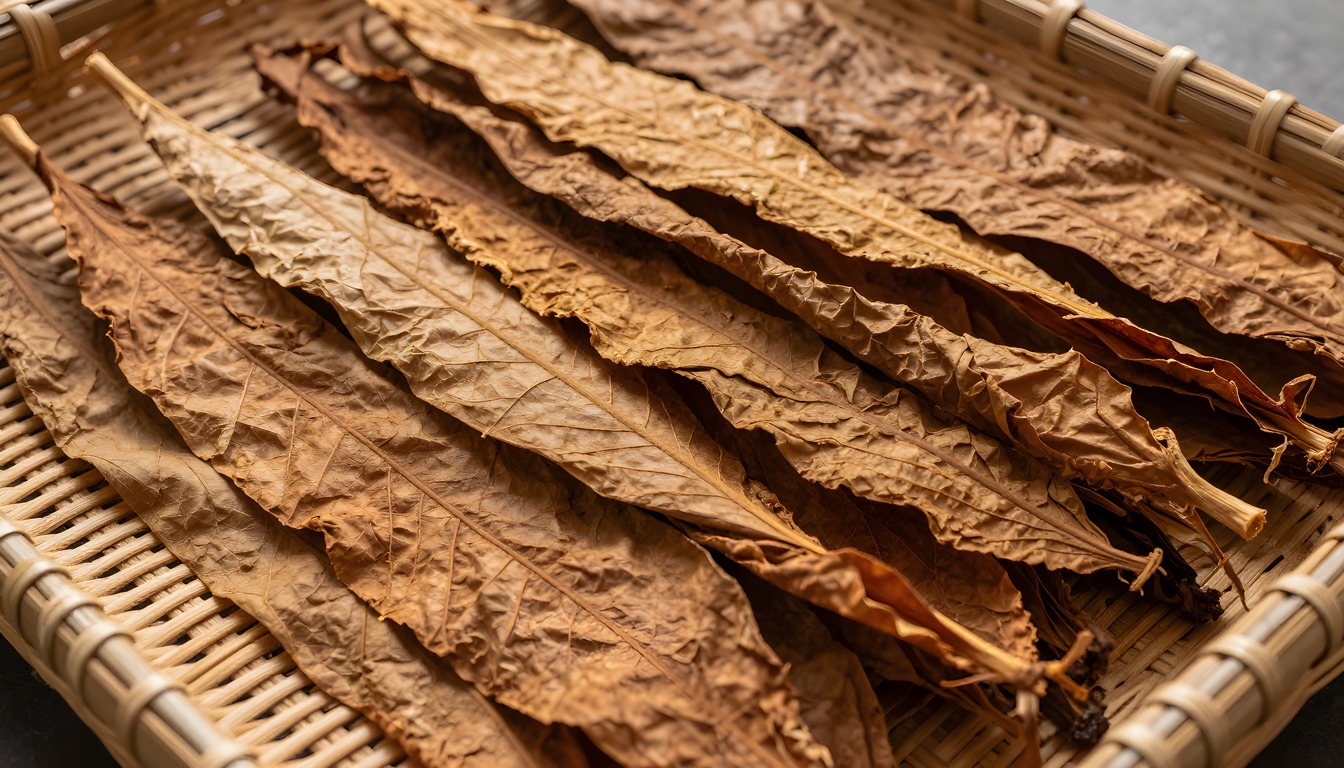
Locally generated editorial illustration of filler selection; the arrangement is not a published cigar recipe.
Long filler and short filler describe construction
Habanos distinguishes handmade long-filler and short-filler cigars. Its long-filler description uses full-length leaves; its short-filler description includes shorter leaf sections. Both categories can be handmade within that system.
Therefore, “handmade” and “long filler” are separate claims. Check both if they matter to your purchase. Do not assume a low price means short filler, or that the words “hand rolled” tell you exactly what is inside.
| Label | Useful information | Information still missing |
|---|---|---|
| Long filler | Leaf-length construction | Exact blend and execution |
| Short filler | Shorter tobacco sections | Overall quality and your preference |
| Handmade | Assembly method | Whether the filler is long or short |
The practical question is what you want from that particular cigar at its actual price. A construction term can help narrow your options, but it is not a substitute for a clearly identified product and reliable seller.
What happens at the workbench
In its manufacturing account, Habanos describes preparing and grading wrapper leaves, conditioning filler and binder, and issuing specified blends to rollers. It also describes recipes for individual sizes. This is a producer's account of its system, rather than a universal factory manual.
That distinction matters when comparing formats. A larger cigar sold under the same line name should not automatically be treated as an unchanged recipe scaled up. Ask what the maker says about that exact size before attributing a difference to geometry alone.
Read a real specification from outside inward
Oliva's Flor de Oliva page lists an Indonesian wrapper with Nicaraguan binder and filler. That is a clear example of why the country associated with a brand does not necessarily identify every tobacco component.
The Serie V page lists an Ecuadorian wrapper and Nicaraguan binder and filler. It adds Jalapa Valley ligero to the description. The extra detail names a region and leaf category; it still does not publish a complete ratio.
| Specification detail | Reasonable reading |
|---|---|
| Wrapper country | Origin of the outer tobacco named by the maker |
| Binder country | Origin of the supporting leaf named by the maker |
| Filler countries or regions | Origins represented in the interior blend |
| Priming term | A leaf category requiring the maker's context |
Those two Oliva examples are specification examples, not recommendations based on a tasting here. Their Nicaraguan binder and filler descriptions also do not prove that those underlying blends are identical.
Build a useful blend note
Keep one record for the exact cigar rather than a loose list of wrapper names. Record its line and size, then copy the manufacturer’s component specification with the source URL and check date. Leave unpublished fields blank instead of borrowing another review’s recipe.
Add your own observations in a separate part of the note. “The wrapper split near the head” describes something visible. “The binder was badly selected” attributes a cause. That separation makes the record useful even if your initial explanation turns out to be wrong.
Compare the same kind of information
Suppose two descriptions both say “Nicaraguan filler.” That shared country does not establish the same farms, varieties, primings, or proportions. Mark the country as shared and the recipe as undisclosed. You have preserved the evidence without pretending the cigars are twins.
If one maker supplies more detail, do not penalize it for making the differences easier to see. A longer specification and a better cigar are also separate judgments. Published detail helps you understand a purchase; it does not decide whether you will prefer it.
Do not turn flavor into a percentage
Habanos says its wrapper contributes relatively little flavor, while Tobacconist University emphasizes the wrapper's sensory role. Neither supplies a universal measured fraction that you can apply to every cigar. Their descriptions should retain their scope.
A claim that the wrapper provides a fixed percentage of flavor needs a defined measurement method and evidence for the cigars concerned. A blender's general opinion is not that measurement. Repeating a precise-looking number does not make it more informative.
Ask a question the evidence can answer
When comparing two wrapper variants, first establish what else changed. Check the size, binder, filler, and manufacturer's description. If those details are not disclosed, you can compare the finished cigars, but cannot isolate the wrapper as the cause of every difference.
For a separate explanation of leaf positions, read seco, viso, and ligero. The distinction between a leaf's position and its job in the cigar is more useful than a percentage without a method.
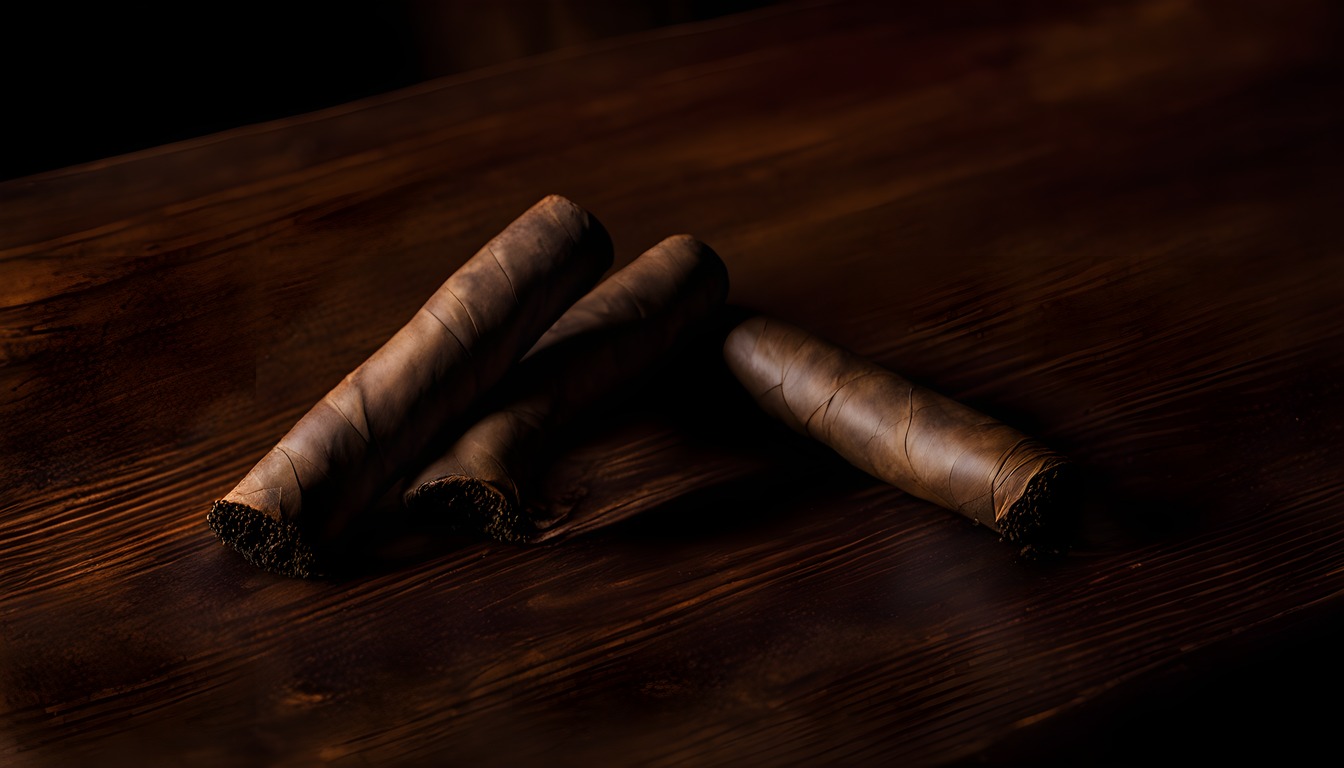
Locally generated editorial illustration of finished cigar form; wrapper shades and internal blends are illustrative.
Inspect a purchase without dismantling it
The head is the end placed in the mouth, usually finished with a cap. The foot is the end lit, normally open. Tobacconist University's anatomy guide identifies these landmarks. Some shapes and foot treatments differ, so examine the actual format.
Use those landmarks for a gentle inspection:
- Check the wrapper for obvious splits or loose sections under good light.
- Inspect the head and cap without trying to lift their edges.
- Look at the foot for visible crushing or missing tobacco.
- Confirm the exact line and size against the seller's description.
Ask about a defect before buying or using the cigar. Keep the sleeve, band, and purchase details if you need to identify it later. For the actual cut and light, use the cutting and lighting guide.
Frequently Asked Questions
Is the binder the same as the wrapper?
No. The binder surrounds the filler beneath the wrapper. The wrapper is the outer tobacco leaf. A tobacco variety can appear in different roles across different cigars, but the two names describe different positions in a finished cigar.
Does a dark wrapper mean a stronger cigar?
Color alone does not reveal the filler blend or establish nicotine strength. Read the exact manufacturer's description and keep appearance separate from strength. The wrapper-color analysis examines another limit of using appearance as a shortcut.
Can a handmade cigar contain short filler?
Yes. Habanos explicitly describes handmade short-filler cigars alongside handmade long-filler cigars. Check the construction statement for the actual product instead of assuming “handmade” necessarily means full-length filler leaves.
Can I identify every tobacco by looking at the foot?
No. The foot shows the exposed end of the bunch, not a labeled recipe. A visual inspection cannot establish countries, varieties, primings, crop years, or proportions. Use the maker's published specification and leave undisclosed details as unknown.