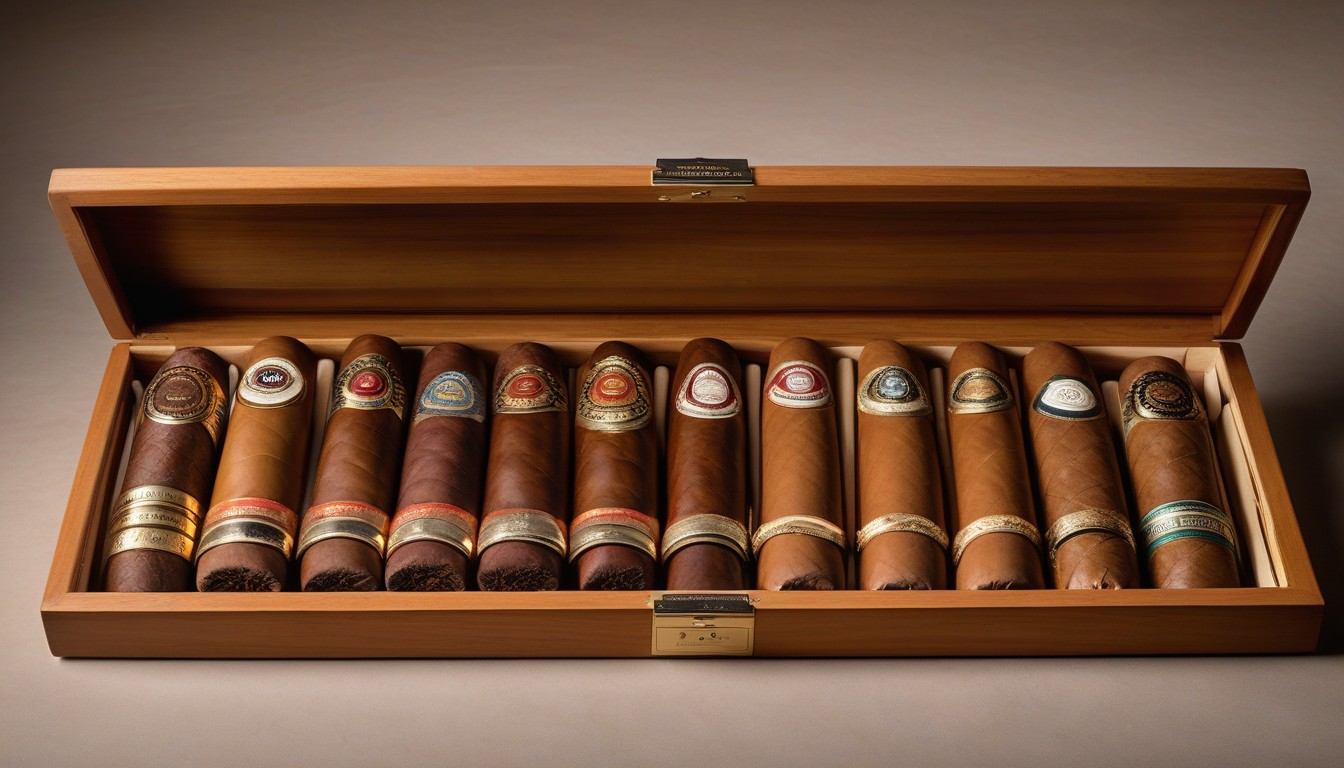
Cuban vs non-Cuban cigars is a broader question than price. Here, 12 non-Cuban picks sit below a $29 historical USD reference from just 11 Cuban catalog records. That small sample cannot establish what Cuban cigars generally cost today, but it provides a transparent threshold for exploring alternatives.
What the Cuban reference actually measures
Our September 21, 2026 catalog snapshot contains 361 Cuban records. Only 11 have positive prices explicitly recorded in USD. Their median is $29: the sixth price when those 11 values are sorted. We exclude other currencies and unknown currencies; we do not convert them or relabel them as dollars.
These are historical catalog references, without linked retailer quotes. Several names identify regional or special releases. That mix is too narrow to represent the full Cuban market. The snapshot date identifies this calculation, not a fresh price check at a shop.
| Comparison | Included records | What it tells you |
|---|---|---|
| Cuban USD reference | 11 of 361 Cuban records | A $29 median within this limited sample |
| Eligible non-Cuban pool | 35 USD-priced records rated at least 4.8, below $29 | Candidates for this particular shortlist |
| Selected entries | 12, one per brand | Options ordered by catalog rating, then alphabetically within ties |
The selected prices range from $8.50 to $25. Those figures are catalog references per cigar, not checkout quotes. Confirm the exact size, quantity, availability and seller price before buying. Our cigar cost guide explains the wider USD catalog; the price index provides its own scope and currency notes.
Price of all 12 non-Cuban picks against the $29.00 Cuban USD reference median
All 12 picks stop short of the Cuban USD reference median of $29.00. The best rating in the set, 4.90, belongs to the E.P. Carrillo Pledge Prequel at $10.75 — $18.25 under that median. Ratings across the list move 0.10 of a point; prices move 2.9×.
best rating (4.90) — $10.75the other 11 picks
- La Mission L'Atelier 1959$8.50
- Alec Bradley Prensado Churchill$10.25
- E.P. Carrillo Pledge Prequel$10.75
- Aging Room Quattro Nicaragua Maestro$10.95
- Arturo Fuente Don Carlos Eye of the Shark$12.25
- Padron 1964 Anniversary Series Hermoso$13.20
- My Father The Judge Grand Robusto$13.30
- La Flor Dominicana Andalusian Bull$15.00
- Davidoff Winston Churchill Late Hour$17.50
- Montecristo 1935 Anniversary Nicaragua Espeso$18.00
- Liga Privada No. 9 Flying Pig$20.83
- Dunbarton Sin Compromiso Seleccion No. 7 Toro$25.00
Cuban origin, tobacco origin and preference
Cuban origin has a specific meaning for Habanos: the protected designation covers cigars made in Cuba using tobacco from defined Cuban growing areas. Habanos also distinguishes its protected designation from the broader category of Cuban cigars. See the producer's introduction to Habanos.
For a non-Cuban cigar, the catalog's country of manufacture and wrapper origin can differ. The Dominican-made Fuente below lists a Cameroon wrapper; the Nicaraguan-made Judge lists Ecuador. Check those fields separately. Neither the manufacturing country nor the wrapper label alone describes the whole blend.
This shortlist cannot settle which origin tastes better. We deliberately select highly rated non-Cuban entries, so comparing their scores with an unfiltered Cuban average would favor the shortlist by construction. Use the ratings to narrow a search, then compare individual cigars you want to try.
The 12 non-Cuban picks, ranked
Three entries tie at 4.9, three at 4.85 and six at 4.8. Alphabetical order breaks those ties; rank does not measure the size of a quality difference. Dimensions, strength labels and ratings below are catalog fields, not new tasting findings.
Images are catalog size illustrations, not authenticated product photographs. Use the stated dimensions to compare formats; do not use the drawings to identify packaging or verify a cigar.
1. E.P. Carrillo Pledge Prequel
- Catalog rating: 4.9
- USD reference per cigar: $10.75
- Catalog strength: Medium-Full
- Format: 5 inches × 50 ring, Robusto; Dominican Republic

Catalog size illustration; not a product photograph.
The Pledge is the least expensive of the three 4.9-rated entries here. Its $10.75 reference is $2.55 below the Judge, with the same five-inch length and a narrower ring gauge. That makes these two a useful first comparison when deciding between a 50-ring and a 60-ring format.
Consider it if: Start here if you want the lowest reference price among this list’s highest-rated entries.
See the E.P. Carrillo Pledge Prequel catalog entry.
2. Liga Privada No. 9 Flying Pig
- Catalog rating: 4.9
- USD reference per cigar: $20.83
- Catalog strength: Full
- Catalog origin: Nicaragua
The Flying Pig matches the Pledge and Judge at 4.9, but its $20.83 reference is higher. Its catalog specifications need verification against the manufacturer’s current size before purchase. We omit the disputed dimensions and illustration here; do not substitute a No. 9 Robusto when checking this entry.
Consider it if: Compare this if you want another 4.9-rated entry, after confirming the exact Flying Pig specifications.
See the Liga Privada No. 9 Flying Pig catalog entry.
3. My Father The Judge Grand Robusto
- Catalog rating: 4.9
- USD reference per cigar: $13.30
- Catalog strength: Medium-Full
- Format: 5 inches × 60 ring, Robusto; Nicaragua

Catalog size illustration; not a product photograph.
At 5 × 60, the Judge is wider than the Pledge without being longer. Both carry a Medium-Full label and a 4.9 rating in the catalog. The $13.30 reference leaves more room below the threshold than the Flying Pig, although an actual purchase comparison still needs current seller quotes.
Consider it if: Choose it for your shortlist if you prefer the wider of these two five-inch formats.
See the My Father The Judge Grand Robusto catalog entry.
4. Arturo Fuente Don Carlos Eye of the Shark
- Catalog rating: 4.85
- USD reference per cigar: $12.25
- Catalog strength: Medium-Full
- Format: 5.75 inches × 52 ring, Figurado; Dominican Republic

Catalog size illustration; not a product photograph.
The Eye of the Shark has the lowest reference price among the three entries rated 4.85: $12.25. Its catalog dimensions are 5.75 × 52, with a Figurado shape. That gives you a different format to compare with the shorter Padron and broader Montecristo in the same rating group.
Consider it if: Compare this if you want a shaped format within the 4.85 group.
See the Arturo Fuente Don Carlos Eye of the Shark catalog entry.
5. Montecristo 1935 Anniversary Nicaragua Espeso
- Catalog rating: 4.85
- USD reference per cigar: $18.00
- Catalog strength: Medium-Full
- Format: 5.5 inches × 60 ring, Gordo; Nicaragua

Catalog size illustration; not a product photograph.
The Espeso is recorded as a 5.5 × 60 Gordo at $18. Its 4.85 rating matches Fuente and Padron, while its ring gauge is larger than either. The Nicaragua origin field is explicit: the Montecristo name by itself should not lead you to treat this entry as a Cuban cigar.
Consider it if: Compare this if you want a broad Nicaraguan format and a little more length than the Judge.
See the Montecristo 1935 Anniversary Nicaragua Espeso catalog entry.
6. Padron 1964 Anniversary Series Hermoso
- Catalog rating: 4.85
- USD reference per cigar: $13.20
- Catalog strength: Medium
- Format: 4 inches × 56 ring, Robusto; Nicaragua

Catalog size illustration; not a product photograph.
The Hermoso is four inches long with a 56 ring gauge. Its Medium label also distinguishes it from several Medium-Full or Full entries. Length alone cannot predict a session’s duration, so choose the format for comfort before assigning it a time slot.
Consider it if: Consider this if you want a short format with a Medium catalog strength label.
See the Padron 1964 Anniversary Series Hermoso catalog entry.
7. Aging Room Quattro Nicaragua Maestro
- Catalog rating: 4.8
- USD reference per cigar: $10.95
- Catalog strength: Medium-Full
- Format: 6 inches × 52 ring, Figurado; Nicaragua

Catalog size illustration; not a product photograph.
The Maestro is a 6 × 52 Figurado with a $10.95 reference. At the same ring gauge, it is longer than the Fuente and La Mission entries. Its 4.8 rating ties the next five picks, so the lower reference price and different dimensions are more useful distinctions than its position within that tie.
Consider it if: Compare this if you want a longer, shaped option close to the Pledge’s reference price.
See the Aging Room Quattro Nicaragua Maestro catalog entry.
8. Alec Bradley Prensado Churchill
- Catalog rating: 4.8
- USD reference per cigar: $10.25
- Catalog strength: Full
- Format: 7 inches × 48 ring, Churchill; Honduras

Catalog size illustration; not a product photograph.
Among the entries with dimensions shown here, the 7 × 48 Prensado is the longest and narrowest. It is also the only Honduran entry selected. Its $10.25 reference sits toward the lower end of the list, giving you a contrasting format to the many shorter, wider choices.
Consider it if: Consider this if a long, relatively narrow Churchill is the format you are looking for.
See the Alec Bradley Prensado Churchill catalog entry.
9. Davidoff Winston Churchill Late Hour
- Catalog rating: 4.8
- USD reference per cigar: $17.50
- Catalog strength: Medium
- Format: 5 inches × 50 ring, Robusto; Dominican Republic

Catalog size illustration; not a product photograph.
The Late Hour entry is a Dominican-made 5 × 50 Robusto with a Medium catalog label. Its dimensions match the Pledge, while its reference price is $17.50 and its rating is 4.8. Compare the exact entry rather than assuming every Winston Churchill size carries these specifications.
Consider it if: Shortlist it if you want a Medium-labeled robusto in the same dimensions as the Pledge.
See the Davidoff Winston Churchill Late Hour catalog entry.
10. Dunbarton Sin Compromiso Seleccion No. 7 Toro
- Catalog rating: 4.8
- USD reference per cigar: $25.00
- Catalog strength: Full
- Catalog origin: Nicaragua
The Sin Compromiso entry has the highest reference price in this set: $25, or $4 below the limited Cuban reference. Its size record is disputed, so we omit its dimensions and illustration. Verify the No. 7 specifications against the manufacturer’s current size before purchase.
Consider it if: Compare it if you want a Full-labeled entry and can confirm the exact No. 7 product and seller’s price.
See the Dunbarton Sin Compromiso Seleccion No. 7 Toro catalog entry.
11. La Flor Dominicana Andalusian Bull
- Catalog rating: 4.8
- USD reference per cigar: $15.00
- Catalog strength: Full
- Format: 6.5 inches × 64 ring, Figurado; Dominican Republic

Catalog size illustration; not a product photograph.
Among entries with dimensions shown, the Andalusian Bull has the widest ring gauge, 64, paired with a 6.5-inch length. Its Full label and Figurado shape offer another distinction from the robustos. A high rating does not establish that this large format will be comfortable for you; use the dimensions as a practical filter.
Consider it if: Consider it if you already prefer a broad format and want a shaped option.
See the La Flor Dominicana Andalusian Bull catalog entry.
12. La Mission L'Atelier 1959
- Catalog rating: 4.8
- USD reference per cigar: $8.50
- Catalog strength: Medium-Full
- Format: 4.75 inches × 52 ring, Robusto; Nicaragua

Catalog size illustration; not a product photograph.
La Mission has the lowest reference price in this shortlist at $8.50. Its 4.75 × 52 Robusto is shorter than the Pledge but slightly wider. It ranks twelfth because of alphabetical ordering within the 4.8 tie, not because the catalog identifies a lower score than ranks seven through eleven.
Consider it if: Start here if the lowest reference price matters more to you than placement within a rating tie.
See the La Mission L'Atelier 1959 catalog entry.
Narrow the comparison before buying
Seven picks are Nicaraguan, four Dominican and one Honduran. Those counts describe this selection rule, not the relative quality of entire countries. For more context, explore our Nicaraguan, Dominican and Honduran guides, or the history of Cuban cigars.
| Your priority | Start by comparing | Why these entries help |
|---|---|---|
| Lowest reference price | La Mission, Prensado, Pledge | $8.50, $10.25 and $10.75 within this shortlist |
| Highest catalog rating | Pledge, Flying Pig, Judge | All three rate 4.9; compare prices and verify exact specifications |
| Medium catalog strength | Padron Hermoso, Davidoff Late Hour | Both are labeled Medium; their lengths are four and five inches |
| Same length, different width | Pledge and Judge | Both five inches; ring gauges 50 and 60 |
Interactive
Pick a non-Cuban cigar
All 12 ranked cigars, $8.50 to $25.00, each under the Cuban USD reference median of $29.00 across 11 Cuban records, drawn from 34 non-Cuban cigars rated 4.8+ under $29.00. Set your ceiling and it names the highest-rated catalog reference within your budget. Check retailer pricing before buying.
Start with E.P. Carrillo Pledge Prequel — rated 4.9 at $10.75, 5" x 50 Robusto, medium-full.
6 of the 12 cigars match at or under $13.25. Top 5 shown.
- E.P. Carrillo Pledge Prequel
- Arturo Fuente Don Carlos Eye of the Shark
- Padron 1964 Anniversary Series Hermoso
- La Mission L'Atelier 1959
- Alec Bradley Prensado Churchill
Nothing in this ranking scores higher than 4.9 on these filters. Spending more here buys size and wrapper, not a better score.
Once you have two candidates, check the exact product name and size against the seller’s listing. Compare single-cigar prices with single-cigar prices, and calculate per-cigar cost separately for a box. A catalog reference does not establish a discount, current stock or the authenticity of an offer.
Frequently Asked Questions
Are Cuban cigars better than non-Cuban cigars?
This dataset cannot establish that. The 12 non-Cuban picks are deliberately filtered for ratings of at least 4.8. The Cuban price reference uses only 11 records with known USD prices. Neither that price sample nor this selected rating group provides a balanced test of taste or quality across origins.
What is the best-rated non-Cuban cigar in this shortlist?
The E.P. Carrillo Pledge Prequel, Liga Privada No. 9 Flying Pig and My Father The Judge Grand Robusto tie at 4.9. The Pledge has the lowest reference price of those three at $10.75. A shared score does not make them interchangeable; confirm the exact specifications, especially for the disputed Flying Pig size record.
Does $29 represent the current price of a Cuban cigar?
No. It is the median of 11 historical Cuban catalog records with positive, explicitly USD prices. The full Cuban catalog contains 361 records, and we have not converted the other currencies. The calculation is reproducible, but the small sample is not a current Cuban retail-market survey.
How much cheaper are these picks than the Cuban reference?
Their references range from $8.50 to $25, placing them $4 to $20.50 below this particular $29 median. Those are arithmetic gaps between catalog references, not promised savings. An actual price comparison requires current offers for the specific cigars, quantities and market you are considering.