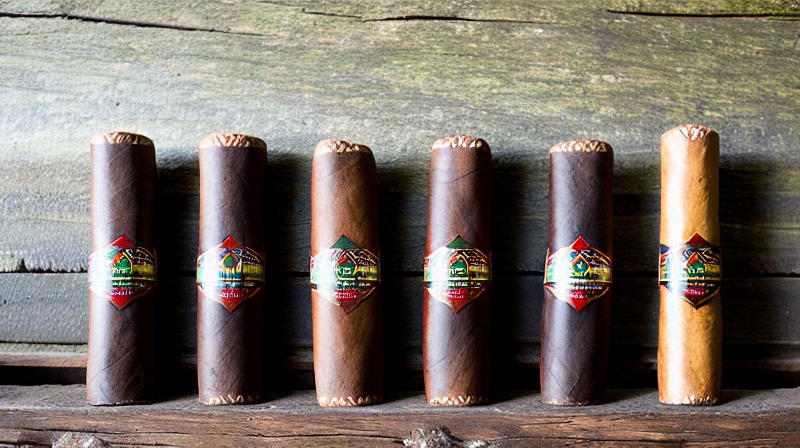
Honduras supplied 37.5 million handmade imports in the first half of 2026, up 10% from a year earlier. These 12 picks came out of 472 rated Honduran cigars, one brand each. The top score is 4.8 at $10.25.
Handmade cigar imports, first half of 2026
Honduras rose to 37.5 million cigars, +10%, while the Dominican Republic fell to 38.0 million. Nicaragua still supplied 121.6 million of the 199.5 million total.
Honduras — the origin that gainedNicaragua and the Dominican Republic
- Honduras37.5
- Dominican Republic38
- Nicaragua121.6
Imports in the first half of 2026
The Cigar Association of America counted 199.5 million handmade imports from January through June 2026, against 200.5 million a year earlier. Cigar Aficionado published the split on September 14.
- Nicaragua: 121.6 million, down 1.5%, 60.1% of the total.
- Dominican Republic: 38.0 million, down 7.7%, 19.0% of the total.
- Honduras: 37.5 million, up 10%, 18.8% of the total.
CAA import codes do not separate handmade premium cigars from machine-made cigars of equal weight. Read these as handmade imports as CAA counts them, not as sales.
The tariff is not the cause
Honduras also stayed at a 10% Section 301 tariff on July 24, while Nicaragua and the Dominican Republic rose to 12.5%. Honduras was already growing in the first quarter, before that step. The share shift is not proof the tariff caused it. The price mechanics are in why cigars cost more in 2026.
In our catalog, Honduras is still the cheapest of the four origins. The side-by-side is Cuban, Nicaraguan, Dominican and Honduran cigars.
The top is the Alec Bradley Prensado Churchill, rated 4.8 at $10.25. The Camacho Corojo Churchill is rated 4.7 at $6.85. A 4.75 Macanudo on this page costs $16.99; a 4.75 Henry Clay costs $7.00. Spending more inside this set buys a brand name and a size, not a better score.
Price of all 12 Honduran picks
The best-rated Honduran on the list is the Alec Bradley Prensado Churchill at $10.25, rated 4.80 — $6.74 less than the dearest pick, the Macanudo Emissary France Churchill at $16.99, which is rated 4.75. Prices spread 2.5× across a 0.15-point rating band.
best rating (4.80) — $10.25the other 11 picks
- 2012 by Oscar Valladares Sumatra Short Robusto$6.80
- Camacho Corojo Churchill$6.85
- Henry Clay War Hawk Corona$7.00
- A. Turrent Triple Play Belicoso$8.00
- 7-20-4 Lancero$8.35
- Rocky Patel Number 6 Corona$9.35
- Alec Bradley Prensado Churchill$10.25
- Viaje Oro Reserva VOR No. 5$10.80
- C.L.E. Maduro 50x5$11.06
- Illusione Epernay 10th Anniversary D'Aosta$12.00
- Aladino 2023 Limited Edition$16.00
- Macanudo Emissary France Churchill$16.99
The 12 Best Honduran Cigars, Ranked
Ranked by catalog rating, one brand each. Four cigars tie at 4.75, three at 4.7, and four at 4.65 — inside a tie the order is alphabetical, not a verdict, so choose on price and size instead. Every price is for a single cigar.
1. Alec Bradley Prensado Churchill
- Rating: 4.8
- Price: $10.25
- Strength: Full
- Size: 7 x 48 Churchill, Honduras wrapper, Honduras

The Alec Bradley Prensado Churchill is rated 4.8 at $10.25. It is the only 4.8 in the twelve and the only full-strength churchill. Seven inches on a 48 ring is a long sit, and the wrapper is Honduran on a Honduran cigar, which makes it one of four puros here.
Buy it if you want the top of the Honduran catalog and you have the evening for a churchill.
2. Henry Clay War Hawk Corona
- Rating: 4.75
- Price: $7.00
- Strength: Medium-Full
- Size: 5 x 44 Corona, Ecuador wrapper, Honduras

The Henry Clay War Hawk Corona is rated 4.75 at $7.00. Four cigars in this ranking tie at 4.75, and this is the cheapest of them by $2.35. A 5 x 44 corona is the smallest format at this rating. The Macanudo Emissary France Churchill below is the same 4.75 at $16.99.
Buy it if you want the 4.75 band without paying churchill money.
3. Macanudo Emissary France Churchill
- Rating: 4.75
- Price: $16.99
- Strength: Medium-Full
- Size: 7 x 48 Churchill, Ecuador wrapper, Honduras

The Macanudo Emissary France Churchill is rated 4.75 at $16.99. It is the most expensive cigar on this page and it shares its 4.75 rating with three cigars that cost $7.00, $9.35 and $10.80. Same 7 x 48 churchill size as the Alec Bradley above, $6.74 more, 0.05 lower.
Buy it if you want this Macanudo specifically. On the numbers there is no case for it over the Henry Clay.
4. Rocky Patel Number 6 Corona
- Rating: 4.75
- Price: $9.35
- Strength: Medium
- Size: 6 x 44 Corona, Honduras wrapper, Honduras

The Rocky Patel Number 6 Corona is rated 4.75 at $9.35. It is the only Medium cigar in the twelve. The other eleven are Medium-Full or Full. A 6 x 44 corona is a longer, still-narrow format, and the wrapper is Honduran on a Honduran cigar.
Buy it if medium is the strength you actually want, not a stepping stone.
5. Viaje Oro Reserva VOR No. 5
- Rating: 4.75
- Price: $10.80
- Strength: Medium-Full
- Size: 5.5 x 52 Robusto Extra, Nicaragua wrapper, Honduras

The Viaje Oro Reserva VOR No. 5 is rated 4.75 at $10.80. At 5.5 x 52 it is the only Robusto Extra in the ranking, and one of two cigars here with a Nicaraguan wrapper. The 4.75 tie puts it next to the $7.00 Henry Clay; this one costs $3.80 more for an inch of length and eight ring gauges.
Buy it if you want the 4.75 band in a fatter short cigar rather than a corona.
6. C.L.E. Maduro 50x5
- Rating: 4.7
- Price: $11.06
- Strength: Full
- Size: 5 x 50 Robusto, Mexico wrapper, Honduras

The C.L.E. Maduro 50x5 is rated 4.7 at $11.06. Five inches on a 50 ring is the reference robusto, and this is one of three Full cigars in the twelve. The wrapper is Mexican, so it is not a Honduran puro. It costs $4.21 more than the Camacho below and scores the same 4.7.
Buy it if you want a robusto at this rating and you do not want a churchill.
7. Camacho Corojo Churchill
- Rating: 4.7
- Price: $6.85
- Strength: Medium-Full
- Size: 7 x 48 Churchill, Honduras wrapper, Honduras

The Camacho Corojo Churchill is rated 4.7 at $6.85. It is the cheapest 4.7 in the twelve and the cheapest churchill by a wide margin. Same 7 x 48 size as the $10.25 Alec Bradley and the $16.99 Macanudo, 0.10 of a rating point off the top of the page.
Buy it if you want the long format and you want to spend less than $7.00.
8. Illusione Epernay 10th Anniversary D'Aosta
- Rating: 4.7
- Price: $12.00
- Strength: Medium-Full
- Size: 6 x 50 Toro, Nicaragua wrapper, Honduras

The Illusione Epernay 10th Anniversary D'Aosta is rated 4.7 at $12.00. Six inches on a 50 ring is the default toro, and this is the other Nicaraguan-wrapped cigar in the twelve. It is the dearest of the three cigars rated 4.7.
Buy it if you want a toro at 4.7 and the Illusione name is the reason.
9. 2012 by Oscar Valladares Sumatra Short Robusto
- Rating: 4.65
- Price: $6.80
- Strength: Medium-Full
- Size: 4 x 52 Robusto, Ecuador wrapper, Honduras

The 2012 by Oscar Valladares Sumatra Short Robusto is rated 4.65 at $6.80. It is the cheapest cigar in the twelve and the shortest, at 4 inches. Four cigars tie at 4.65; this is the one to buy if the rating band is acceptable and the price is the point.
Buy it if you want a short Honduran cigar and you do not want to spend $8.00 to get one.
10. 7-20-4 Lancero
- Rating: 4.65
- Price: $8.35
- Strength: Full
- Size: 7 x 40 Panetela, Brazil wrapper, Honduras

The 7-20-4 Lancero is rated 4.65 at $8.35. Its 40 ring gauge is the narrowest here by eight gauges. Seven inches on that ring is a lancero in everything but the catalog's shape label, which is Panetela, and it is the only Brazilian wrapper in the twelve. It is also Full, one of three at that strength.
Buy it if you want the long, thin format and you already know a 40 ring is what you like.
11. A. Turrent Triple Play Belicoso
- Rating: 4.65
- Price: $8.00
- Strength: Medium-Full
- Size: 6.13 x 54 Belicoso, Mexico wrapper, Honduras

The A. Turrent Triple Play Belicoso is rated 4.65 at $8.00. At 6.13 x 54 it is the largest cigar in the twelve, and the tapered head is the reason to pick it over a parejo at the same 4.65. The wrapper is Mexican, matching the C.L.E. five entries up.
Buy it if you want a belicoso and a 54 ring from this origin.
12. Aladino 2023 Limited Edition
- Rating: 4.65
- Price: $16.00
- Strength: Medium-Full
- Size: 6 x 52 Toro, Honduras wrapper, Honduras

The Aladino 2023 Limited Edition is rated 4.65 at $16.00. It is the second most expensive cigar on this page and it ties the $6.80 Oscar Valladares at 4.65. Six inches on a 52 ring with a Honduran wrapper, so it is a puro, and the price is what a limited edition costs in this catalog, not a higher score.
Buy it if you want this Aladino release. On rating and price the Oscar Valladares is the 4.65 to buy.
Which One Should You Buy
Buy the Camacho Corojo Churchill, rated 4.7 at $6.85, if you want the long format without paying for the 4.8. It is the cheapest churchill here, and it sits 0.10 of a rating point off the top of the page.
Three reasons to buy something else:
- You want the best-rated one. That is the Alec Bradley Prensado Churchill, rated 4.8 at $10.25. You are paying $3.40 more than the Camacho for 0.10 of a rating point, in the same 7 x 48 size.
- You want 4.75 without churchill money. That is the Henry Clay War Hawk Corona, rated 4.75 at $7.00. The other 4.75 churchill on this page is $16.99.
- You want the cheapest cigar here. That is the 2012 by Oscar Valladares Sumatra Short Robusto, rated 4.65 at $6.80. It is also the shortest, at 4 inches.
Set your ceiling below and the picker names the best cigar in the twelve you can actually buy for it.
Interactive
Pick a Honduran cigar
All 12 ranked cigars, $6.80 to $16.99, one brand each from 472 rated Honduran cigars. Set your ceiling and it names the highest-rated catalog match. Prices may be historical; check current offers and stock.
Start with Henry Clay War Hawk Corona — rated 4.75 at $7.00, 5" x 44 Corona, medium-full.
6 of the 12 cigars match at or under $9.75. Top 5 shown.
- Henry Clay War Hawk Corona
- Rocky Patel Number 6 Corona
- Camacho Corojo Churchill
- 2012 by Oscar Valladares Sumatra Short Robusto
- A. Turrent Triple Play Belicoso
Stretch to $10.25 — $0.50 over your ceiling — and Alec Bradley Prensado Churchill takes you to 4.8.
One Brand Each, From 472
The eligible Honduran sample has 472 rated records with positive USD reference prices, from $2.25 to $28.90, with a median of $8.32. These 12 are the highest-rated cigar from each of twelve brands, so a second Alec Bradley never displaces a first Camacho.
Four of the twelve wear a Honduran wrapper: the Alec Bradley, the Rocky Patel, the Camacho, and the Aladino. The rest are wrapped in leaf from Ecuador (three), Nicaragua (two), Mexico (two), or Brazil (one). Origin of the cigar is Honduras in every row; origin of the wrapper is not.
Strength and size
Strength is lopsided. Eight are Medium-Full, three are Full, and one is Medium — the Rocky Patel Number 6 Corona, rated 4.75 at $9.35. If someone tells you Honduran cigars are all full-bodied, that is not what this list says.
Sizes run from 4 x 52 to 7 x 48, with a 40-ring lancero and a 54-ring belicoso at the extremes. Length and ring gauge are independent choices here, the same way they are on every other origin page.
Honduras Against the Other Origins
The Honduran USD sample has an $8.32 median reference price, against $9.64 for both Nicaragua and the Dominican Republic. Average ratings are 4.54, 4.55 and 4.56 respectively. These historical catalog comparisons do not establish current retail prices.
Only 11 of 361 Cuban catalog records have eligible USD prices. Their $29 median describes that small subset; comparing it with hundreds of Honduran records is not a survey of either market.
The useful comparison on this page is inside Honduras. The $16.99 Macanudo and the $7.00 Henry Clay are both rated 4.75. The $10.25 Alec Bradley is the only 4.8. Paying more does not move the score.
More from this origin and the ones next to it: Cuban vs non-Cuban cigars · Dominican cigars · Nicaraguan cigars · Cigar strength guide · Cigar price index
Which Honduran cigar is the best?
The Alec Bradley Prensado Churchill, rated 4.8 at $10.25. It is the only 4.8 in these 12, which were cut from 472 rated Honduran cigars, one per brand.
If you want the long format for less, the Camacho Corojo Churchill is rated 4.7 at $6.85, same 7 x 48 size.
What is the cheapest good Honduran cigar on this list?
The 2012 by Oscar Valladares Sumatra Short Robusto, rated 4.65 at $6.80. It is the cheapest of the twelve and the shortest, at 4 inches.
The Camacho Corojo Churchill is five cents more at $6.85 and is rated 4.7. That is the one to buy if four inches is too short.
Are Honduran cigars full-bodied?
Not as a rule. Of the 12 ranked here, eight are Medium-Full, three are Full, and one is Medium. The Medium cigar is the Rocky Patel Number 6 Corona, rated 4.75 at $9.35.
The Honduran catalog behind them is 472 cigars. Full-bodied share in that catalog is about half, which is why a list cut on rating still comes out mostly Medium-Full.
How much should I spend on a Honduran cigar?
$6.80 to $10.25 covers the cheapest cigar here, the cheapest 4.7, and the only 4.8. The $16.99 cigar is rated 4.75, the same as the $7.00 one.
The Honduran USD reference-price median is $8.32. Seven of these twelve sit at or under $10.80. Paying past that, on this page, buys a brand and a size.