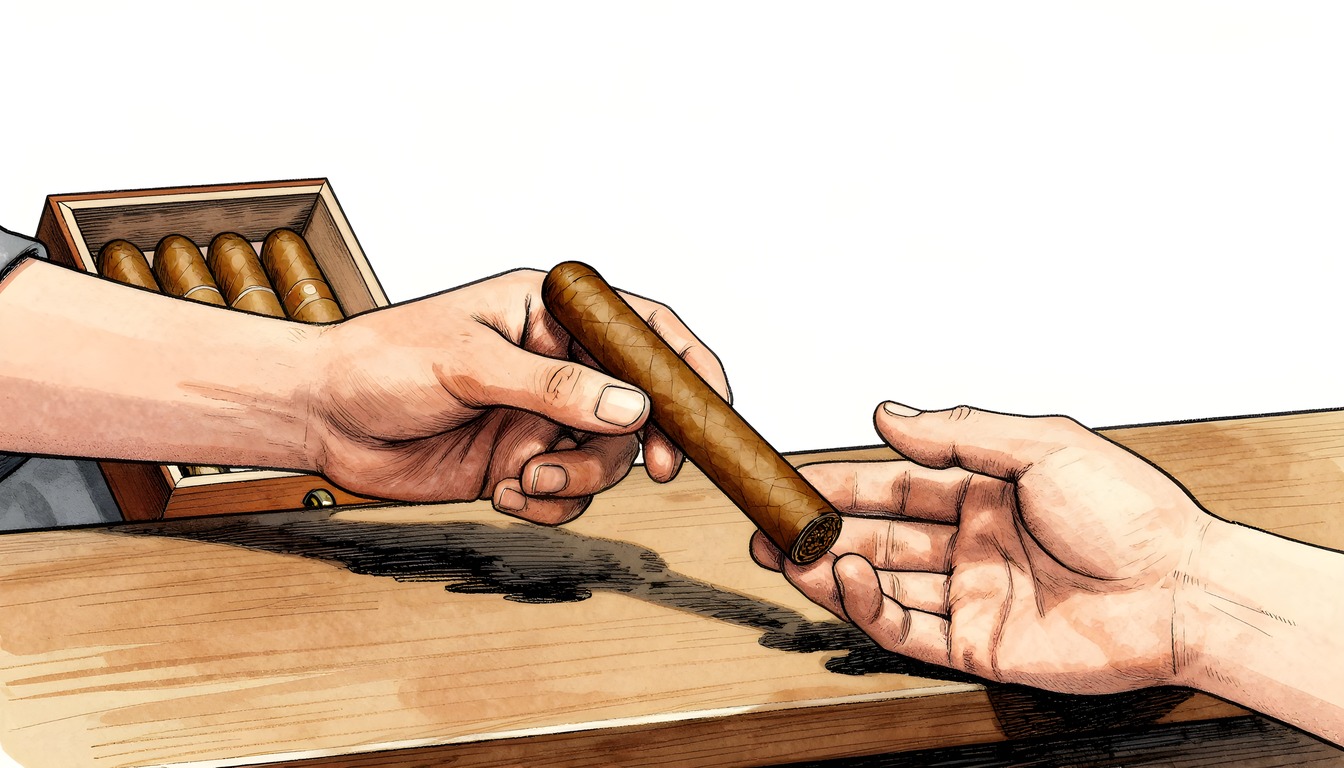
A buyer spent $25 on a sampler and about $40 on a box from CigarPage, took delivery on November 9 and found every cigar rock hard — his post on r/cigars. Online sellers should pack for 65–69% humidity and replace cigars that arrive dry, not sell the buyer a month of repair work.
A hard box is a delivery failure
The thread did not argue with him. One reply explained the process instead: expect a month or two of rest from any online retailer. Another said warehouse stock sits at or above 70% RH, so every order has to come down before it smokes.
Neither commenter claimed the cigars were ready. The dispute was never about whether the box was smokable on arrival. It was about who pays for the fix.
The buyer's numbers are specific: $25 for a sampler, "about $40 and some change" for a box of Black Swans, and "at least a month" before anything was smokable.
A customer with 50-plus orders over five years said the retailer "does seem to come a little more dry than most," reported no problems, and now gives everything two to three months.
The range that matters
Boveda, which makes the packs most shops ship, puts cigar storage at 65% to 72% relative humidity and calls its 69% pack the universal choice. A cigar inside that range smokes. A cigar that needs a month to get there was not sold at that range.
The seller owns the truck
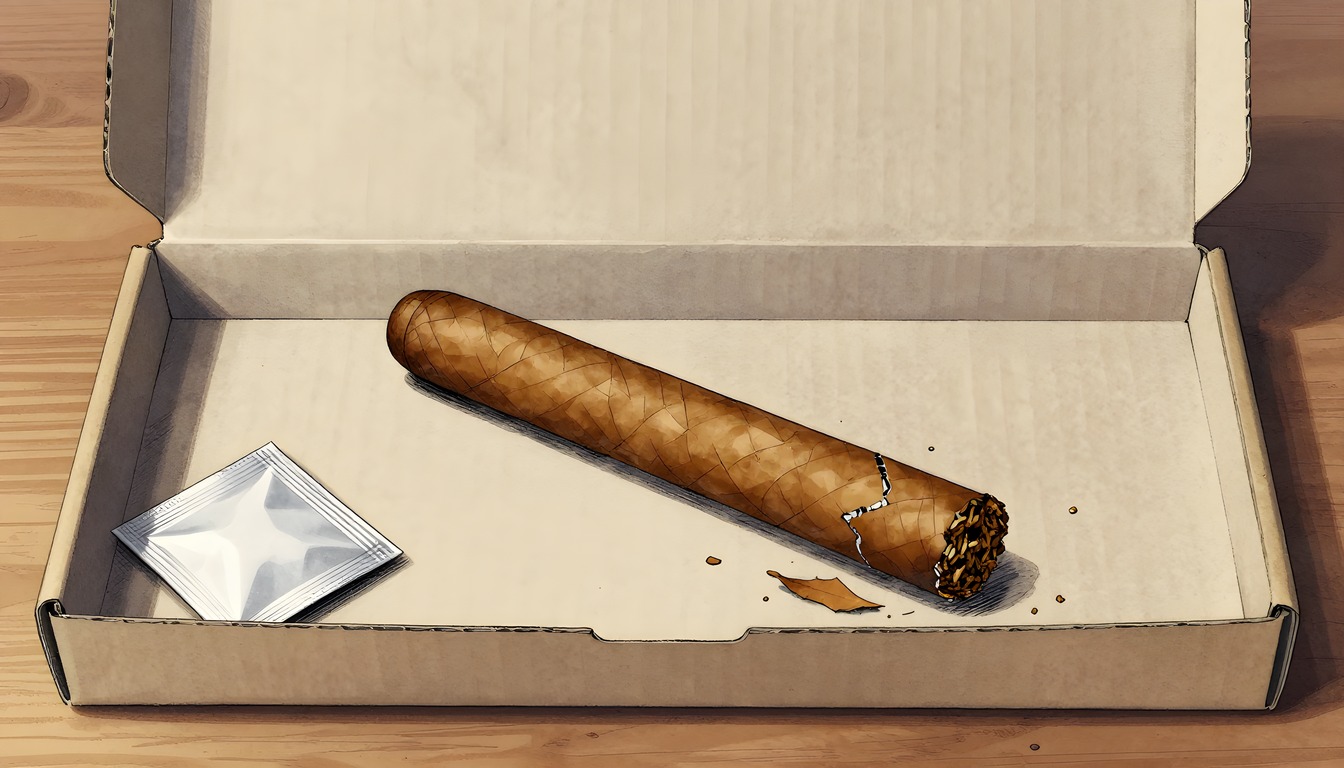
Read the seller's own terms. CigarPage ships from Bath, Pennsylvania, under a shipment contract: risk of loss and title "pass to you upon delivery to the carrier". The seller picks the box, the carrier and the route. The buyer picks nothing and carries the risk.
The same page allows 14 days for a return and refuses cut or smoked cigars. The advice in the thread asks for a month or two. Follow the advice and the return window closes before the first cigar is ready.
That gap is the argument. A remedy that expires before the defect appears is not a remedy. The federal mail-order rule sets a shipping clock and a refund if the seller misses it; it says nothing about moisture.
| Seller | Promise on arrival | When it applies | Source |
|---|---|---|---|
| CigarPage | Replacement for damage, filed as a carrier claim; transit risk passes to the buyer | 14-day return, unopened | CigarPage shipping terms |
| PYRE Cigars | "We guarantee your cigars arrive in perfect smoking condition" | 7 days, with photos | PYRE FAQ |
| Sun of a Gun | Boveda in every order; replacement, credit or refund if damaged, defective or incorrect | 48 hours, with photos | Shipping |
| Treasure Coast | Free 69% Boveda with the order | Orders of $120 or more | Florida Fresh |
Three of these four write some version of a freshness promise. The seller that shipped the sampler in the thread writes a carrier claim instead.
The best case against this
Here is the strongest version of the other side. Humidity moves in transit no matter how a box is packed. A pack slows the exchange through cardboard; it does not stop a parcel sitting in a hot truck for a day.
The thread's highest-voted replies make the same point from experience. A reply with 66 points calls the squeeze test "completely meaningless", because a tight roll and a wet leaf both feel hard. One with 48 points says cigars are stored at or above 70% RH and need time to come down.
Then the bill. Every pack, every replacement and every fraudulent claim gets priced into the box. A guarantee, on this reading, is a subsidy for people who smoke half a box and complain.
What the post cannot show
The costs are real. The evidence is thinner than the certainty around it: one anonymous post cannot establish a moisture reading or a warehouse-wide failure. What it establishes is the answer the buyer got, which was to fix it himself.
The answer starts with the opponents' best point. The squeeze test is meaningless, so do not write the guarantee around firmness. Write it in relative humidity, the number a $20 hygrometer reads, and the argument about feel disappears.
The price claim runs into the shops already doing it. PYRE puts a Boveda pack in every box and replaces cigars that arrive "damaged, stale, or not as described." Sun of a Gun packs a Boveda in every order. Neither treats a humidity pack as an upgrade.
Resting for age is not resting to repair
A humidor does two jobs the thread treats as one. Aging is deliberate: months change a cigar, and cellaring buys that change. Drying a shipment is repair: the months restore what the trip took.
Temperature is a different problem. A cold cigar needs hours to warm up; a dry cigar needs weeks to rehydrate. Nobody should light one straight out of a freezing mailbox.
Three jobs get called rest here, and only one of them is the buyer's:
| Job | What the time does | How long | Who pays |
|---|---|---|---|
| Aging | Months change what the leaf tastes like; cellaring buys that change | Months | The buyer, by choice |
| Repair | Rehydrating restores the moisture the trip pulled out | Weeks | The seller who shipped it |
| Warming | A cold cigar has to come back up to room temperature | Hours | The trip, not a defect |
"I pretty much always give anything shipped to me 2-3 months in the humidor before smoking," one customer wrote. That is a preference, and his right. It is not evidence that the first week belonged to the buyer.
Customers who measure instead of squeeze give the argument its number. One reported his orders testing "usually everything is 63-64" and still rests them three to four weeks. That is just under Boveda's 65% floor, the edge a guarantee should police.
The cost of the wait
Put a price on the wait. Our catalog prices 2,944 cigars at an average of $11.23, so a five-cigar order runs about $56. Two months of storage on $56 is free labor for a seller who already shipped.
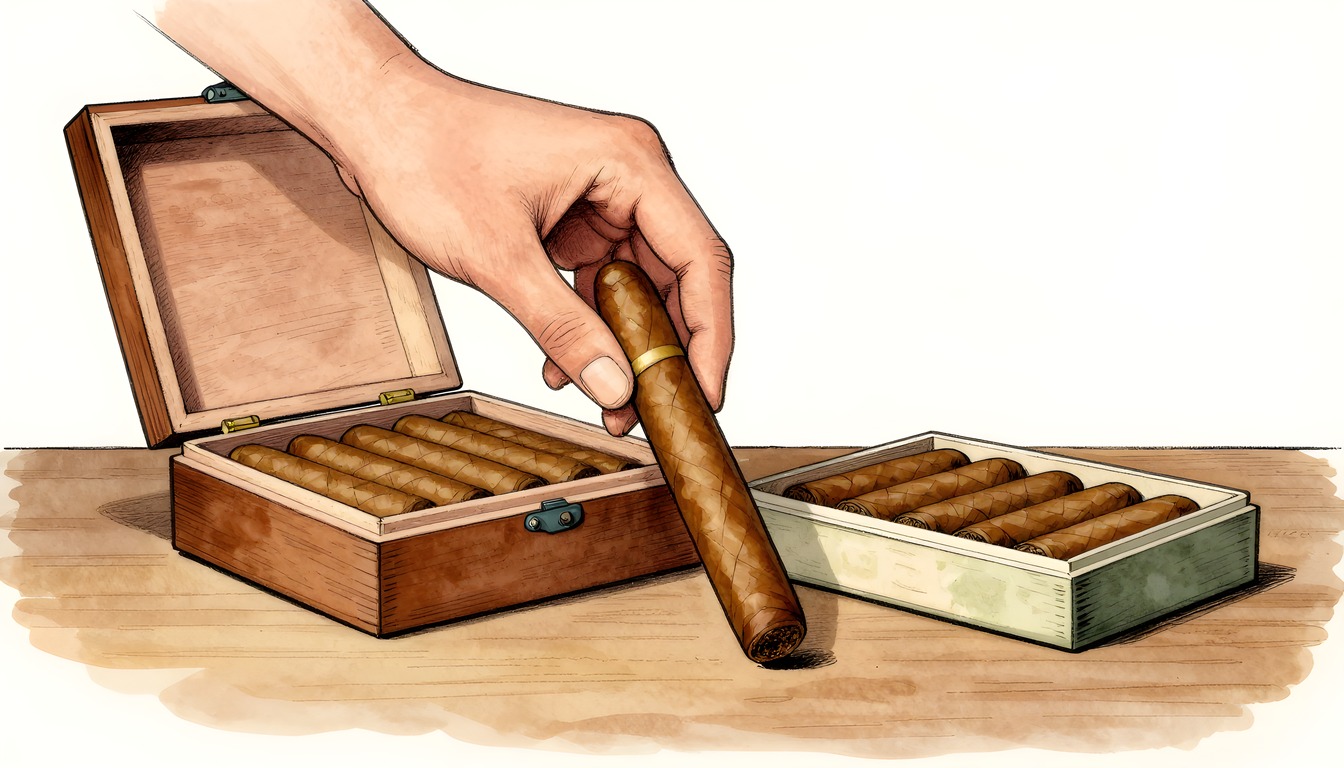
That is what the hobby language hides. Resting is enjoyable as a choice. It is a cost when it is the only way to make a purchase usable. Our guide to rehydrating dried cigars describes the repair: it takes weeks.
What a smoking-ready guarantee would say
A smoking-ready guarantee fits in five lines and costs less than the box it ships in.
- Pack to 65–69% RH and print the target on the order page, not the box.
- Put a two-way pack in every order, sized to the count; one Size 8 covers up to five cigars.
- Replace or refund any cigar that reads below 62% on a calibrated hygrometer within seven days.
- Publish the warehouse RH and the packing date on the listing.
- Give buyers 30 days to make a claim, because that is how long the defect takes to show.
None of that is exotic. Three of the four sellers in the table already promise most of it. The volume retailers already track warehouse humidity, and publishing it costs one line on a product page.
A 65 vs 69 vs 72 RH tasting test makes the stake concrete: moisture changes flavor, burn and wrapper condition, not just feel.
What would change our mind
We would drop this argument the day a volume retailer publishes a packing RH, a pack spec and a seven-day replacement promise on the order page. One season of that data would settle whether the month of rest is a necessity or a habit.
Until then, buyers should read the listing before the price. A shop that writes down what humidity the cigars leave at, and what happens if they arrive under it, is selling a cigar. A shop that transfers the risk at the loading dock is selling a box and a chore.
Measure the next order with a calibrated hygrometer, photograph the reading and send it inside the window. The number is the argument.
Sources
- Cigarpage quality, r/cigars, 2026-11-09
- How It Works, CigarPage, 2026-11-11
- What's the RH for Cigars?, Boveda, 2026-11-11
- Size 8 For Travel and Small Humidors, Boveda, 2026-11-11
- Frequently Asked Questions, PYRE Cigars, 2026-11-11
- Cigar Shipping, Sun of a Gun Cigars, 2026-11-11
- Florida Fresh, Treasure Coast Cigars, 2026-11-11
- 16 CFR 435.2, eCFR, 2026-11-11