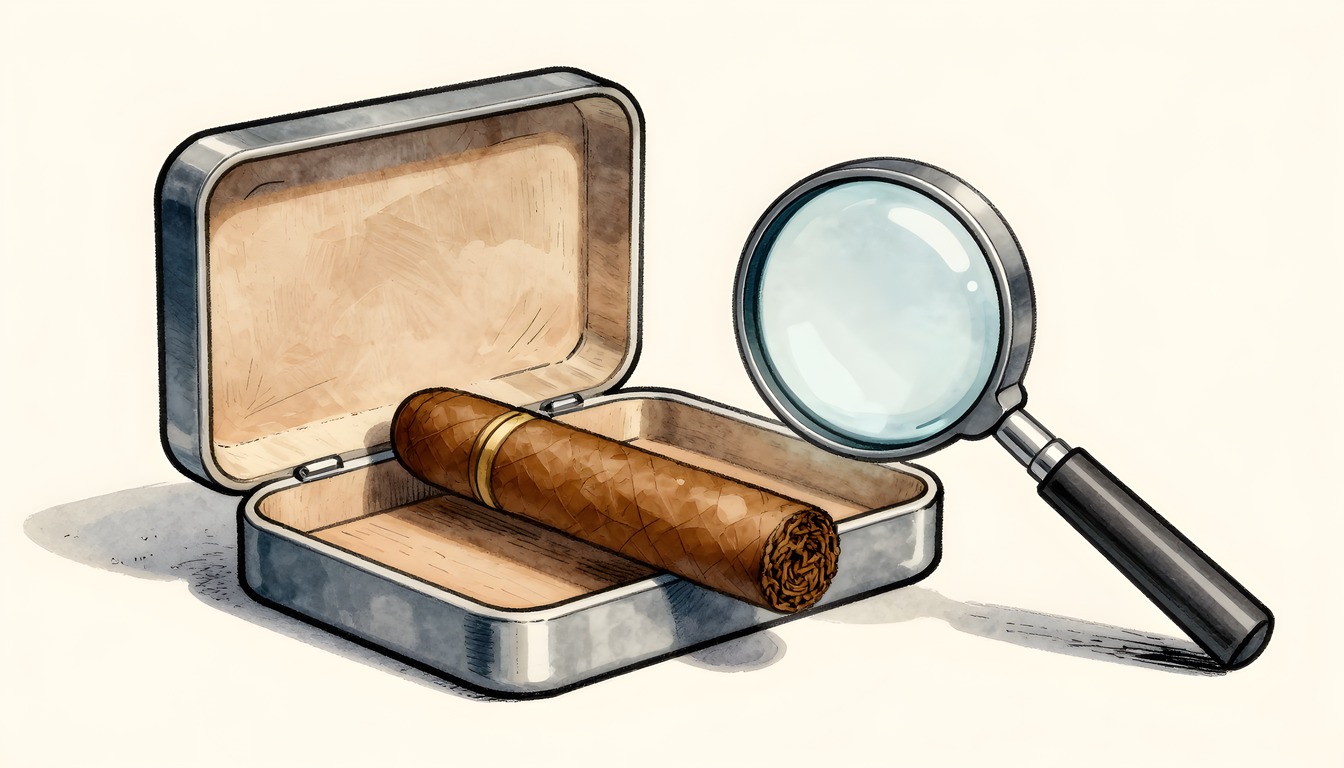
Kith's November 2 launch lists its TUMI travel cigar case at $595. We think luxury cigar cases should publish humidity-test results before retailers recommend them as storage upgrades. Attractive hardware can justify a design purchase. Better cigar protection needs a different kind of evidence.
The price should buy an answer
When we opened the launch announcement, we found descriptions of aluminum shells, cedar interiors and matching accessories. We didn't find a humidity-retention test. That observation concerns the announcement we read; it doesn't establish what testing happened privately.
We can admire a case while asking for more. Our embarrassing weakness is how quickly we can furnish an imaginary travel bag before deciding what it needs to do. Beautiful objects make the specifications feel settled. They aren't.
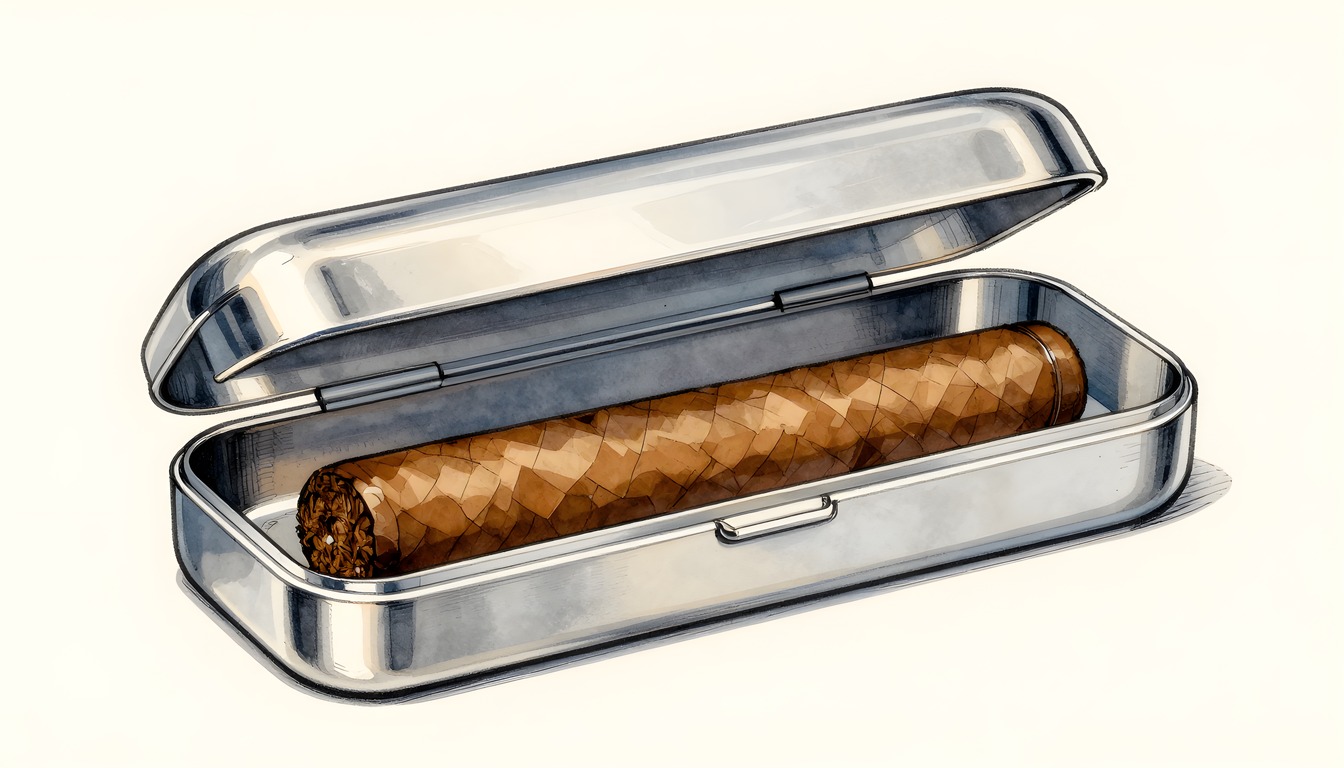
Here is our position: the more confidently a retailer sells protection, the more specific the supporting evidence should be. The finish can be judged from a photograph. The conditions inside a closed case cannot. A premium recommendation should explain both.
We haven't tested this case. We aren't calling it defective. We're declining to treat its appearance as a test result. A published result could establish excellent performance, ordinary performance or a clear limit on trip length. Each would help buyers more than another photograph of the clasp.
Cheap storage sets the evidence standard
Boveda says a clean food container with a tight-fitting lid can serve as cigar storage at home or on the move. That's a humidity supplier's guidance, not an independent comparison with this launch. Still, it gives expensive cases a practical benchmark: a plain enclosure deserves a place in the test.
The comparison should concern the job being sold. A container can look cheap and work. A luxury case can look excellent and work. We want evidence that distinguishes their performance without pretending their owners must want identical things.
| Published information | What we can reasonably conclude |
|---|---|
| Kith lists a $595 travel cigar case | This is the collaboration's advertised price, before checkout costs. |
| TUMI's separate standard case listing includes a humidity-packet pocket; the packet isn't supplied | A buyer must complete the humidity setup; this isn't a specification for the collaboration. |
| XIKAR describes its plastic travel case as airtight and supplies a mini humidifier | The maker makes explicit protection claims. Those claims still deserve testing. |
We'd be comfortable hearing a retailer make these distinctions:
- Recommend the finish and layout because a customer likes them, while saying plainly that comparative humidity performance hasn't been established.
- Recommend a storage advantage when a relevant test supports it, identifying the conditions under which that advantage appeared.
- Explain what the buyer still needs to add, rather than letting a luxurious presentation imply a complete storage system.
Our travel-humidor guide covers choosing and packing an enclosure. This column asks something of the sellers: publish enough information that a recommendation can be checked. The ordinary plastic case shouldn't receive a free pass either.
The best case against this
The strongest objection is that we are grading a luxury accessory against a laboratory brief its buyer never requested. Kith presents the cigar case as part of a coordinated travel collection. A buyer might value that design coherence more than any measurable advantage over plastic.

There's also functional value beyond moisture. TUMI's standard case lists cigar restraints, accessory compartments and a cutter. Organization matters. We shouldn't assume that a buyer paying for a well-arranged object is confused, vain or incapable of understanding a humidity pack.
We accept that argument. Nobody owes us an austere travel bag. Enjoying a material, a color or an opening mechanism is a perfectly intelligible reason to buy something. A gift can succeed because its recipient likes handling it. Utility doesn't exhaust the value of ownership.
But that defense supports a design recommendation. It doesn't establish superior storage. Our objection begins when the recommendation moves from enjoying an object to expecting better protection. If the sales pitch stays with appearance and organization, say so plainly. If it promises a better environment for tobacco, show the measurements.
Publish the conditions with the results
A useful report wouldn't need theatrical equipment or a glossy certificate. We'd want these conditions disclosed:
| Test detail | What to publish |
|---|---|
| Packing and humidification | Test the case as a buyer would pack it, identifying the humidification product. |
| Readings and surroundings | Publish internal readings alongside the surrounding temperature and humidity. |
| Opening routine and duration | Explain how often the lid opened and when the test ended. |
Boveda's own guidance says drafty humidors and extremely dry surroundings can affect expected results. That makes the surroundings part of the evidence. A stable reading without those conditions leaves us guessing about how hard the case was working.
For a comparison, use equivalent starting conditions and disclose the loading differences. Give the basic enclosure a suitable humidity supply too. Include repeated trials and explain sensor accuracy. Our hygrometer-calibration guide explains why a convincing display deserves scrutiny before its readings become evidence.
We'd also want physical protection assessed separately. A case that holds humidity well might still pack awkwardly. A strong shell might protect against pressure without offering better moisture retention. Publish those findings separately so buyers can choose the advantage relevant to their trip.
What would change our mind
A transparent comparison showing a meaningful advantage would change our recommendation. So would clear evidence that the expensive case offers equivalent humidity performance plus better usable protection or organization for a particular trip. We don't require luxury to be cheaper. We require its claimed practical advantage to be demonstrated.
For our own buying decision, we'd keep the current setup until we could name the problem an upgrade would solve. For a gift chosen mainly for appearance, we'd judge appearance honestly. We wouldn't invent a preservation benefit to make the purchase sound more sensible.
Readers considering this launch should ask the seller for the storage conditions it supports and the evidence behind that answer. Retailers should distinguish a handsome carrying accessory from a demonstrated performance upgrade. We're happy to pay for a beautiful object. We'd rather know which part of the bill is beauty.
Sources
- Kith for TUMI 2026, Kith, 2026-11-02.
- Cigar Case, standard model product listing, TUMI, 2026-11-02 (accessed; publication date not supplied).
- What Boveda Should I Use in a Tupperdor, Boveda, 2026-11-02 (accessed; publication date not supplied).
- Cigar Travel Case, product specifications, XIKAR, 2026-11-02 (accessed; publication date not supplied).
- What Boveda RH Do I Need for Cigars, Boveda, 2026-11-02 (accessed; publication date not supplied).