
US TSA permits cigars in both carry-on and checked baggage. That permission does not extend automatically to cutters, lighters, or border entry. Pack those as separate items and check the destination's import rules before buying cigars abroad, especially Cuban-origin products you might otherwise expect to bring back to the United States.
Four different checks govern the trip
Rules checked October 2, 2026. This guide covers US departure screening, FAA lighter restrictions, returning-US-resident customs examples, and one Great Britain arrival example. Recheck the linked authorities and airline instructions for your actual route before departure.
| Check | What it answers |
|---|---|
| TSA screening | Can the item pass a US checkpoint? |
| FAA dangerous goods | Can the fuelled or powered accessory travel? |
| Destination customs | Can you import the cigars there? |
| US return rules | Can you bring the foreign purchases home? |
A domestic US flight does not create an international tobacco import. An international trip adds border questions on arrival and return. A connection can also add another security screening, so check the itinerary rather than relying on a single airport's rules.
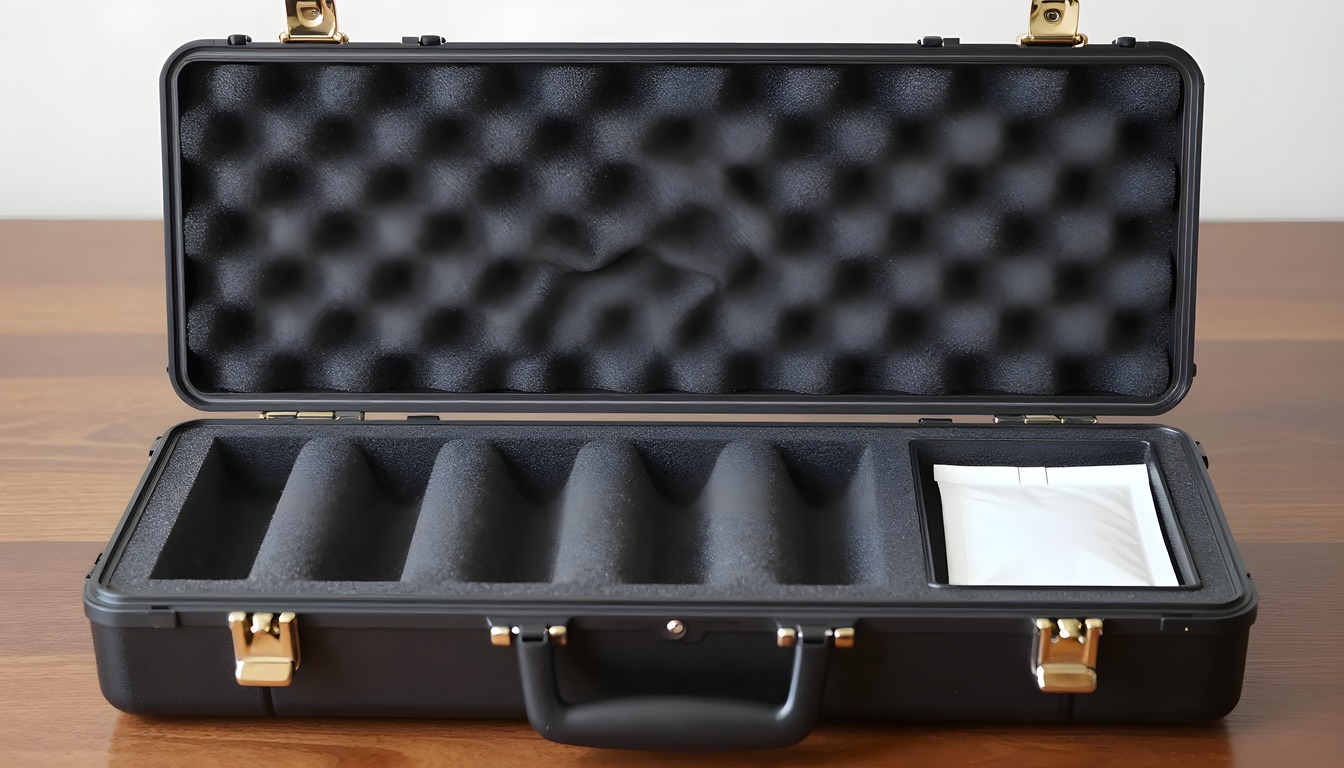
Locally generated editorial illustration of packing protection; it does not depict a tested case or approved airport configuration.
Cigars themselves can go in either bag
The TSA cigar entry lists “Yes” for carry-on and checked bags. It also retains the officer's final checkpoint decision. The entry concerns the cigars as baggage items; it is not a customs allowance.
Carry-on is a practical choice when you want to control handling and inspect the case yourself. That is a packing recommendation, not a claim that airlines guarantee a particular temperature or humidity in either compartment.
Protect the actual load
Use a case that fits the cigars without squeezing them. Leave space for the humidification system and secure any dividers. Close and reopen the packed case before the trip; pressure on caps or feet is a reason to reduce the load.
The travel humidor guide covers that physical setup. Keep sound supplied sleeves for handling protection if appropriate, as explained in cellophane on or off. Neither the case nor the sleeve supplies import permission.
Locally generated editorial illustration of luggage organization; the image is not evidence of screening acceptance.
Cutters have special instructions
TSA lists cigar cutters as generally permitted, with special carry-on instructions. It recommends checked baggage and gives officers discretion to prohibit an item they consider a security threat. Sharp items in checked bags should be sheathed or securely wrapped.
That is more conditional than “my cutter always gets through.” A permitted category does not guarantee a particular model will pass your checkpoint. Consider how much inconvenience or loss you would accept before taking an expensive cutter in cabin baggage.
Make the decision before the queue
If you are checking a bag, secure the cutter there according to TSA's instructions. If you are traveling with carry-on only, verify the actual tool and plan around the officer's discretion. Arranging a cutter at the destination is another straightforward option.
Inspect combination tools separately. A cigar accessory that also incorporates a knife or another implement raises a different question from an ordinary cutter. Do not rely on the cigar-cutter listing to clear every part of a multifunction tool.
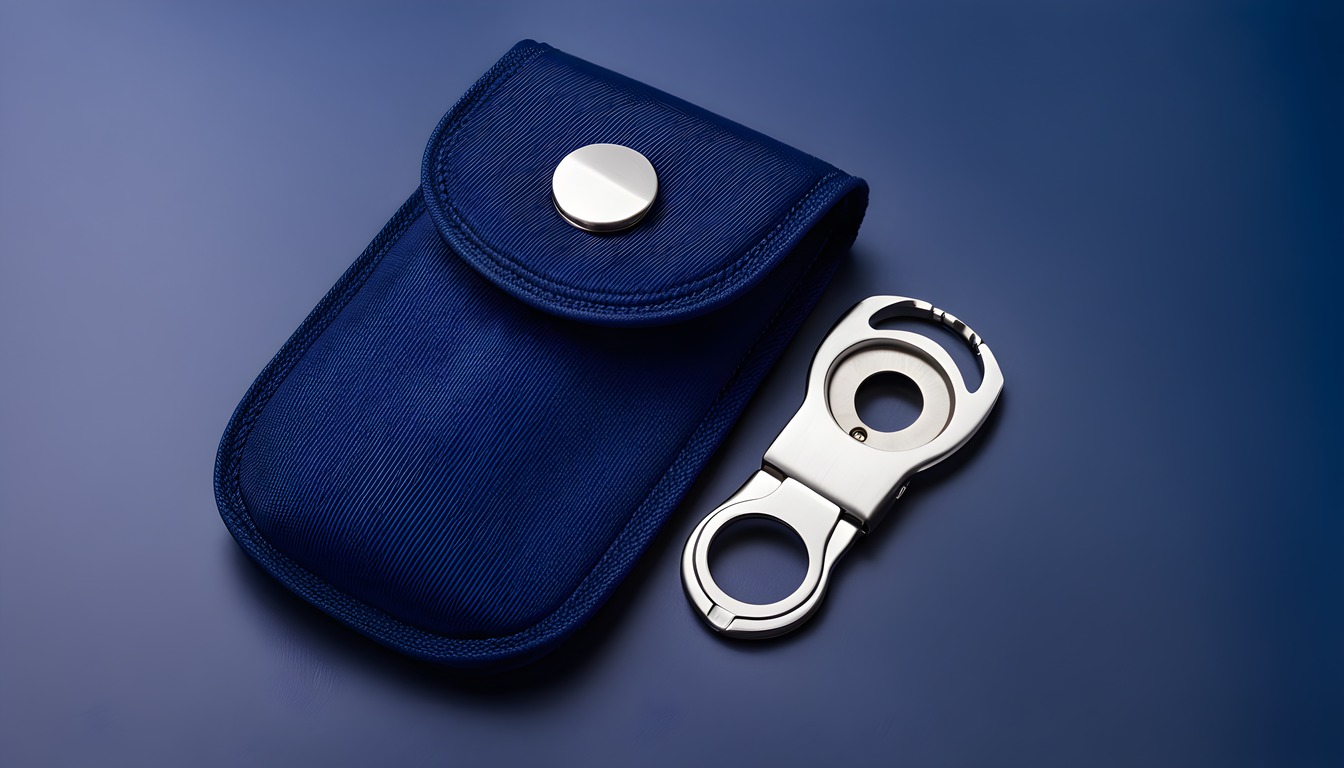
Locally generated editorial illustration of accessory organization; no pictured tool is certified for carry-on travel.
Torch lighters are the costly packing mistake
FAA's PackSafe lighter guidance prohibits torch, blue-flame, and jet-flame lighters in the cabin and checked baggage. Putting the torch into the checked suitcase does not solve the restriction. Leave it at home and arrange suitable equipment after arrival.
The same FAA page permits one ordinary absorbed-liquid or butane lighter in carry-on or on your person. Identify the lighter type carefully: “butane” describes fuel, while a blue jet flame identifies the prohibited torch category.
| Accessory | Simple US departure plan |
|---|---|
| Cigar cutter | Follow TSA special instructions; secure checked sharps |
| Torch or jet lighter | Leave at home |
| Permitted ordinary lighter | One in cabin, subject to the applicable rules |
| Fuel refill or extra equipment | Leave behind; arrange supplies at destination |
The last row is a planning recommendation, not an exemption analysis for every fuel product. A simple kit reduces the number of separate rules you must resolve. Buying or borrowing suitable equipment after arrival can be easier than carrying a complicated collection.
Prepare for a gate-checked carry-on
FAA requires a lighter in a carry-on bag to be removed and kept in the cabin when that bag is checked at the gate or planeside. Keep any permitted lighter accessible so a last-minute bag check does not bury it in the hold.
Battery-powered arc lighters have their own FAA conditions, including preventing accidental activation and no recharging aboard. If you intend to take one, read that exact section and your airline's rules. Do not treat every lighter as interchangeable with a disposable soft-flame model.
Check the destination before buying or packing
Your US departure screening answers only the departure question. Consult the arrival country's customs authority for tobacco quantities, age conditions, declaration requirements, and any origin restrictions. Use the rules for your traveler status and entry route.
For a concrete example, GOV.UK's Great Britain arrival guidance lists an allowance of 50 cigars when entering Great Britain from outside the UK. Mixed tobacco categories split the allowance; they do not each receive a full allowance on top.
Locally generated editorial illustration of destination storage; it does not depict a named country or an actual hotel stay.
Keep the geography and conditions attached
That Great Britain guidance concerns England, Wales, and Scotland. It is not a substitute for Northern Ireland's separate entry guidance. It also says travelers under 17 have no tobacco personal allowance, and excess goods require declaration and applicable tax and duty.
Do not borrow “50 cigars” from that page for another country, or “100 cigars” from a US return page for a foreign arrival. Write the authority and route next to each quantity in your packing note. The scope belongs with the number.
Returning to the US: quantity and eligibility matter
CBP's tobacco guidance limits returning residents' imports to quantities in the personal exemption for which they qualify. It lists no more than 100 cigars when arriving from outside the beneficiary-country and insular-possession categories, with the tobacco exemption for adults 21 or older.
Do not turn that into an unconditional allowance for every passenger. Traveler status, itinerary, age, and exemption eligibility matter. If you are a visitor, have a different route, or plan a larger quantity, ask CBP about your actual circumstances before purchasing.
A value allowance does not erase a tobacco limit
CBP's general exemption page describes value allowances and conditions, including declarations, qualifying trip length, and previous use of an exemption. Tobacco also has category-specific quantity rules. Read the two sets of conditions together.
Do not assume that offering to pay duty makes any excess tobacco import acceptable. The tobacco-specific page warns of consequences for quantities outside a permitted personal exemption. Resolve an unusual quantity with CBP rather than testing that assumption at arrival.
Cuban-origin cigars are a separate restriction
OFAC FAQ 769 says accompanied-baggage authorizations no longer include Cuban-origin alcohol or tobacco. It covers relevant travel from Cuba and third countries, as well as foreign travelers. A small personal quantity does not restore the excluded authorization.
That means a Cuban-origin cigar bought in another country is not cleared for US import merely because it was sold there. Nor does a duty-free receipt change its origin. Keep the origin question separate from where you bought it.
| Common assumption | What to verify instead |
|---|---|
| TSA allowed the cigars | Separate border admissibility |
| The shop called them duty-free | Destination and return rules |
| There are fewer than 100 | Exemption eligibility and origin |
| They were bought outside Cuba | Whether the tobacco is Cuban-origin |
Use original packaging and receipts to identify purchases. If provenance is unclear, do not infer a permissible origin from the brand name alone. Ask the seller for exact product information before deciding whether it belongs in your return luggage.
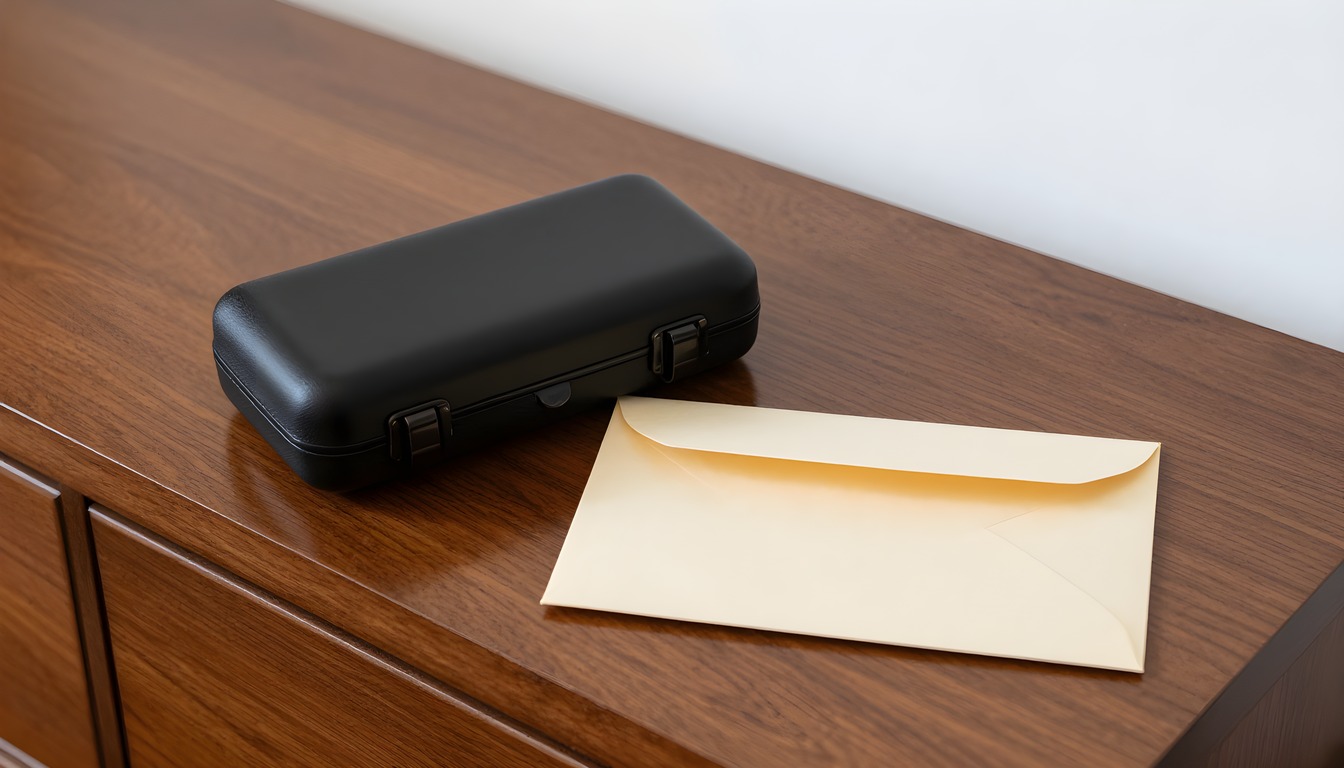
Locally generated editorial illustration of arrival records; the envelope is not an actual receipt or customs document.
Write an itinerary-specific checklist
For a US-to-Great-Britain trip with a US return, make separate rows for US departure, Great Britain entry, and US return. Attach the relevant source to each row. Include any connection that requires another screening or entry, and distinguish the rules applying there.
Write your actual cigar count and documented origins alongside those rows. Add other tobacco purchases before comparing allowances. A checklist that follows the route exposes a missing border question more clearly than a single note saying “cigars allowed.”
Make the arrival easy to explain
Keep an inventory of foreign purchases: line, quantity, price, currency, and origin where documented. Retain receipts with it. CBP's exemption guidance requires declaration; being below an allowance does not mean hiding the purchase is appropriate.
Before returning, check the remaining cigars against that inventory and the current rules. Remove prohibited items from the travel plan before departure using a lawful local option. Do not expect an airport retailer or an earlier checkpoint to settle your US import question.
A final packing note
- Confirm cigar quantities and origin for every border.
- Verify the exact cutter and lighter categories.
- Keep a permitted lighter accessible if a bag may be gate-checked.
- Retain purchase records and make required declarations.
On arrival, inspect the case and contents before returning them to regular storage. For an extended stay, maintain the enclosure as the travel humidor guide describes. The useful travel kit is one you can pack, explain, and maintain without guesswork.
Frequently Asked Questions
Can I take cigars in my carry-on?
Yes, TSA lists cigars as permitted in both carry-on and checked bags, subject to the officer's checkpoint decision. Pack them against crushing. For international travel, separately check the destination and return customs rules; TSA permission does not establish admissibility.
Can I fly with an empty torch lighter?
Do not plan to use an empty-fuel claim to bypass the category restriction. FAA lists torch, blue-flame, and jet-flame lighters as prohibited in cabin and checked baggage. Leaving the torch at home is the straightforward plan.
Are 100 cigars always duty-free when returning to the US?
No. The figure belongs to particular CBP personal-exemption circumstances, with traveler, age, route, and eligibility conditions. Tobacco quantity rules and value allowances are distinct. Check the actual guidance, and ask CBP before attempting an unusual quantity.
Can I bring Cuban cigars home if I buy them in Mexico?
The purchase location does not change Cuban origin. OFAC's accompanied-baggage guidance excludes Cuban-origin tobacco from the relevant import authorizations, including third-country purchases. A personal-use quantity or duty-free sale does not override that restriction.