If cigar wrappers were wines, Maduro would be the bold, full-bodied Amarone -- dark, rich, sweet, complex, and utterly captivating once you develop the palate to appreciate it. I have spent years exploring the Maduro spectrum, and I can tell you that no other wrapper category offers the same depth of flavor, the same range of expression, or the same sheer sensory satisfaction.
The word "maduro" means "mature" or "ripe" in Spanish, and that name tells you everything you need to know about the philosophy behind these dark, luscious wrappers. Maduro tobacco has been taken further than other wrappers -- fermented longer, processed more carefully, and allowed to develop flavor complexity that lighter wrappers simply cannot match.
What Makes a Wrapper Maduro?
At its core, Maduro refers to the degree of fermentation, not the tobacco varietal or origin. Any tobacco can theoretically be made into a Maduro wrapper, though some varietals handle the process better than others.
The key factors that create a Maduro wrapper:
Extended fermentation: Maduro wrapper leaves undergo significantly longer and more intense fermentation than their lighter counterparts. While a Connecticut shade wrapper might ferment for 30-45 days, a Maduro wrapper can undergo fermentation cycles lasting 6 months to over a year. During this extended process, natural sugars caramelize through Maillard reactions (the same chemistry that gives a seared steak its crust), harsh nitrogen compounds break down and dissipate as ammonia, and the leaf darkens progressively from brown to chocolate to nearly black.
Higher priming selection: Maduro wrappers typically come from the upper primings of the tobacco plant (viso and ligero), where leaves are thicker, oilier, and have absorbed more sunlight. These thicker leaves can withstand the stress of extended fermentation without disintegrating.
Controlled heat: Fermentation generates heat through microbial activity, and Maduro production requires carefully managing temperatures that are higher than those used for lighter wrappers. The heat accelerates the chemical reactions that develop the signature sweetness and depth.
For a complete overview of the fermentation science, our fermentation and aging guide covers the full process from harvest to humidor.
The Major Maduro Tobacco Types
Not all Maduros are created equal. The starting tobacco makes an enormous difference in the final product:
Connecticut Broadleaf
Grown in the same Connecticut River Valley as its shade-grown cousin, but in full sun and with a completely different result. Broadleaf is thick, dark, and toothy (a rough, slightly bumpy texture that indicates high oil content). It is the premier American Maduro wrapper.
Flavor profile: Dark chocolate, espresso, molasses, earth, and a natural sweetness that is almost dessert-like. Rich and bold without being harsh.
Famous cigars using it: Liga Privada No. 9 (the gold standard for Broadleaf Maduro), Padron Family Reserve, many Drew Estate lines.
I think of Connecticut Broadleaf the way I think of a great aged Port -- dark, sweet, concentrated, and utterly satisfying after a rich meal.
San Andres (Mexico)
Grown in the San Andres Valley of Veracruz, Mexico, this dark, naturally oily tobacco has become one of the most popular Maduro wrapper choices in the modern cigar industry.
Flavor profile: Chocolate, coffee, dried fruit, earth, with a slightly drier sweetness than Broadleaf. Often has a subtle spice that Broadleaf typically lacks.
Famous cigars using it: Many Rocky Patel lines, Crowned Heads, Room 101. San Andres has become the go-to Maduro wrapper for many boutique brands.
San Andres is my Malbec analogy -- dark fruit, chocolate, and earth with a structured, slightly tannic quality that adds definition.
Brazilian Mata Fina (Arapiraca)
Grown in the Bahia region of Brazil, this tobacco produces a distinctive Maduro wrapper with its own unique character.
Flavor profile: Sweet, slightly acidic, with notes of dried plum, dark chocolate, and a faintly floral quality. Less earthy than Broadleaf, more aromatic.
Famous cigars using it: CAO Brazilia, several Villiger lines.
Habano Maduro (Various Origins)
Cuban-seed Habano tobacco, particularly from Nicaragua and Honduras, that has been subjected to extended fermentation to reach Maduro darkness.
Flavor profile: Complex -- retaining the natural pepper and spice of Habano tobacco while adding the sweetness and depth of Maduro processing. These can be powerful.
Famous cigars using it: Padron 1926 Serie Maduro, My Father Le Bijou 1922, Oliva Serie V Maduro.
The Maduro Flavor Spectrum
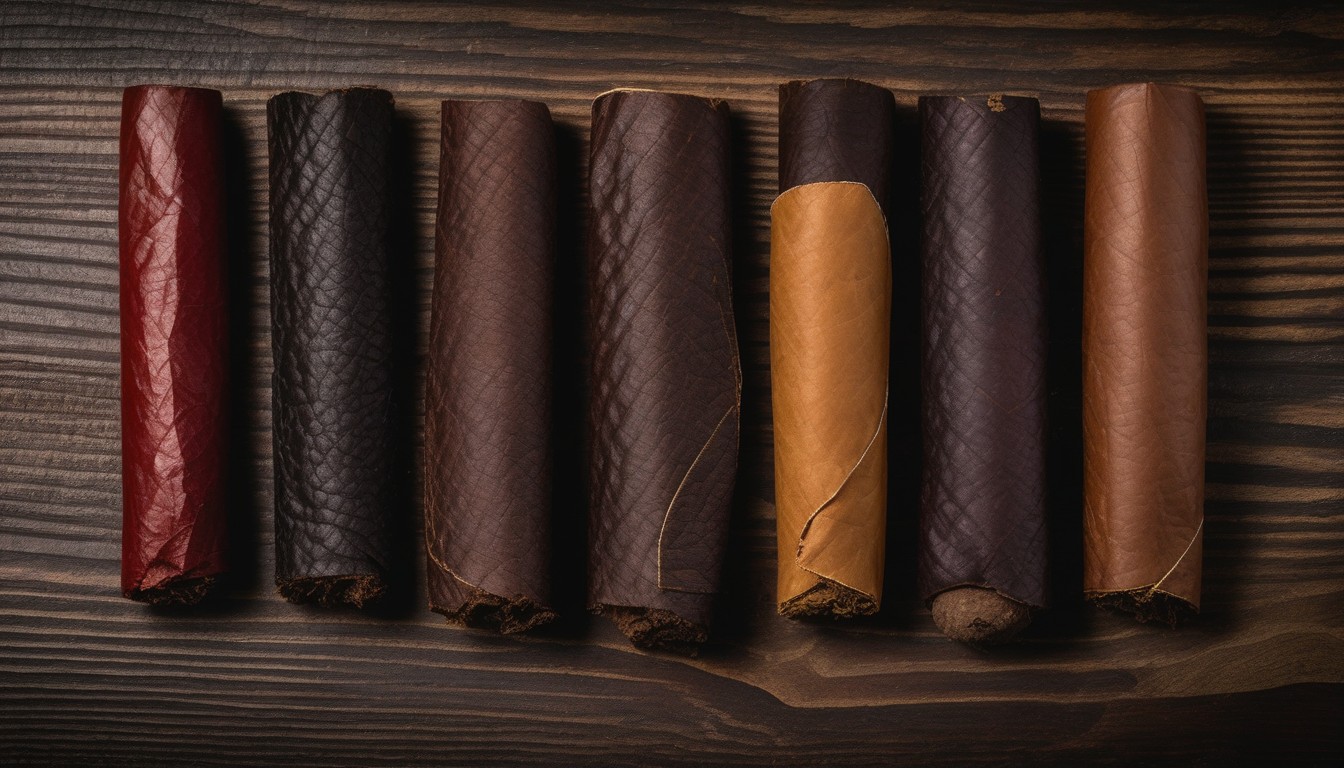
One of the biggest misconceptions about Maduro cigars is that they all taste the same -- dark, sweet, and heavy. In reality, the Maduro category is as diverse as any other wrapper type. Here is the flavor spectrum:
Sweet Maduros: Cigars where the caramelized sugars take center stage. These taste like dark chocolate, coffee with cream, molasses, and dried fruit. The Liga Privada No. 9 is the benchmark here -- read our Liga Privada review for a detailed breakdown of what a sweet Maduro can deliver.
Earthy Maduros: Cigars where the fermentation has developed deep, soil-like qualities alongside the sweetness. Think leather, loam, mushroom, cedar, and dark cocoa. Padron's Maduro offerings tend toward this profile.
Spicy Maduros: Cigars where the underlying tobacco's pepper and spice punch through the Maduro sweetness. Habano Maduro wrappers often deliver this -- sweet on the front, peppery on the finish. The Padron 1926 Maduro is a perfect example, as our Padron 1926 review discusses.
Complex Maduros: The best Maduros deliver all of the above in layers -- sweetness, earth, spice, and more, all shifting and evolving throughout the smoke. These are the cigars that make you stop mid-puff and pay attention.
Maduro vs. Natural: The Great Debate
Many cigar lines are available in both Natural (lighter wrapper) and Maduro versions. This makes for an excellent comparison exercise:
Padron 1964 Anniversary -- The Natural version uses a sun-grown Habano wrapper that delivers coffee, leather, and cedar with moderate spice. The Maduro version adds dark chocolate, molasses, and a velvety sweetness that rounds out the edges. Both are exceptional. I personally reach for the Maduro more often, but the Natural has a vibrancy and spice that the Maduro smooths over.
Arturo Fuente Hemingway -- The Natural uses a beautiful Cameroon wrapper with toasty sweetness and cedar. There is not an official Maduro version, but the comparison with the Hemingway Short Story review illustrates how different wrapper choices create entirely different experiences from similar filler tobaccos.
My Father -- The Natural offerings have a bright, peppery quality with red fruit and spice. The Maduro versions trade that brightness for depth -- dark cocoa replaces red pepper, coffee replaces citrus zest.
Neither Natural nor Maduro is objectively better. They are different moods, different occasions, different cravings. A well-stocked humidor should have both.
How to Identify Quality Maduro Wrappers
Not all dark wrappers are genuine Maduros. Some manufacturers use dyes, fast-tracked fermentation, or dark binder leaves passed off as Maduro wrappers. Here is how to spot the real thing:
Oiliness: A genuine Maduro wrapper should have a visible sheen -- natural oils that have risen to the surface during fermentation. The leaf should look like it has been polished. Dry, dull dark wrappers may be artificially darkened.
Aroma: Smell the unlit cigar. A quality Maduro should give you chocolate, coffee, dried fruit, and a natural sweetness. If it smells flat, chemical, or like nothing at all, be cautious.
Texture: Run your fingers along the wrapper. It should feel smooth and slightly oily, possibly with a slight toothiness (small bumps). If it feels papery or brittle, the leaf may not have been properly fermented.
Consistency: The color should be relatively uniform across the cigar. Blotchy, uneven coloring can indicate inconsistent fermentation or poor leaf selection.
Ash: When you smoke it, quality Maduro wrappers produce firm, light-to-medium gray ash. If the ash is black, crumbly, and the cigar tastes bitter, the tobacco was likely under-fermented.
Top Maduro Cigars: My Recommendations
After years of tasting my way through the Maduro category, these are the cigars I keep coming back to:
Liga Privada No. 9 -- The Connecticut Broadleaf masterpiece. Dark, sweet, creamy, and impossibly smooth for its strength. This is the cigar that converted me into a Maduro enthusiast.
Padron 1926 Serie No. 9 Maduro -- Possibly the greatest cigar ever made. Dark chocolate, espresso, leather, spice, and a finish that lasts for minutes. Expensive, and worth every cent.
My Father Le Bijou 1922 -- A Nicaraguan Maduro that delivers waves of cocoa, dark fruit, and pepper. Full-bodied, complex, and beautifully constructed.
Oliva Serie V Melanio Maduro -- Excellent value for the quality. Creamy, chocolatey, with a pleasant spice that keeps things interesting.
Arturo Fuente Anejo -- A limited release featuring Connecticut Broadleaf wrappers that have been aged in cognac barrels. The result is extraordinary -- sweet, complex, with a subtle brandy-like quality.
Rocky Patel Vintage 1990 -- Affordable and consistent. A great introduction to Maduro smoking with chocolate, coffee, and earth notes.
Pairing Maduro Cigars
Maduro wrappers pair brilliantly with bold beverages that can stand up to their rich flavors:
- Bourbon or Rye Whiskey -- The caramel and vanilla notes in bourbon complement Maduro's chocolate and sweetness perfectly. A match made in heaven.
- Dark Rum -- Aged rum and Maduro cigars share flavor DNA -- both develop sweetness, spice, and depth through aging.
- Port or Madeira -- Fortified wines with their own dark fruit and sweetness are natural companions.
- Espresso -- The coffee notes in many Maduros harmonize beautifully with actual coffee.
- Dark Chocolate -- This creates an almost overwhelming richness, but it is fantastic for dessert.
- Stout or Porter -- Dark beers with roasted malt character echo the Maduro's dark, sweet profile.
As a former sommelier, I find pairing Maduro cigars endlessly rewarding. The sweetness, body, and complexity give you so much to work with.
The Maduro Misconception: Darkness Does Not Equal Strength
This is crucial and I cannot stress it enough: a dark Maduro wrapper does not mean the cigar is strong. The extended fermentation that darkens the leaf also breaks down many of the harsh, high-nicotine compounds in the tobacco. A well-made Maduro can actually be smoother and gentler than a lighter wrapper on a cigar stuffed with potent filler.
Many beginners avoid Maduros because they assume dark means overwhelming. Some of the most approachable cigars I know are mild-to-medium Maduros -- the sweetness makes them easy to enjoy even if you are relatively new to cigars.
Do not let color intimidate you. The darkness is flavor, not necessarily firepower.
Final Thoughts
Maduro wrappers represent, in my opinion, the pinnacle of what tobacco fermentation and processing can achieve. The transformation from a raw, green leaf into a dark, oily, sweet-yet-complex wrapper is one of the most remarkable processes in the food and beverage world -- comparable to the transformation of grapes into aged wine or green coffee beans into a perfect roast.
If you have never explored the Maduro category, start with a Liga Privada No. 9 or a Padron 1964 Maduro. Light it after a good meal, pour something dark and rich alongside it, and pay attention to the layers of flavor. I think you will discover what I discovered years ago: that Maduro wrappers offer a depth and richness that no other wrapper category can match.
And once you have developed a taste for Maduro, there is an enormous world to explore. From the chocolate sweetness of Connecticut Broadleaf to the spicy complexity of Habano Maduro to the aromatic charm of Brazilian Mata Fina, every Maduro tobacco tells a different story. The journey is endlessly rewarding.