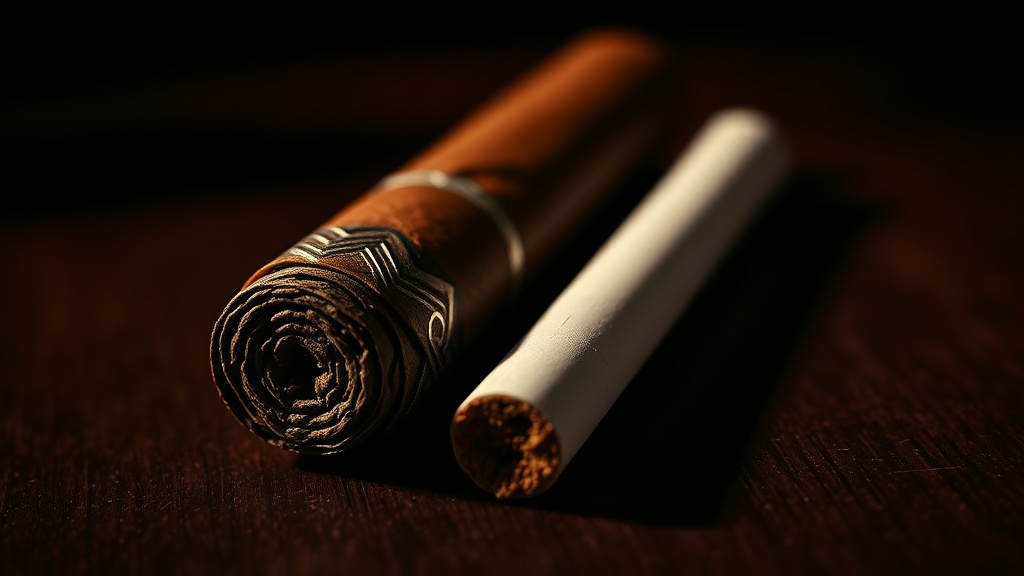
I can't tell you how many times I've heard someone say, "Oh, you smoke cigars? That's basically the same as cigarettes, right?" And every time, I have to stop myself from launching into a twenty-minute rant. (My friends have learned to avoid the topic at dinner parties.)
But look, I get it. If you've never been around premium cigars, the distinction isn't obvious. They're both tobacco, they both produce smoke, and they both come with health warnings. So what's the big deal?
Here's the thing -- the differences between cigars and cigarettes are enormous. We're talking about two completely different products, two different cultures, and honestly, two different philosophies about what it means to enjoy tobacco. It's like comparing a craft bourbon sipped neat to a shot of well vodka at last call. Technically both alcohol, but come on.
What's Actually Inside
Let's start with what you're smoking, because this is where it gets interesting.
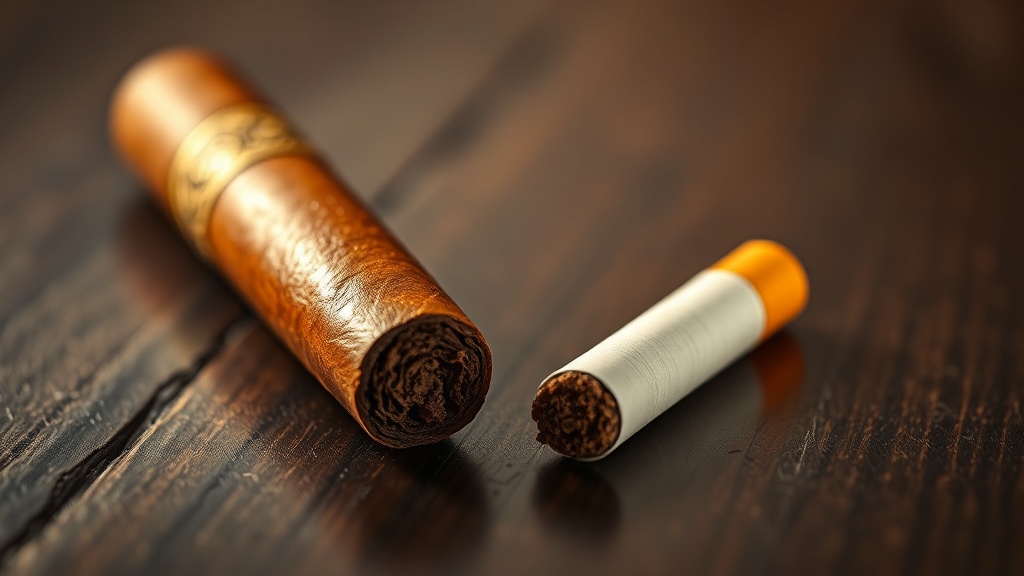
A premium cigar is made from three components: the filler (the core blend of whole tobacco leaves), the binder (a leaf that holds the filler together), and the wrapper (the gorgeous outer leaf that gives the cigar its appearance and contributes a surprising amount of flavor). That's it. Three parts, all whole-leaf tobacco, zero additives. My grandfather's shop in Ybor City -- he'd roll cigars right in front of you, and you could see every single leaf that went in.
Cigarettes? They're a different animal entirely. The tobacco inside a cigarette is chopped, processed, and reconstituted. Then manufacturers add a cocktail of chemicals -- we're talking about hundreds of additives including things like ammonia, which speeds up nicotine absorption. There's also a paper wrapper and a filter, neither of which you'll find on a cigar. The whole thing is designed for one purpose: quick, efficient nicotine delivery.
I'm not saying cigars are "healthy" -- let me be super clear about that. But pretending they're the same product is like saying a grass-fed ribeye and a gas station hot dog are both just "beef."
How They're Made
This might be my favorite part of the whole conversation, because it really highlights the gap between these two worlds.
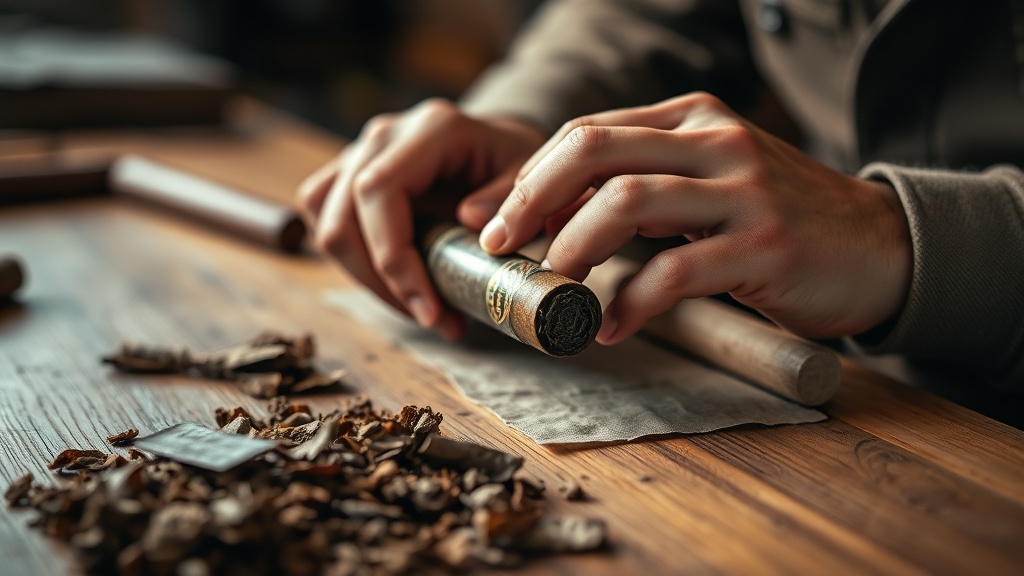
Premium cigars are hand-rolled. An experienced torcedor (that's cigar-roller in Spanish, for the uninitiated) sits at a table and rolls each cigar individually, using skill that takes years to develop. My abuela used to say the best rollers in Cuba had "hands that could hear the tobacco" -- a little dramatic, sure, but she wasn't entirely wrong. A skilled roller can produce maybe 100 to 200 cigars per day, depending on the size and complexity.
Cigarettes come off machines. Fast ones. A single cigarette-making machine can produce about 20,000 cigarettes per minute. Per minute! That's the mass-production efficiency that makes a pack of cigarettes cost a few bucks while a single premium cigar might run you $10 to $30 or more.
There are machine-made cigars out there too -- the ones with plastic tips you see at gas stations. But calling those "cigars" is one of my personal pet peeves. It's like calling a frozen pizza a Neapolitan margherita. Technically in the same food group, but worlds apart.
How You Actually Smoke Them
Okay, this is the part that trips up almost every new cigar smoker, and I'll admit, it tripped me up too. Back when I was starting out, I lit my first cigar at a friend's wedding and inhaled like I was smoking a cigarette. I turned green in about thirty seconds. Not my finest moment. The bride was not amused.
You don't inhale cigar smoke. Full stop. You draw the smoke into your mouth, savor the flavors on your palate, and exhale. It's a tasting experience, not a nicotine-delivery system. Think of it like wine tasting -- you swirl, you taste, you appreciate the complexity. Nobody's chugging a 2015 Burgundy.
Cigarettes are designed to be inhaled. The smoke goes straight into your lungs, delivering nicotine rapidly to the bloodstream. That's the whole point -- quick hit, fast absorption, rinse and repeat every hour or so.
This difference in smoking technique actually changes everything about the experience. A cigar takes 45 minutes to two hours to enjoy. You're sitting down, you're relaxed, maybe you've got a good pour of rum or a cup of Cuban coffee. A cigarette takes five to seven minutes. You're probably standing outside your office building, checking your phone.

The Flavor Thing
And here's where I really start to geek out.
Cigarettes taste like... well, cigarettes. There's not a ton of complexity happening there. Menthol ones taste minty. That's about the range.
Cigars? Oh, we're in a whole different universe. A well-made cigar can deliver flavors of dark chocolate, espresso, cedar, leather, cream, pepper, dried fruit, honey, nuts -- I've even picked up flavors that reminded me of my grandmother's arroz con leche. And the flavors evolve as you smoke. The first third might be creamy and mild, the second third develops earthier notes, and the final third can hit you with a full-bodied burst of pepper and spice.
This flavor complexity comes from the tobacco itself -- where it was grown, how it was fermented and aged, which leaves were selected for the blend. No artificial flavors needed. (Hot take: flavored cigars are fine for beginners, but you're cheating yourself out of what tobacco can actually do on its own. Yeah, I said it.)
Nicotine, Addiction, and the Health Stuff
Let's address the elephant in the room, because this matters.
Cigars do contain more total nicotine than cigarettes -- a single cigar can have as much nicotine as an entire pack of cigarettes. But because you don't inhale cigar smoke, the nicotine absorption is dramatically different. Cigar smokers absorb nicotine primarily through the mucous membranes in the mouth, which is a much slower delivery system than lung absorption.
Most cigar enthusiasts I know -- myself included -- don't smoke daily. Maybe a few cigars a week, sometimes fewer. Cigarette smokers typically go through a pack a day (about 20 cigarettes). The frequency and the inhalation create a very different addiction profile.
I'm not a doctor, and I'm definitely not going to sit here and tell you cigars are safe. They're not. All tobacco products carry health risks. But the risk profiles are genuinely different, and pretending they're identical doesn't help anyone make informed choices.
The Cultural Divide
This is where things get personal for me.
Cigarette culture, at least in the U.S., has become increasingly marginalized. Smoking breaks are rushed, smokers huddle outside in the cold, and there's a general social stigma attached to it. I'm not making a judgment call here -- that's just the reality.
Cigar culture is something else entirely. It's communal. It's celebratory. You smoke a cigar to mark a birth, a wedding, a promotion, or just a Tuesday evening when the weather's nice. Growing up in Tampa, I watched my grandfather share cigars with customers like he was sharing stories -- and he was, because every cigar led to a conversation.
The cigar lounge is a real social institution. You sit down, you light up, and suddenly you're talking to a stranger about their kids, their job, their favorite blend. I've made genuine friendships in cigar lounges. It's not something you typically hear about cigarette breaks.
Though I'll say this -- there's a snobbery problem in cigar culture that drives me absolutely crazy. People who gatekeep beginners, who mock someone for enjoying a flavored cigar, or who insist you need to spend $30 a stick to "really" enjoy the hobby? Those people are the worst. A $7 cigar enjoyed on your back porch is just as valid as a $50 cigar in a leather chair. Fight me.
What It'll Cost You
Let me break down the numbers, because this surprises a lot of people.
A pack of cigarettes runs anywhere from $6 to $13 depending on where you live (New York and California smokers, I feel your pain). A pack-a-day habit costs roughly $2,500 to $5,000 per year.
A decent premium cigar starts around $5 to $8 for something like an Arturo Fuente Curly Head or a Padron 2000. Mid-range runs $10 to $20 -- your Oliva Serie V, your My Father Connecticut. Premium territory is $20 to $50, and ultra-premium (Padron 1926, OpusX, Davidoff) goes higher. If you smoke three to four cigars per week at an average of $12 each, you're looking at roughly $1,800 to $2,500 per year.
So surprisingly, a moderate cigar habit can cost about the same as or less than a daily cigarette habit. But you're getting hand-crafted whole-leaf tobacco instead of processed, additive-laden filler. Value's a personal calculation, though.
So What's the Point?
The bottom line -- and I know I've been going on a while here, so thanks for sticking with me -- is that cigars and cigarettes share a base ingredient and basically nothing else. Different construction, different materials, different smoking technique, different flavor experience, different cultural context, different cost structure.
If someone tells you they're the same thing, just smile and nod. Or do what I do and invite them to your local cigar lounge for an education. My grandfather always said the best argument is a good cigar and an hour of conversation. He wasn't wrong about much, honestly.
Now if you'll excuse me, I've got a Padron 3000 Maduro and a colada calling my name. It's been that kind of week.