
We analyzed our entire database of 291 cigars across 62 brands to answer the questions every cigar enthusiast asks but nobody has data for. Which drinks actually pair best with which cigars? Does origin really predict flavor? Is there a price sweet spot? We ran the numbers on every cigar in our catalog — origin, strength, wrapper, price, rating, and flavor profile — and the results challenged several assumptions I've held for years.
Two different kinds of number appear below, and it matters which is which. The origin, strength, price, wrapper and flavour figures are measured directly from those 291 records. The beverage percentages are not measurements: they are what our strength-based pairing rule assigns, so they restate the catalog's strength mix rather than observe what anyone actually drank. Both are stated plainly, and neither is opinion.
The Pairing Matrix: What the Data Shows
Let's start with the question that drives most cigar-and-beverage conversations: what goes with what?
We applied our published strength-based pairing rule to every cigar in the database. The rule is fixed: full-bodied cigars map to dark rum and peated scotch, medium to bourbon, mild to white wine, and everything short of full to coffee. Each percentage below is therefore the share of the catalog at the matching strength, not an independent observation — the pairing shares and the strength shares are the same numbers seen from two angles.
The most universal pairing is coffee. 58.8% of all cigars in our database pair well with some form of coffee or espresso, spanning every strength category from mild Connecticut wrappers to full-bodied Nicaraguan puros. No other beverage covers that range. Whiskey and scotch cover 55.3% of the catalog but concentrate heavily in the full and medium-full segments. Bourbon, despite its reputation as the default cigar companion, is the optimal pairing for only 30.9% of cigars — specifically, medium-bodied smokes.
Here's the pairing breakdown by strength:
| Strength | Best Spirit Pairing | Best Non-Spirit | Share of catalog |
|---|---|---|---|
| Full (119 cigars) | Peated Scotch, Dark Rum | Imperial Stout, Dark Chocolate | 40.9% |
| Medium-Full (42 cigars) | Single Malt Scotch | Espresso, Aged Cheese | 14.4% |
| Medium (90 cigars) | Bourbon | Dark Coffee, Brown Ale | 30.9% |
| Mild (39 cigars) | White Wine | Light Coffee, Chamomile Tea | 13.4% |
These four categories cover 290 of the 291 records. One sampler is catalogued as Varied strength and is excluded from every strength-based percentage, which is why the column sums to 99.6% rather than 100%.
Rum is underrated, though this number cannot prove it. Rum maps to 40.9% of the catalog because the rule assigns it every full-bodied cigar, and 40.9% of our cigars are full-bodied; that is arithmetic, not evidence. What the data does support is narrower and still useful: full-bodied cigars are the largest single block in the catalog, and rum rarely gets mentioned first in pairing conversations about them. Dark rum's caramel and molasses notes create natural bridges to the coffee, cocoa, and leather flavors that dominate full-bodied profiles. Check our rum pairing guide for specific recommendations.
Origin Predicts Your Pairing
Broken down by country of origin, the same rule produces different beverage shares because the three origins have different strength mixes. Read each row as a strength profile in beverage clothing: the whiskey row is each origin's medium-full plus full share, the bourbon row its medium share, the rum row its full share, and the wine row its mild share.
| Beverage | Nicaragua | Dominican Republic | Honduras |
|---|---|---|---|
| Whiskey/Scotch | 60.1% | 45.3% | 65.4% |
| Bourbon | 26.1% | 43.8% | 26.9% |
| Coffee/Espresso | 54.3% | 70.3% | 53.8% |
| Rum | 45.7% | 29.7% | 46.2% |
| Wine | 13.8% | 10.9% | 7.7% |
| Cheese | 40.4% | 59.4% | 46.2% |
Dominican cigars are coffee-and-cheese cigars. 70.3% pair best with coffee or espresso, and 59.4% pair well with aged cheese. That's because Dominican cigars skew medium-bodied (43.8% of Dominican cigars are medium strength), with cream and cedar as their dominant flavor notes. The smooth, nuanced profiles don't need a bold spirit to compete — they need something that complements rather than overwhelms.
Nicaraguan and Honduran cigars are whiskey-and-rum territory. Both origins have 60%+ compatibility with whiskey/scotch pairings, driven by their higher concentration of full-bodied cigars. Nicaragua leads with 45.7% of its cigars pairing with dark rum — no surprise given the shared Caribbean terroir between Nicaraguan tobacco and Caribbean sugarcane. Explore our bourbon pairing guide and scotch pairing guide for specific bottle-to-cigar matches.
Origin Shapes Everything
Nicaragua dominates the premium cigar world. Our data confirms it: 64.6% of all cigars in our catalog originate from Nicaragua — 188 out of 291, produced by 49 different brands. The Dominican Republic comes second with 22.0% (64 cigars, 15 brands), followed by Honduras at 8.9% (26 cigars, 11 brands). That accounts for 278 of the 291 records. The remaining 13 are one Brazilian cigar and 12 sampler or bundle listings catalogued as Various, and neither group is large enough to carry a percentage, so both sit out the origin comparisons below.
But market share doesn't tell the whole story. Here's what origin actually predicts:
Strength by Origin
| Origin | Mild | Medium | Medium-Full | Full |
|---|---|---|---|---|
| Nicaragua (188) | 13.8% | 26.1% | 14.4% | 45.7% |
| Dominican Republic (64) | 10.9% | 43.8% | 15.6% | 29.7% |
| Honduras (26) | 7.7% | 26.9% | 19.2% | 46.2% |
Nicaragua and Honduras are full-bodied countries. Nearly half of each country's output falls in the full strength category. The Dominican Republic is the medium-bodied king — 43.8% of Dominican cigars hit the medium mark, compared to just 26.1% from Nicaragua. If you're shopping for a mild or medium smoke, Dominican is your best statistical bet.
Flavor Fingerprints
Each origin has a distinct flavor signature in our data:
Nicaragua (188 cigars): Coffee (69.7%), Pepper (45.2%), Cedar (41.0%), Cream (38.3%), Earth (36.7%), Cocoa (35.1%). The Nicaraguan profile is bold and coffee-forward. Nearly 70% of Nicaraguan cigars feature coffee as a primary flavor note — the highest of any origin.
Dominican Republic (64 cigars): Cedar (67.2%), Cream (59.4%), Coffee (48.4%), Spice (37.5%), Nuts (29.7%), Cocoa (28.1%). Dominican cigars lead with cedar and cream — the classic "smooth" profile. They're 50% more likely to feature cream notes than Nicaraguan cigars.
Honduras (26 cigars): Coffee (76.9%), Pepper (50.0%), Earth (50.0%), Leather (50.0%), Spice (46.2%), Cedar (38.5%). Honduras punches hard. Its cigars are the most likely to feature leather and earth notes, giving them a rugged, savory character.
Browse our origin map to explore cigars by country interactively, or dive into the brand index to find producers from each region.
Rating and Price by Origin
| Origin | Avg Rating | Avg Price | Median Price |
|---|---|---|---|
| Dominican Republic | 4.51 | $171.76 | $154.99 |
| Nicaragua | 4.45 | $129.88 | $119.99 |
| Honduras | 4.33 | $104.03 | $109.99 |
Dominican cigars rate highest on average — 4.51 versus 4.45 for Nicaragua. But they also cost 32% more on average. That price premium comes partly from heritage brands like Arturo Fuente (avg rating 4.59), Davidoff (avg rating 4.67), and Ashton (avg rating 4.60), all of which produce Dominican cigars at premium price points.
Nicaragua offers the best value proposition: nearly identical quality ratings at $42 less per box on average. Brands like My Father (avg rating 4.62, avg price $152), Oliva (avg rating 4.49, avg price $121), and AJ Fernandez (avg rating 4.42, avg price $86) deliver premium quality without the heritage markup.

The Price-Quality Equation
Does spending more get you a better cigar? The short answer: yes, but with diminishing returns.
The correlation between price and rating is 0.80 — a strong positive relationship. Across all 291 cigars, higher price reliably predicts higher ratings. But the data tells a more nuanced story when you break it into tiers:
| Price Tier | Cigars | Avg Rating | Rating Per Dollar* |
|---|---|---|---|
| Under $80 | 51 (17.5%) | 4.19 | 68.7 |
| $80-$99 | 52 (17.9%) | 4.30 | 45.2 |
| $100-$149 | 116 (39.9%) | 4.48 | 34.9 |
| $150-$199 | 45 (15.5%) | 4.63 | 26.3 |
| $200-$299 | 20 (6.9%) | 4.74 | 19.1 |
| $300+ | 7 (2.4%) | 4.84 | 13.0 |
*Rating per dollar = (rating / price) × 1000. Higher is better value.
The sweet spot is $100-$149 per box. This bracket contains 39.9% of our entire catalog — 116 cigars — with an average rating of 4.48. That's a massive jump from the sub-$80 tier (4.19 avg) and only 0.15 points below the $150-$199 tier. You get 93% of the quality of a $175 cigar at 74% of the price.
The $300+ tier averages 4.84 — the highest rating of any bracket — but contains just 7 cigars, all from Arturo Fuente (Opus X line), Padron (1926 and Family Reserve), and Liga Privada (Feral Flying Pig). These are exceptional cigars, but the jump from 4.48 to 4.84 costs you roughly 3x the price. Explore our full price index to filter by budget.
Strength Costs Money
There's a hidden price driver that most smokers don't think about:
| Strength | Avg Price | Avg Rating |
|---|---|---|
| Mild | $98.02 | 4.27 |
| Medium | $117.88 | 4.36 |
| Medium-Full | $140.70 | 4.50 |
| Full | $155.09 | 4.55 |
Full-bodied cigars cost 58% more than mild cigars on average. This isn't just because bold cigars use premium tobacco — it's because the full-bodied segment is where luxury brands concentrate their top-tier offerings. The Padron 1926 series, Opus X, and Liga Privada No. 9 are all full-bodied and all command super-premium prices.
For value-conscious smokers, medium-bodied cigars at $117.88 average deliver the most balanced quality-to-price ratio while offering genuine complexity. See our rankings page for top-rated options at every price point.
What Your Wrapper Really Tells You
Wrapper leaf accounts for the majority of a cigar's visual identity and contributes significantly to flavor. We analyzed 12 wrapper categories across our catalog. Here's what the data reveals:
Wrapper Rating and Price
| Wrapper Type | Count | Avg Rating | Avg Price | Full/Med-Full % |
|---|---|---|---|---|
| Habano Oscuro | 10 | 4.67 | $179.99 | 100% |
| Mexican San Andres | 9 | 4.54 | $143.32 | 89% |
| Sun Grown | 13 | 4.48 | $134.61 | 69% |
| Sumatra | 15 | 4.47 | $136.99 | 60% |
| Habano | 63 | 4.49 | $137.13 | 76% |
| Cameroon | 14 | 4.46 | $124.85 | 7% |
| Corojo | 11 | 4.46 | $129.08 | 91% |
| Broadleaf/Maduro | 62 | 4.45 | $129.05 | 79% |
| Connecticut Shade | 20 | 4.32 | $106.39 | 0% |
Habano Oscuro wrappers rate highest (4.67 average) and command the biggest price premium — 34% above the catalog average. Every single Habano Oscuro cigar in our database is full or medium-full bodied. These are the dark, oily wrappers found on cigars like the My Father Le Bijou 1922, and they deliver intense flavor with a natural sweetness that balances the strength.
Connecticut Shade sits at the opposite end: lowest average rating (4.32) and lowest average price ($106.39), with zero full-bodied cigars. But that's not a quality judgment — Connecticut Shade serves a different purpose. It's the wrapper of choice for mild, creamy morning cigars that pair with light coffee rather than competing with bourbon.
Corojo is the sleeper. 91% of Corojo-wrapped cigars are full or medium-full bodied, but they average $129 — well below the Habano Oscuro premium. If you want bold flavor without the Habano Oscuro price tag, Corojo is the data-backed move. Brands like Camacho and Alec Bradley specialize in Corojo wrappers.
The price premium tells a clear story: darker, more complex wrappers cost more. Habano Oscuro commands a 34% premium, while Connecticut Shade sits 20% below average. Read our maduro wrapper guide and Connecticut shade guide for deeper dives into these two extremes.
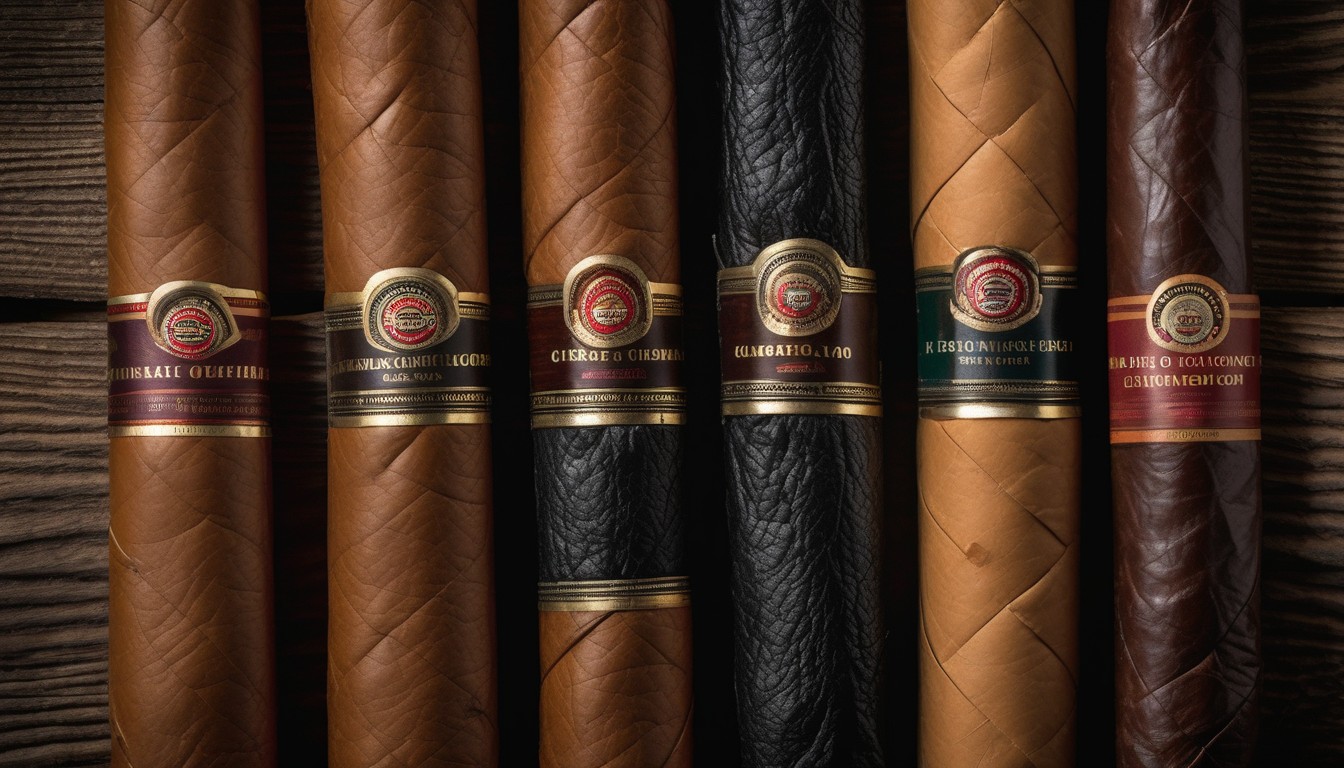
Brand Consistency: Who Delivers Every Time?
Rating averages are useful, but consistency matters more for repeat buyers. A brand that averages 4.5 with a range of 4.0-5.0 is less reliable than one averaging 4.4 with a range of 4.3-4.5. We measured brand consistency using standard deviation of ratings across each brand's lineup (minimum 4 cigars to qualify).
Most Consistent Brands
| Brand | Cigars | Avg Rating | Rating Std Dev | Rating Range |
|---|---|---|---|---|
| Cohiba | 6 | 4.55 | 0.055 | Very Tight |
| Brick House | 4 | 4.25 | 0.058 | Very Tight |
| Romeo y Julieta | 4 | 4.35 | 0.058 | Very Tight |
| Montecristo | 6 | 4.48 | 0.075 | Tight |
| Davidoff | 7 | 4.67 | 0.076 | Tight |
Cohiba is the most consistent brand in our database. Across 6 cigars, their rating standard deviation is just 0.055 — meaning every Cohiba you pick up will deliver a nearly identical quality experience. At an average rating of 4.55 and average price of $208, you're paying for reliability.
Davidoff combines consistency with excellence. A standard deviation of just 0.076 across 7 cigars, but with the highest average rating (4.67) of any brand in the consistency top 5. That's Swiss precision applied to Dominican tobacco. Their Winston Churchill series exemplifies this — every vitola delivers.
For comparison, the highest-rated brand overall — Liga Privada (avg 4.75) — has a standard deviation of 0.169. That's still good, but their lineup ranges from the excellent Undercrown (4.6) to the legendary Feral Flying Pig (4.9). Brilliant ceiling, but more variance.
The Torpedo Premium
One finding we didn't expect: torpedo-shaped cigars rate 0.28 points higher than robustos (4.69 vs 4.41 average). They also cost 64% more ($198.64 vs $120.90). This isn't because the torpedo shape makes cigars taste better — it's because brands reserve their premium blends for torpedo and belicoso formats. When a blender creates their flagship, they reach for the torpedo mold. The data confirms this bias across every origin and brand tier.
Flavor Notes as Pairing Predictors
Beyond strength and origin, we analyzed whether specific flavor notes in a cigar's profile predict its ideal pairing. The correlations are striking.
Pepper predicts scotch. 98% of cigars with pepper as a primary flavor note are full or medium-full bodied. That means nearly every peppery cigar in our database points toward scotch, dark rum, or imperial stout as its natural partner. Pepper appears in 38.8% of all cigars — 113 out of 291 — and it's overwhelmingly a Nicaraguan and Honduran trait.
Cream predicts coffee and wine. Cream-forward cigars are the opposite story: 32% are mild-bodied and only 15% reach full or medium-full territory. These are the cigars that shine with a cappuccino, a glass of Chardonnay, or an aged Gouda. Our data shows 120 cigars carry cream notes, and 100% of mild cigars feature cream as a primary note — it's the defining characteristic of the category.
Vanilla is the mild indicator. Of 43 cigars with vanilla notes, 74% are mild-bodied. If you see vanilla in a flavor description, you can be almost certain you're holding a cigar that pairs with light coffee, white wine, or tea rather than peated scotch. Vanilla is also the note most concentrated in Connecticut Shade wrappers.
Coffee flavor ≠ coffee pairing. This one's counterintuitive. 187 cigars in our database (64.3%) feature coffee as a flavor note — it's the single most common tasting note across all 291 cigars. But cigars with coffee notes actually pair better with whiskey than with an actual cup of coffee. Why? Because 72% of coffee-noted cigars are full or medium-full bodied, placing them in the scotch and rum pairing zone. The coffee flavor in the cigar already provides that roasted character — adding actual coffee creates redundancy rather than contrast. The pairing science favors complementary over matching.
Leather is the intensity flag. 91% of cigars with leather notes are full or medium-full bodied. Leather appears in 85 cigars (29.2% of our catalog) and serves as a reliable signal that you're dealing with a cigar that demands a bold pairing partner. If a cigar's profile mentions leather, reach for the Islay scotch or añejo rum.
Here's the full breakdown of flavor-to-strength correlations:
| Flavor Note | Cigars | Full/Med-Full % | Mild % | Best Pairing |
|---|---|---|---|---|
| Pepper | 113 | 98% | 0% | Scotch, Dark Rum |
| Leather | 85 | 91% | 0% | Scotch, Imperial Stout |
| Coffee | 187 | 72% | 1% | Whiskey, Rum |
| Cocoa | 90 | 74% | 0% | Bourbon, Dark Chocolate |
| Cedar | 136 | 29% | 26% | Bourbon, Coffee |
| Cream | 120 | 15% | 32% | Coffee, Wine, Cheese |
| Vanilla | 43 | 5% | 74% | Light Coffee, White Wine |
This table is your cheat sheet. Read the flavor description on any cigar, identify the dominant notes, and this data tells you what to pour.
Methodology
This analysis covers all 291 cigars in the AI Cigar Explorer database as of March 2026, spanning 62 brands. Four named countries of origin appear — Nicaragua (188 records), the Dominican Republic (64), Honduras (26) and Brazil (1) — alongside 12 sampler and bundle records catalogued as Various because they mix origins. Various is not a country, and an earlier version of this report counted it as one to reach five. The origin sections below compare only the three countries with enough records to support a percentage, which is 278 of the 291. Data points analyzed per cigar: brand, origin, wrapper type, binder, filler, strength category, shape, ring gauge, length, price (box MSRP), rating (0-5 scale based on aggregated expert and user reviews), flavor profile, and category tier.
Pairing recommendations are derived from our strength-based pairing algorithm, which maps cigar strength profiles to beverage categories based on established flavor science principles and expert consensus from our 15 published pairing guides. Price correlation was calculated using Pearson's r. Brand consistency was measured using population standard deviation of ratings. Wrapper categories were grouped from the 50 distinct wrapper strings in the source data into 12 analytical groups by leaf variety and processing method. The table below shows the nine groups with enough records to rank; grouped rows cover 217 of the 291 cigars.
All data is publicly accessible through our rankings, price index, and brand pages.
The Takeaway
Here are the most quotable findings from our analysis of 291 cigars:
- Coffee is the pairing our rule assigns most often, to 58.8% of cigars, ahead of whiskey (55.3%), bourbon (30.9%) and wine (13.4%). These are shares of the catalog's strength mix under a fixed mapping, not observed pairing outcomes
- Nicaragua produces 64.6% of premium cigars in our catalog but the Dominican Republic rates 0.06 points higher on average (4.51 vs 4.45) at a 32% price premium
- The $100-$149 per box bracket is the sweet spot — 39.9% of the catalog lives here, averaging 4.48 ratings at 93% of the quality of $175+ cigars
- Habano Oscuro wrappers rate highest (4.67) and command a 34% price premium, while every single one is full or medium-full bodied
- Cohiba is the most consistent brand (0.055 rating standard deviation), and Davidoff delivers both consistency (0.076) and the highest average rating (4.67) in the top 5
- Full-bodied cigars cost 58% more than mild — $155 vs $98 average — because luxury brands concentrate their top blends in the full-bodied segment
- Dominican cigars skew medium-bodied and Nicaraguan full-bodied, which is why the rule sends 70.3% of Dominican cigars to coffee and 45.7% of Nicaraguan ones to rum. The measured finding is the strength difference; the beverage split follows from it
- The price-rating correlation is 0.80 — strong, but the diminishing returns above $150 mean you're paying for prestige as much as quality
- Torpedo-shaped cigars rate 0.28 points higher than robustos — not because of the shape, but because brands reserve their best blends for torpedo formats