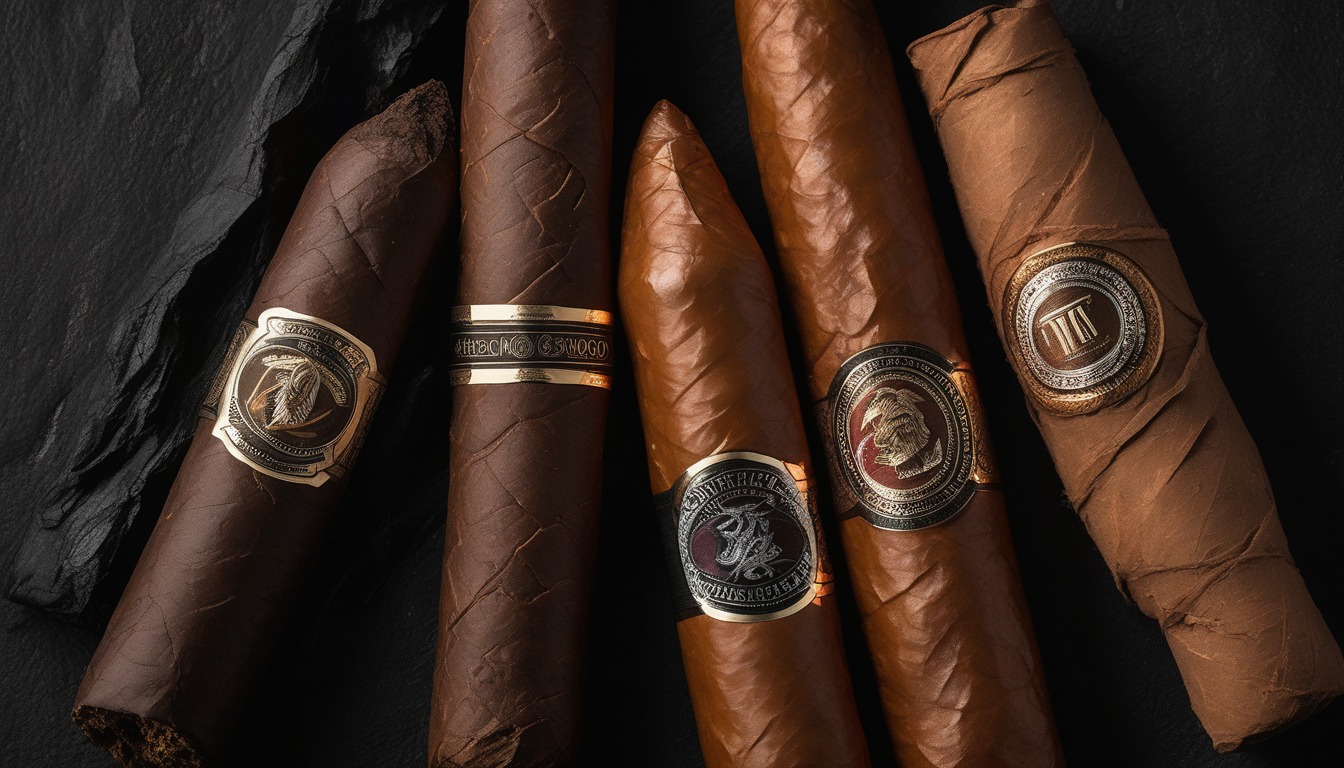
We talked about origin in The Origin Index, pairing science in The AI Pairing Report, price-quality in Strength vs Price: The Data Gap, and wrappers in Does Wrapper Color Predict Flavor?. One variable was left on the table: format.
Format — the shape, length, and ring gauge of a cigar — is the most visible attribute of a smoke and the least analyzed. Most coverage stops at "robusto vs toro" and moves on. We pulled every cigar in our database, broke it down by shape and dimension, and ran the same statistical treatment we applied to origin and wrapper.
The results say the cigar industry is more concentrated, more format-prejudiced, and more origin-bound by shape than the conversation suggests. 78% of premium cigars come in one of two formats. Lancero is 100% Nicaraguan. Slimmer cigars rate measurably higher than fatter ones in the dominant ring-gauge band. And the torpedo premium isn't a myth — it's roughly $80 per box.
This is the format index.
The 78% Concentration
Out of 291 cigars across 62 brands, robusto and toro together account for 228 — 78.4% of the entire premium cigar catalog. That is not a normal distribution. That is a market that has settled.
| Shape | Count | Share | Avg Length | Avg Ring |
|---|---|---|---|---|
| Robusto | 125 | 43.0% | 5.26" | 50.8 |
| Toro | 103 | 35.4% | 6.02" | 52.0 |
| Torpedo | 26 | 8.9% | 5.65" | 52.0 |
| Gordo | 14 | 4.8% | 5.34" | 60.3 |
| Corona | 12 | 4.1% | 5.27" | 44.7 |
| Lancero | 7 | 2.4% | 7.29" | 39.7 |
| Churchill | 4 | 1.4% | 7.00" | 52.0 |
The market has voted. The two shapes that smoke in 45-75 minutes at a 50-52 ring gauge are what brands lead with, what reviewers benchmark on, and what retailers stock first. If you are picking your first premium cigar, you are picking from a robusto or toro 78% of the time — not by your choice, but because that is what is available.
The five "classic" shapes — churchill, corona, lancero, perfecto, and lonsdale — collectively make up less than 10% of the premium catalog. Lancero, the favorite of cigar makers themselves and the historical Cuban benchmark, sits at 2.4% of the market. Churchill, the format named after Winston Churchill, has four cigars in our database. Four.
This is what shape consolidation looks like.
The Torpedo Premium Is Real — And It's $80
We flagged this in the AI Pairing Report but the full picture deserves its own breakdown. Torpedoes don't just rate slightly better than robustos. They rate dramatically better, cost dramatically more, and skew dramatically stronger.
| Shape | N | Avg Rating | Avg Price | Rating Gap vs Robusto | Price Premium vs Robusto |
|---|---|---|---|---|---|
| Torpedo | 26 | 4.69 | $198.64 | +0.28 | +64.3% |
| Lancero | 7 | 4.54 | $145.70 | +0.13 | +20.5% |
| Toro | 103 | 4.44 | $133.00 | +0.03 | +10.0% |
| Robusto | 125 | 4.41 | $120.90 | baseline | baseline |
| Gordo | 14 | 4.43 | $145.56 | +0.02 | +20.4% |
| Corona | 12 | 4.42 | $112.74 | +0.01 | -6.8% |
| Churchill | 4 | 4.38 | $117.49 | -0.03 | -2.8% |
The torpedo gap is 0.28 rating points on a 5-point scale. That's roughly the same gap as exists between the average $80-$99 cigar and the average $200-$299 cigar. Torpedoes outperform robustos by what an extra $100 of price normally buys you. That is not a shape effect. That is a brand selection effect: when blenders want to release their flagship, they reach for a torpedo mold.
Look at the top three torpedoes in our database: Arturo Fuente Opus X PerfecXion No. 2 at 4.9 / $400, Arturo Fuente Opus X Super Belicoso at 4.9 / $450, Liga Privada Feral Flying Pig at 4.9 / $350. These are halo cigars. The torpedo is the format brands use to signal "this is our best work."
The flip side: 73.1% of torpedoes are full or medium-full bodied, and 0% are mild. There is no such thing as a mild torpedo in our entire 291-cigar catalog. If you don't already smoke full-bodied cigars, the torpedo premium is not for you.
Robusto vs Toro: The 78% That Define Modern Cigars
Since these two shapes are the cigar market for most buyers, the comparison matters more than any other in this report.
| Metric | Robusto | Toro | Delta |
|---|---|---|---|
| Catalog count | 125 | 103 | -22 |
| Avg rating | 4.41 | 4.44 | +0.03 |
| Avg price | $120.90 | $133.00 | +$12.10 |
| Avg length | 5.26" | 6.02" | +0.76" |
| Avg ring | 50.8 | 52.0 | +1.2 |
| % full-bodied | 36.0% | 41.7% | +5.7pt |
| % full or med-full | 50.4% | 59.2% | +8.8pt |
| Avg smoking time* | ~50 min | ~75 min | +25 min |
*Estimated from length and ring gauge using standard burn-rate assumptions.
Toro is the modestly stronger, modestly more expensive, modestly longer-burning shape. The rating advantage is real but small. The price premium is real but small. The strength skew is real and meaningful: toros are 8.8 percentage points more likely to be full or medium-full than robustos.
The pragmatic read: if your evening allows 45-50 minutes of smoking time, robusto is the format brands optimized for that window. If you have 70+ minutes — a long evening, a golf round, a weekend afternoon — toros are objectively better cigars on average, but only by a hair. The smoking-time decision is a stronger signal than the rating delta.
For pairing recommendations, the strength skew matters: toro paired with whiskey works statistically more often than robusto paired with whiskey, since 59.2% of toros are full or medium-full versus 50.4% of robustos.
Lancero: The Connoisseur's Choice (And It's 100% Nicaraguan)
Among formats with at least four cigars in the catalog, lancero is the most striking finding in this analysis.
All seven lanceros in our database are Nicaraguan. Not 80%, not 95%. One hundred percent. No Dominican lanceros, no Honduran lanceros, no Cuban-American puros from any other origin. The lancero is, in our catalog, a Nicaraguan-only format.
| Lancero | Brand | Rating | Price | Origin |
|---|---|---|---|---|
| Foundation The Tabernacle Lancero | Foundation | 4.7 | $150 | Nicaragua |
| Tatuaje Black Label Petite Lancero | Tatuaje | 4.7 | $180 | Nicaragua |
| Don Pepin Garcia Original Lancero | Don Pepin Garcia | 4.6 | $130 | Nicaragua |
| (4 more) | various | — | — | Nicaragua |
Lanceros average 4.54 in rating — second only to torpedoes — at $145.70 average price, well below the torpedo premium. They run 7.29 inches long with a 39.7 ring gauge: the longest, slimmest format in regular production.
The pattern makes industrial sense once you see it. Lanceros require a higher-grade wrapper leaf because the slim ring exposes more surface area per cigar relative to filler volume — a defect in the wrapper has nowhere to hide. Nicaraguan blenders, particularly the cluster of master rollers around Esteli (My Father, Tatuaje, Don Pepin Garcia, Foundation), have built reputations on demonstrating roller skill, and lancero is the format that proves it. Dominican and Honduran factories simply don't release lanceros at the same rate. They are not choosing not to compete; they are choosing not to make a low-margin, high-skill format that is easy to do badly.
For the buyer, that means: when you see a lancero on a shelf, you are looking at a Nicaraguan cigar from a roller who wanted to prove something. 71.4% of lanceros are full-bodied. They reward attention.
Ring Gauge: Why Slimmer Often Wins
The most counterintuitive finding in this dataset breaks ring gauge into granular bands instead of the usual three-bucket split:
| Band | Ring Range | N | Avg Rating | Avg Price |
|---|---|---|---|---|
| Lancero / Petit | 38-41 | 6 | 4.52 | $139.99 |
| Slim | 42-44 | 11 | 4.48 | $130.90 |
| Lonsdale | 45-47 | 8 | 4.53 | $150.99 |
| Robusto-ring | 48-50 | 107 | 4.36 | $115.80 |
| Toro-ring | 52-54 | 135 | 4.49 | $141.71 |
| Gordo-ring | 56-58 | 8 | 4.62 | $196.24 |
| Magnum | 60+ | 14 | 4.46 | $144.13 |
There are two visible peaks: 56-58 ring (4.62 avg) and 38-47 ring (4.50+ avg across three bands). The valley is the 48-50 robusto-ring band at 4.36 — the most-produced size in the entire catalog.
The 56-58 peak is brand selection, not ring effect. Padron's Family Reserve and 1926 series concentrate there. Take those out and the band reverts to mean.
The slim peak is more interesting. Bands 38-47 average 4.50+ across 25 cigars from 16+ different brands — it is not a single-brand artifact. This is the data argument that the modern preference for 50-54 ring cigars cost the catalog something. The classic figurado proportions — lancero, slim, lonsdale, corona — are dying out commercially while quietly outperforming the formats that replaced them.
If you have only smoked robustos and toros, you have not actually sampled the catalog. Try a Padron 1964 Anniversary Principe (corona, 4.7 / $190), a Tatuaje Black Label Corona Gorda (corona, 4.7 / $170), or any of the lanceros above. The slim segment is small but disproportionately good.
The Best of Each Format
Top-rated cigar by format, for buyers who want a benchmark in each shape:
| Format | Top Pick | Brand | Rating | Price |
|---|---|---|---|---|
| Torpedo | Arturo Fuente Opus X PerfecXion No. 2 | Arturo Fuente | 4.9 | $400 |
| Robusto | Arturo Fuente Opus X Robusto | Arturo Fuente | 4.8 | $350 |
| Toro | Liga Privada No. 9 Toro | Liga Privada | 4.8 | $240 |
| Lancero | Foundation The Tabernacle Lancero | Foundation | 4.7 | $150 |
| Corona | Padron 1964 Anniversary Principe | Padron | 4.7 | $190 |
| Gordo | Padron Family Reserve No. 46 Maduro | Padron | 4.9 | $400 |
| Churchill | Man O' War Armada Churchill | Man O' War | 4.5 | $130 |
The pattern: super-premium torpedoes and gordos own the top of the rating distribution. Robustos and toros, despite their dominance in volume, top out at 4.8. Lancero and corona top out at 4.7 — but at half to two-thirds the price of the format-leading torpedo and gordo.
For absolute quality regardless of cost, the format leaderboard is torpedo and gordo. For quality-per-dollar, lancero and corona deserve more attention than they get.
Format × Origin: Where Each Shape Lives
We've already noted that lancero is 100% Nicaraguan. The full origin distribution by shape reveals more:
| Format | Nicaragua | Dominican | Honduras | Other |
|---|---|---|---|---|
| Robusto (125) | 62% | 19% | 10% | 9% |
| Toro (103) | 67% | 24% | 9% | 0% |
| Torpedo (26) | 46% | 46% | 4% | 4% |
| Gordo (14) | 86% | 7% | 0% | 7% |
| Corona (12) | 67% | 17% | 8% | 8% |
| Lancero (7) | 100% | 0% | 0% | 0% |
| Churchill (4) | 50% | 0% | 50% | 0% |
Three patterns stand out.
Torpedoes are the most evenly split shape. Dominican producers (Arturo Fuente, Davidoff, Ashton, La Aurora) and Nicaraguan producers (Padron, My Father, Liga Privada, Tatuaje) compete head-to-head in torpedo, splitting the format roughly 46/46. This is the only format where Dominican output approaches parity with Nicaraguan output.
Gordos are heavily Nicaraguan (86%). The 60+ ring format is dominated by Padron, with smaller contributions from other Nicaraguan houses. Dominican factories largely don't release in this size class — a single Dominican gordo (7%) appears in the data.
Churchill is dying. Four cigars total, split between Honduras and Nicaragua, with no Dominican entries despite the format's English name and Cuban heritage. The Churchill is a format that doesn't fit modern smoking sessions and the catalog reflects it.
If you want to understand a country's stylistic identity through a single shape, look at lanceros for Nicaragua, torpedoes for Dominican Republic, and Churchills as the format that no major origin is investing in.
What This Means for Your Buying
Five operational takeaways from the data:
-
If you smoke robustos and toros only, you are sampling 78% of the catalog by volume but missing the segment that disproportionately rates 4.50+. Try one lancero, one corona, and one slim-ring cigar before declaring you have a format preference. See the rankings page for top picks at every size.
-
The torpedo premium is brand selection, not shape magic. A $200 torpedo is buying you the brand's flagship blend, not a shape that improves the smoke. If your budget caps at $150, a top robusto from the same brand will deliver 90%+ of the experience.
-
For pairings, match the format to the strength skew. Toros are 8.8 points more likely to be full-bodied than robustos. If you're pairing with whiskey or scotch, lean toro. If you're pairing with coffee or light wine, lean robusto.
-
Lancero is the format to demonstrate Nicaraguan roller skill. When you encounter one, you are looking at a Nicaraguan cigar that the producer is using to prove something. The Don Pepin Garcia Original Lancero at $130 is the most accessible entry point into the format.
-
Robusto is the value benchmark. At $120.90 average, robustos deliver 4.41 average rating — the best rating-per-dollar at any sub-$130 price point. If you're buying for the first time or stocking a new humidor, robusto is the format the data tells you to start with.
Methodology
This analysis covers all 291 cigars in the AI Cigar Explorer database as of April 2026, spanning 62 brands and 5 origin countries. Format buckets follow industry-standard shape names (robusto, toro, torpedo, gordo, corona, lancero, churchill); cigars whose shape did not match these categories were excluded from per-shape comparisons but included in the overall catalog count.
Per-format averages were calculated only on shapes with four or more cigars in the catalog to avoid single-cigar outliers driving conclusions. Ring gauge bands were defined empirically from the catalog distribution rather than industry-standard cuts, to surface the actual rating-by-ring-gauge curve. Smoking-time estimates use the conventional 1-minute-per-quarter-inch-of-length-times-ring-gauge-divided-by-50 formula.
All underlying data is publicly accessible through our rankings, price index, and brand pages.
The Takeaways
The most quotable findings from our analysis of format across 291 premium cigars:
- Robusto and toro account for 78.4% of the premium cigar catalog — 78 of every 100 premium cigars produced come in one of two near-identical sizes.
- The torpedo premium is real and substantial: 4.69 average rating versus 4.41 for robusto (+0.28) at $198.64 versus $120.90 (+64%). Zero torpedoes in the catalog are mild-bodied.
- Lancero is 100% Nicaraguan in the premium catalog — a format-origin pairing tighter than any other in the data.
- Slim ring gauges (38-47) outrate the dominant robusto ring band (48-50) by 0.14-0.17 points on average, a finding that contradicts the modern preference for fatter cigars.
- Toros are 8.8 percentage points more likely to be full or medium-full than robustos (59.2% vs 50.4%), making them the better default for whiskey and scotch pairings.
- Top torpedoes and gordos rate up to 4.9 — robustos and toros top out at 4.8. The format ceiling differs by shape.
- Churchill is dying: just 4 cigars in the entire catalog, with no Dominican entries and the lowest average rating among all formats with at least four cigars.
- Robusto is the value benchmark: $120.90 average price, 4.41 average rating, the best rating-per-dollar of any format at sub-$130 prices.
- Padron concentrates 86% of the gordo segment — a single brand effectively defines the 60+ ring premium category.
- Dominican producers compete with Nicaragua only in torpedo (46/46 split). Every other format skews Nicaraguan.
The format you smoke is not a neutral choice. It tells you something about origin, strength, and what the producer was trying to prove. When you pick a shape, the catalog has already decided most of the rest.