There's a building in Ybor City, Tampa, that has been making cigars since 1910. The J.C. Newman Cigar Company factory -- called "El Reloj" (The Clock) for the distinctive clock tower on its facade -- still operates today, rolling cigars the same way it did over a century ago. I've walked through that factory twice, and both times I got the same feeling I get when my abuela shows me her kitchen: this is where the real work happens. No flash. No marketing. Just hands, tobacco, and time.
J.C. Newman is the oldest family-owned cigar company in America. Four generations of the Newman family have run this business since Julius Caesar Newman founded it in 1895 in Cleveland, Ohio. If you want to understand the history of American cigar-making -- the booms, the busts, the immigration stories, the Cuban Revolution, the modern renaissance -- you can trace it all through the Newman family. Their story is our story.
From Cleveland to Ybor City
Julius Caesar Newman was a Hungarian immigrant who started rolling cigars in a Cleveland barn at age 16. His timing was good -- the late 1800s were the golden age of American cigar manufacturing, with thousands of small operations producing cigars across the country. By the early 1900s, Newman had built a successful regional cigar business.
The move to Tampa came later, driven by the concentration of cigar manufacturing talent in Ybor City -- the neighborhood that Cuban, Italian, and Spanish immigrants had transformed into the cigar capital of the world. The Newman family purchased the El Reloj factory in 1954 and moved their primary operations south.
What happened next is a survival story. The cigar industry collapsed in the 1960s and 70s, crushed by the rise of cigarettes and anti-tobacco sentiment. Thousands of cigar companies went under. The Newmans survived by adapting -- shifting to machine-made cigars when handmade sales dried up, diversifying their product line, and never abandoning the factory even when it would have been financially sensible to do so.
Today, the company is led by Drew Newman (fourth generation) along with his father Bobby and uncle Eric. They've rebuilt the handmade premium cigar side of the business while maintaining the factory that has been the family's home for seven decades.
The Cigar Lines
Diamond Crown
In our catalog: 14 vitolas, $7.00-$22.60. Best rated is the Diamond Crown Maximus Double Corona No. 1 at $17.50 (4.65). Strength: Medium | Price: ~$12-18
Diamond Crown is the premium jewel of the J.C. Newman portfolio, and it represents the closest thing American cigar-making has to the Arturo Fuente legacy -- which makes sense, because Fuente actually produces the Diamond Crown cigars at their Dominican factory.
The standard Diamond Crown uses an Ecuadorian Connecticut wrapper over Dominican fillers aged 4-5 years. The result is a silky, medium-bodied cigar with cream, cedar, toast, and a gentle sweetness that speaks to the age of the tobacco. The construction is immaculate (it's a Fuente-rolled cigar, after all), and the smoking experience is refined without being boring.
The Diamond Crown Maximus steps things up with a Habano wrapper that adds more body and complexity -- cocoa, pepper, and a longer finish. And the Diamond Crown Julius Caesars is the ultra-premium expression, using extra-aged tobacco and coming in larger ring gauge formats that allow the blend to show its full range.
Diamond Crown doesn't get the hype it deserves. In a world obsessed with Nicaraguan full-bodied bombs, a refined Dominican medium-bodied cigar can get overlooked. But for the smoker who appreciates nuance over power -- the kind who'd choose Pinot Noir over Cabernet -- Diamond Crown is a revelation.
Brick House
In our catalog: 13 vitolas, $3.60-$8.90. Best rated is the Brick House Corona Larga at $5.55 (4.65). Strength: Medium-Full | Price: ~$6-8
Brick House is where J.C. Newman really makes their mark on the everyday cigar market. Produced at the company's PENSA factory in Esteli, Nicaragua, Brick House is a straightforward, affordable, genuinely good cigar that punches well above its price point.
The standard Brick House uses a Nicaraguan Havana-seed wrapper over Nicaraguan and Honduran fillers. The flavor profile is earthy and satisfying: cocoa, roasted nuts, cedar, pepper, and a clean finish. Nothing fancy. Just good tobacco, well-rolled, at an honest price.
The Brick House Maduro is the pick for me. The Connecticut Broadleaf wrapper adds sweetness and chocolate depth to the earthy base, and the overall experience is richer and more complex than the natural version. At $7-8, it's one of the best values in premium cigars. If you're exploring budget-friendly options that don't taste cheap, Brick House deserves a prominent spot on your radar.
The Brick House Connecticut provides a milder alternative with an Ecuadorian Connecticut wrapper, targeting the smoker who wants something smoother for daytime smoking or as a first cigar of the day.
Perla del Mar
In our catalog: 5 vitolas, $4.50-$6.50. Best rated is the Perla Del Mar Perla "P" at $4.65 (4.5). Strength: Medium | Price: ~$8-11
Perla del Mar ("Pearl of the Sea") is a Dominican-made cigar that leans into smoothness and refinement. The blend uses Ecuadorian and Dominican tobaccos in a medium-bodied profile with cream, cedar, light cocoa, and a touch of dried fruit. The Corojo version adds more pepper and earthiness, while the Maduro brings chocolate and sweetness.
Perla del Mar occupies interesting territory in the J.C. Newman portfolio -- it's more premium than Brick House but less rarefied than Diamond Crown. Think of it as the bridge between everyday smoking and special-occasion indulgence.
Yagua
Not in our catalog. Strength: Medium-Full | Price: ~$9-12
Yagua is the most creative cigar in the J.C. Newman lineup, and it has a story that connects directly to the company's heritage. The cigar is wrapped in a yagua leaf -- the sheath from a royal palm tree -- which is how Cuban farmers traditionally bundled their cigars before commercial production existed.
The yagua wrapping gives each cigar a rough, rustic appearance and imparts a subtle woody, slightly sweet character to the smoke. Underneath the yagua is a Nicaraguan puro that's earthy, spicy, and satisfying. It's a novelty, sure, but it's a novelty backed by genuinely good tobacco and thoughtful execution.
The American
Not in our catalog. Strength: Medium-Full | Price: ~$10-14
The American holds a special distinction: it's made entirely with American-grown tobacco. Connecticut wrapper, Pennsylvania binder, and Tennessee and Connecticut broadleaf fillers make this a cigar you won't confuse with anything else in your humidor. The flavor is distinctly different from Caribbean-origin cigars -- there's a barnyard quality, a sweet grassiness, and an earthy depth that reflects American terroir.
Drawn Newman has championed American-grown tobacco as part of his vision for the company's future, and The American is the fullest expression of that commitment. It's not for everyone -- the flavor profile is unusual -- but it's a fascinating cigar that tells a story about where tobacco growing has been and where it's going.
El Reloj: The Factory as Heritage
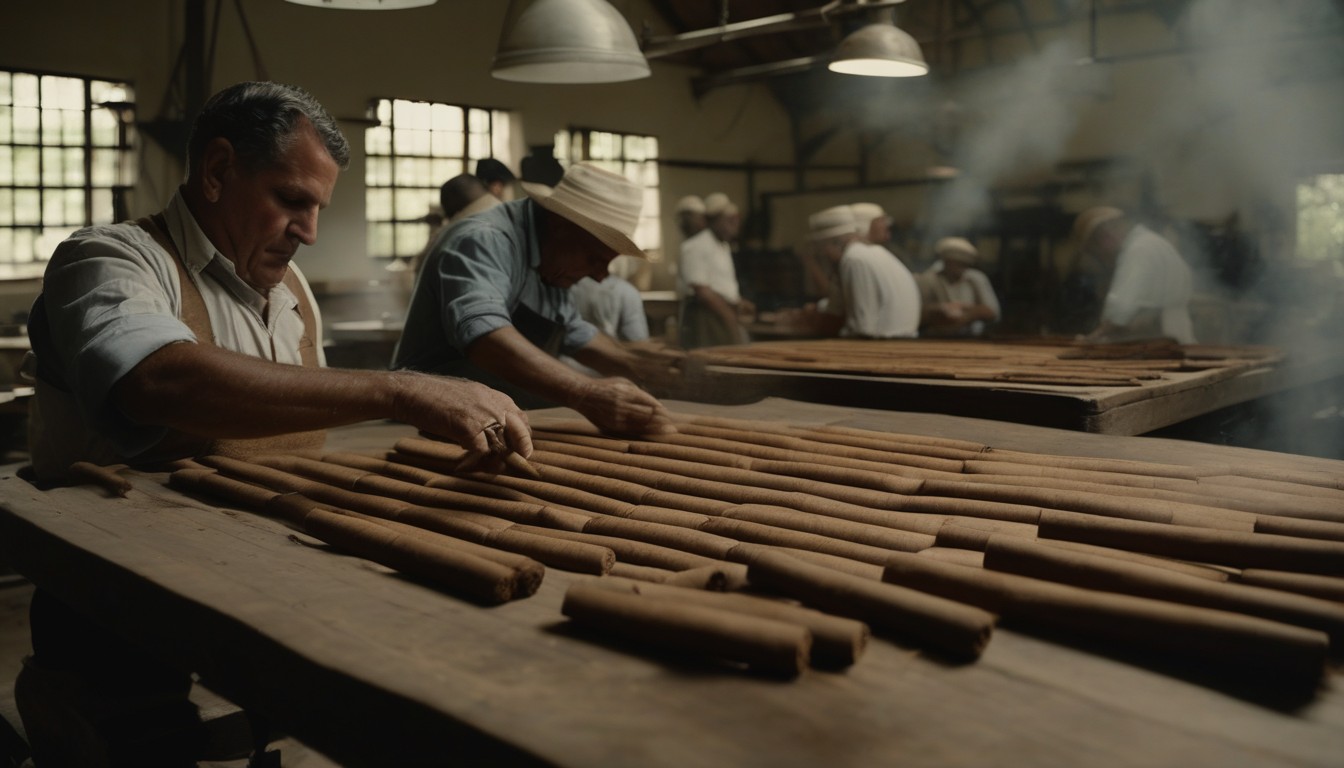
You can't write about J.C. Newman without writing about El Reloj. The factory is a living museum of American cigar-making -- a place where you can watch cigars being rolled by hand using techniques that haven't changed in a century.
The Newmans have invested heavily in restoring and preserving El Reloj, and they've opened it to visitors as the J.C. Newman Cigar Company Experience. The tour takes you through the entire process: tobacco selection, bunching, rolling, aging, and boxing. You see the original equipment alongside modern machinery, and you get a sense of how much craftsmanship goes into every cigar.
If you're ever in Tampa -- and if you're a cigar smoker, you should be -- the El Reloj tour is essential. It's one of the few places in America where you can watch premium cigars being made and buy factory-fresh sticks on the spot. Pair it with a visit to the nearby cigar shops along 7th Avenue in Ybor City, and you've got yourself a perfect Tampa cigar day.
The Newman Legacy in Context
J.C. Newman has survived things that killed every other American cigar manufacturer of their era. The 1920s consolidation, the Great Depression, World War II rationing, the cigarette takeover, the cigar recession of the 1970s, the boom-and-bust of the 1990s -- through all of it, the Newman family kept making cigars.
That resilience matters because it means J.C. Newman carries institutional knowledge that no other American cigar company possesses. They've seen every trend come and go. They know what works and what doesn't. And they've made the strategic decisions -- investing in Nicaraguan production with PENSA, partnering with Fuente for Diamond Crown, championing American tobacco -- that position them for the future without abandoning their past.
Drew Newman, in particular, has been a vocal advocate for the premium cigar industry, fighting FDA regulation, promoting cigar culture, and investing in the next generation of cigar makers. His commitment to both heritage and innovation is exactly what the industry needs.
Who Are J.C. Newman Cigars For?
The history buff: If the story behind your cigar matters to you, no brand has a richer American story than J.C. Newman.
The value smoker: Brick House at $6-8 is one of the best everyday smokes in the industry. Period.
The refined palate: Diamond Crown offers a smooth, sophisticated smoking experience that stands apart from the full-bodied Nicaraguan trend.
The explorer: Yagua and The American offer unique smoking experiences you literally can't get anywhere else.
The Tampa connection: If you have any connection to Tampa, Ybor City, or Florida cigar culture, J.C. Newman is your heritage brand. Mi abuelo would approve.
The Bottom Line
J.C. Newman isn't the flashiest brand in your humidor. They don't chase trends, they don't hype limited editions, and they don't put influencers on their payroll. What they do is make honest cigars backed by 130 years of family expertise and sell them at prices that respect the customer.
The Diamond Crown for special occasions, the Brick House for every day, and the El Reloj factory for the soul -- that's the J.C. Newman trifecta. And in a world where cigar brands come and go faster than ever, there's something deeply reassuring about a family that's been doing this since 1895 and shows no signs of stopping.
That's the kind of legacy mi abuelo understood. And it's the kind of legacy that every cigar smoker should appreciate.