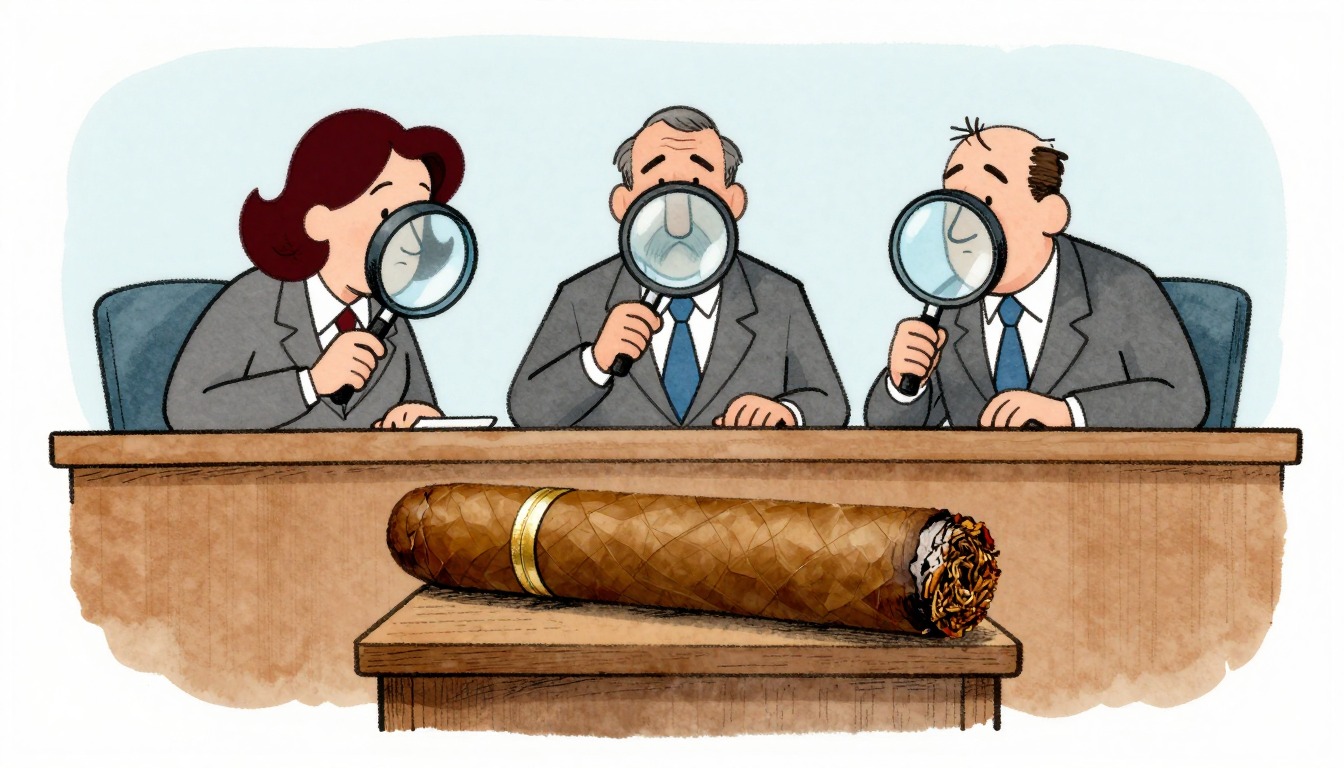
Political differences in attitudes toward masculinity are documented. Whether those differences cause support for cigar restrictions remains unproven. The claim that restrictions reflect hostility to masculinity is a personal theory, not a conclusion established by the research examined here.
Start with the actual restriction
In January 2024, Democratic senators including Dick Durbin, Tammy Duckworth and Jeff Merkley urged the Biden administration to finalize a prohibition on flavored cigars. Their stated reasons were youth addiction, disease and health disparities. Their letter establishes support for a specific restriction; it does not establish an unstated motive. Read the senators' statement.
The FDA's 2022 proposal targeted characterizing flavors other than tobacco. It explicitly excluded cigars whose characterizing flavor was tobacco. That distinction matters: a flavored-cigar prohibition is not a blanket prohibition on every cigar. Read the proposed rule.
The proposal's history complicates the party story
The federal regulatory agenda recorded the proposal as withdrawn on July 25, 2025. It should therefore not be described as an active nationwide ban. This withdrawal concerns that federal proposal, not the status of every state or local tobacco restriction. See the regulatory record.
The idea also crossed administrations. In November 2018, during Donald Trump's first administration, FDA Commissioner Scott Gottlieb announced an intention to prohibit cigar flavors, citing youth initiation. Any account that treats the policy as exclusively Democratic leaves out that history. Read the FDA's published statement.
| Source | Question it addresses | Question it leaves open |
|---|---|---|
| Tobacco proposals | Which products would be restricted? | Are the stated reasons the only motives? |
| Pew survey | How do partisan groups evaluate masculinity? | Do those attitudes predict cigar-policy preferences? |
| Psychology studies | How do attitudes relate to appearance or identity threats? | Do the findings explain lawmakers' decisions? |
Pew found a real partisan difference
Pew's 2024 survey included 6,204 U.S. adults. Among respondents who thought society viewed masculine men positively, 67% of Republicans and 33% of Democrats considered that positive treatment a good thing. Both party groups include people who lean toward the party. Read Pew's report.
Among respondents who thought society viewed masculine men negatively, 86% of Republicans and 45% of Democrats considered that negative treatment bad. Those figures describe particular subgroups, not every Republican or Democrat. Neutral responses cannot automatically be counted as hatred. See Pew's detailed findings.
Appearance studies measure something narrower
In a 2023 research account, Mitch Brown described an association between higher left-wing authoritarianism scores and lower willingness to collaborate with masculinized male faces. The post described a conference presentation, without enough methodological detail to independently assess its strength. Left-wing authoritarianism is a measured construct, not a synonym for every liberal. Read Brown's account.
A related peer-reviewed 2025 study by Brown and Donald Sacco involved 310 university participants. Higher left-wing authoritarianism scores were associated with a weaker preference for physically strong male leaders. That provides relevant evidence about evaluations of appearance. The student sample and photograph-based judgments limit how widely the result can be generalized. Read the study.

Illustrative cartoon: separate puzzle pieces represent the evidence still needed to connect social attitudes with policy motives.
Masculine insecurity is a different question
A separate 2023 study exposed men to threats against their masculinity. Across three experiments, those threats increased liberal men's support for aggressive political policies more consistently than conservative men's. Effects varied with the kind of threat. This concerns responses to a threatened identity, rather than dislike of masculinity or preferences about cigars. Read the original paper.
Where cigars and influencer culture meet
A February 2026 UK parliamentary debate offers a direct connection between tobacco policy and male influencer culture. Green Party peer Baroness Bennett criticized Andrew Tate's promotion of cigars to young men while opposing cigar exemptions. Liberal Democrat Baroness Northover echoed concerns about his influence. Their arguments also addressed youth uptake and smoke exposure. Read Hansard, columns 588–590.
Those remarks show that influencer culture entered the debate. They do not establish opposition to masculinity itself, and a British parliamentary exchange cannot stand in for the motivations of American lawmakers.
What would test the theory
A useful study would measure both attitudes toward masculinity and support for specific cigar restrictions. It would also examine competing explanations, including health concerns, tobacco use and general preferences about government regulation. Survey associations could inform the question; claims about particular lawmakers would still need evidence concerning those lawmakers.
The theory is open to examination. The research currently supports political differences over masculinity, not a demonstrated causal explanation for cigar restrictions. Labeling that distinction clearly lets readers evaluate the argument without being asked to treat a proposed motive as a discovered fact.