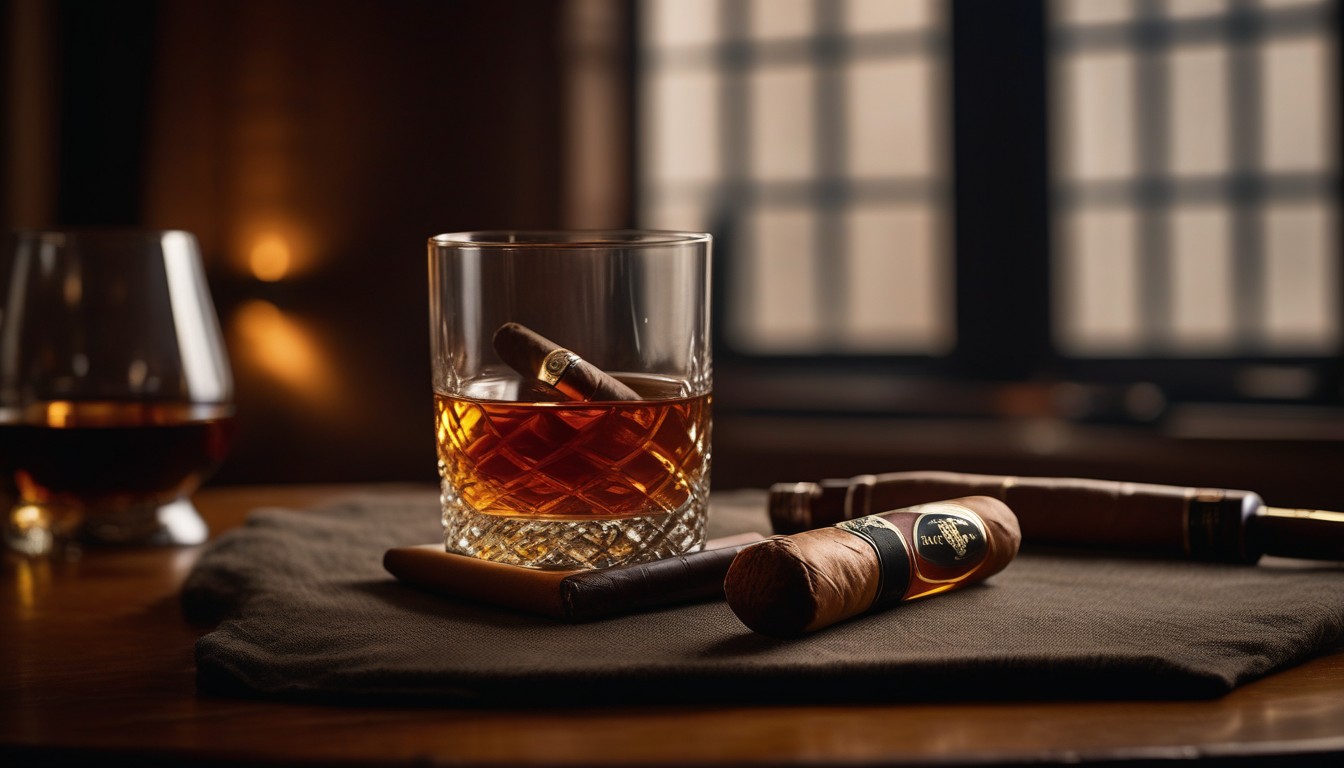
In my wine days at a Napa tasting room, we had a regular—a retired cardiologist from Edinburgh—who'd visit every October and spend three hours deconstructing every pour we served. One evening after closing, he pulled out a bottle of Springbank 15 and a pair of Bolivar Belicosos, and said, "Now let me show you what real pairing looks like."
He was right. Scotch whisky and cigars occupy a shared territory of complexity that few other pairings can reach. But here's the thing most guides get wrong: Scotch isn't one category. The distance between an Islay peat bomb and a delicate Lowland malt is greater than the distance between white wine and red. You can't just say "pair Scotch with cigars" any more than you can say "pair wine with food." The region, the cask, the age—everything matters.
This guide breaks Scotch pairing down by region and style, because that's the only way to do it honestly.
The Regional Framework
Scotch whisky comes from five (some say six) distinct regions, each with its own character. Understanding these regions is the key to unlocking cigar pairings:
Speyside: Fruity, honeyed, often sherry-influenced. The crowd-pleaser. Think Macallan, Glenfiddich, Balvenie.
Highland: Broad category, but generally medium-bodied with heather, dried fruit, and light smoke. Think Dalmore, Glenmorangie, Oban.
Islay: Peat, smoke, iodine, sea salt. The polarizing region. Think Lagavulin, Ardbeg, Laphroaig.
Lowland: Light, grassy, floral. The aperitif malts. Think Auchentoshan, Glenkinchie.
Campbeltown: Briny, slightly smoky, complex. A tiny region with outsized character. Think Springbank, Glen Scotia.
Each region calls for a different cigar approach.
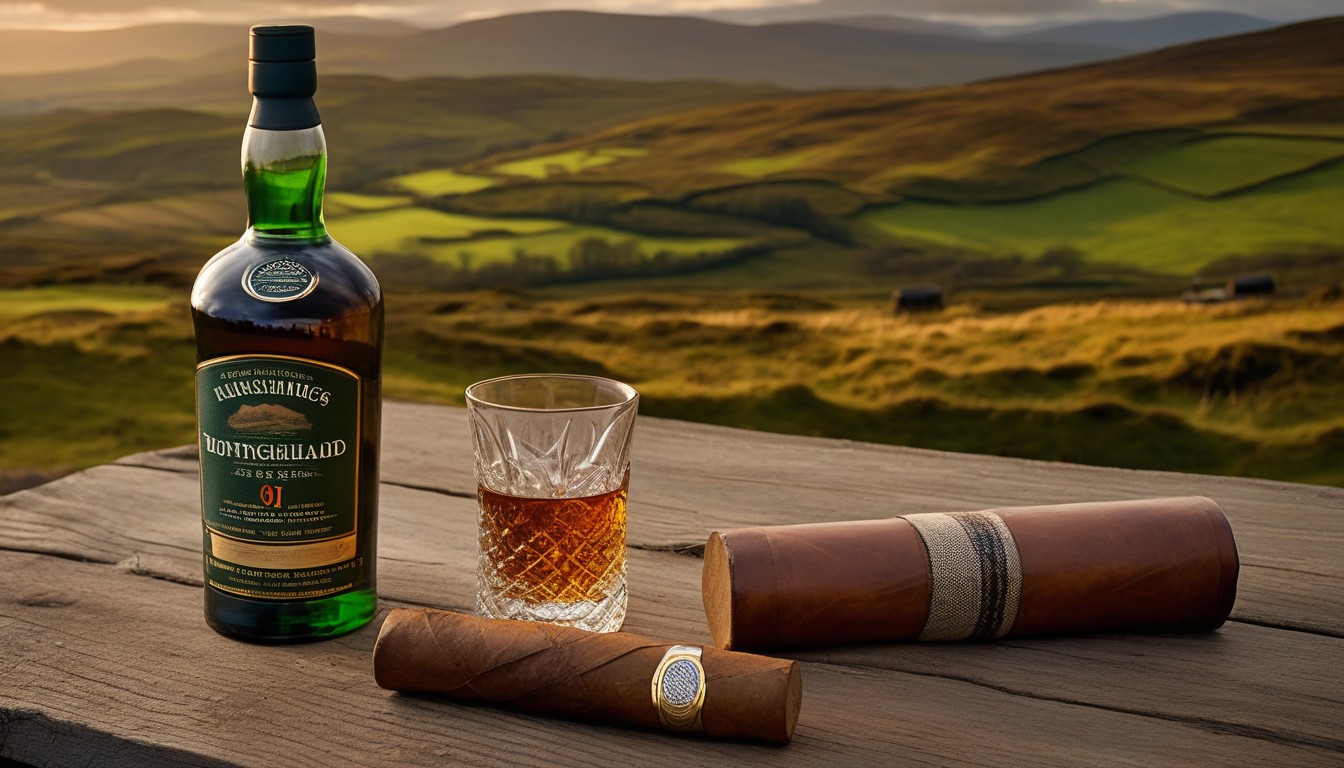
Speyside Pairings: Fruit and Honey
Speyside malts are the most versatile for cigar pairing because their fruit-forward, honeyed profiles complement a wide range of tobacco. The trick is not to overwhelm them—Speyside malts are generally elegant, not powerful.
Macallan 12 Sherry Oak + Rocky Patel Vintage 1999 Connecticut
The Macallan's dried fruit, Christmas cake, and sherry sweetness meet the Rocky Patel 1999's creamy, nutty Connecticut wrapper. This is sophistication without effort. The sherry influence adds warmth that mirrors the Connecticut's natural sugars. A pairing I'd recommend for someone's first Scotch-and-cigar experience.
Glenfiddich 18 + Davidoff Winston Churchill The Late Hour
Glenfiddich 18 has a beautiful baked apple and oak character that deepens with each sip. The Late Hour, finished in Scotch whisky casks (how meta), brings dark chocolate, leather, and a whisper of smoke. The whisky and the cigar are literally speaking the same language—they share cask influence. The result is seamless.
Balvenie 14 Caribbean Cask + Arturo Fuente Don Carlos
The Balvenie's rum cask finishing adds tropical fruit and toffee that play beautifully against the Don Carlos's refined cedar and cream. There's a warmth here that feels almost Caribbean—appropriate given the rum influence. This pairing works especially well on a warm evening.
Highland Pairings: Heather and Spice
Dalmore 15 + Padron 1964 Anniversary Natural
The Dalmore 15's Gonzalez Byass sherry cask finishing gives it orange peel, chocolate, and cinnamon. The Padron 1964 Natural has a lighter touch than its maduro sibling—more cedar, cream, and nutty sweetness. Together, they're autumn in a glass and a cigar. The orange and chocolate from the whisky meet the cedar and cream from the cigar at exactly the right frequency.
Oban 14 + Oliva Serie V Melanio
Oban is the gateway to smoke in Scotch—it has just a hint of maritime character and peat beneath its honeyed, citrus profile. The Melanio's medium-to-full body provides enough weight to match the Oban's complexity without tipping into competition. The Melanio's baking spice notes particularly complement Oban's subtle smokiness.
Glenmorangie Quinta Ruban (Port Cask) + My Father Flor de las Antillas
Port cask finishing gives the Quinta Ruban dark fruit and chocolate that echo the Flor de las Antillas's spice and sweetness. This Pepin Garcia creation has won enough awards to fill a wall, and its medium body makes it flexible enough to pair with a port-finished whisky without either component fighting for attention.
Islay Pairings: Into the Smoke
Islay is where things get interesting—and where most people make mistakes. The intense peat smoke of Islay malts demands cigars that can coexist with that smokiness rather than being buried by it.
The golden rule: never pair Islay with a mild cigar. The peat will erase everything. You need medium-full to full-bodied sticks with enough personality to hold their ground.
Lagavulin 16 + Liga Privada No. 9
This is the king of Islay pairings. Lagavulin 16's campfire smoke, iodine, and dark sweetness meet the Liga Privada No. 9's Connecticut Broadleaf darkness, espresso, and leather. They don't compete. They merge into something that's richer than either component alone. The cigar's natural sweetness tames the Lagavulin's peat, while the peat amplifies the cigar's smoky undertones.
As I mentioned in the whiskey pairing guide, this isn't a beginner combination. But for experienced palates, it's extraordinary.
Ardbeg Uigeadail + Padron 1926 No. 9 Maduro
The Uigeadail (pronounced "OO-ga-dahl") combines Ardbeg's characteristic peat with sherry cask sweetness, creating a whisky that's simultaneously smoky and fruity. The Padron 1926 has the depth and complexity to match—dark chocolate, earth, leather, and an underlying richness that takes an hour to fully unfold. Together, they're an event. Clear your schedule.
Laphroaig Quarter Cask + Tatuaje Black Label Corona Gorda
Laphroaig's medicinal, seaweed-laced peat is the most aggressive of the Islay malts. The Quarter Cask version adds extra vanilla and coconut from smaller barrel aging. The Tatuaje Black Label's dark Nicaraguan tobacco, with its pepper and dark fruit, creates a pairing that's bold, unapologetic, and fascinating. This is the pairing for people who like to live on the edge of their palate.
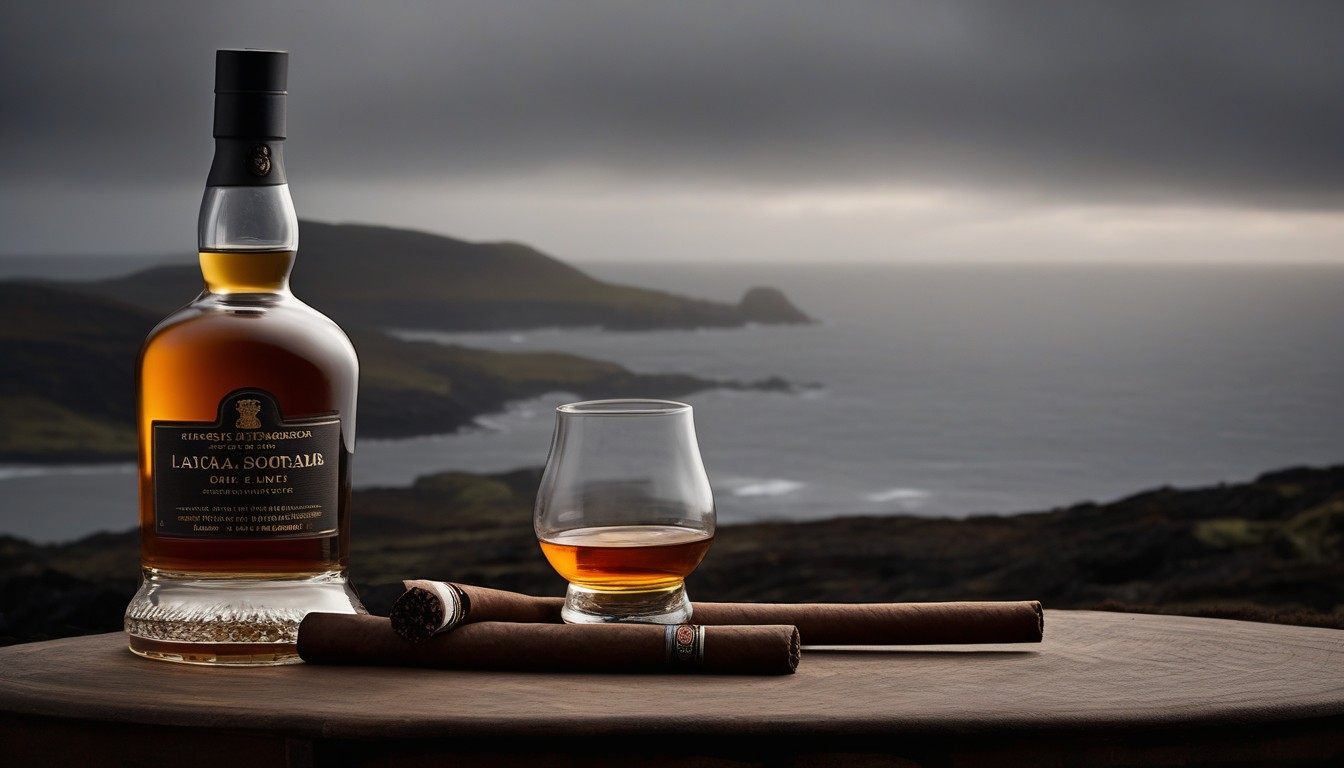
Lowland and Campbeltown: The Hidden Gems
Auchentoshan Three Wood + Montecristo White Label
Auchentoshan's triple distillation and three-wood finishing (bourbon, oloroso sherry, Pedro Ximenez sherry) creates a light, sweet, versatile whisky. The Montecristo White's creamy mildness is a natural companion. This is the brunch of Scotch-and-cigar pairings—light, approachable, and perfect for daytime.
Springbank 15 + Ashton VSG
Remember my Edinburgh cardiologist? This was his pairing (well, close—he used Bolivars, which are harder to source). Springbank 15 has salt, fruit, a touch of smoke, and extraordinary complexity for a non-Islay malt. The Ashton VSG's cedar, espresso, and dark chocolate stand up to Springbank's multifaceted personality. Campbeltown and the VSG are both underappreciated. Together, they make a compelling case for paying closer attention.
Blended Scotch: Don't Be a Snob
Single malts get all the glory, but great blended Scotch can pair beautifully with cigars, often at a fraction of the price.
Johnnie Walker Green Label + Perdomo Habano Connecticut Green Label is a vatted malt (blend of single malts, no grain whisky) with a beautiful balance of smoke, fruit, and malt. The Perdomo Connecticut's creaminess provides a smooth counterpoint. Under $60 for the combo.
Compass Box Great King Street Artist's Blend + Arturo Fuente Hemingway Short Story Compass Box makes some of the most thoughtful blends in Scotch. The Artist's Blend has honeycomb, vanilla, and gentle spice that complement the Hemingway Short Story's cameroon wrapper sweetness perfectly.
The Pairing Cheat Sheet
| Scotch Style | Cigar Match | Example Pairing |
|---|---|---|
| Light Speyside | Mild Connecticut | Glenfiddich 12 + Macanudo Cafe |
| Rich Speyside | Medium, creamy | Macallan 18 + Davidoff Grand Cru |
| Highland | Medium-full | Dalmore 15 + Padron 1964 Natural |
| Light Islay | Full-bodied | Caol Ila 12 + Oliva Serie V |
| Heavy Islay | Very full-bodied | Lagavulin 16 + Liga Privada No. 9 |
| Lowland | Mild-medium | Auchentoshan 12 + Montecristo White |
| Campbeltown | Medium-full, complex | Springbank 15 + Ashton VSG |
Mistakes to Avoid
Don't add water to your Scotch when pairing. A few drops is fine for nosing, but water dilutes the flavors you're trying to pair. If the proof is too high, pair it with a fuller cigar rather than watering down the whisky.
Don't pair peated Scotch with flavored cigars. The artificial flavoring in infused cigars clashes horribly with peat. Just don't.
Don't rush Islay pairings. Peat-forward Scotch needs time to open up. Pour it, let it sit for five minutes, then nose it, then sip it, then light your cigar. The patience pays off.
Don't dismiss age statements. Older Scotch generally pairs better with cigars because the tannins have mellowed and the flavors have integrated. A 15-year malt will typically pair more gracefully than a 10-year from the same distillery.
Building a Scotch-and-Cigar Collection
If you're stocking your bar for cigar pairing, I'd start with these four bottles:
- Macallan 12 Sherry Oak — Your all-purpose Speyside
- Oban 14 — Your Highland bridge to smoke
- Lagavulin 16 — Your Islay cornerstone
- Balvenie 14 Caribbean Cask — Your wild card
With those four and a well-stocked humidor, you can pair with virtually any cigar that comes your way.
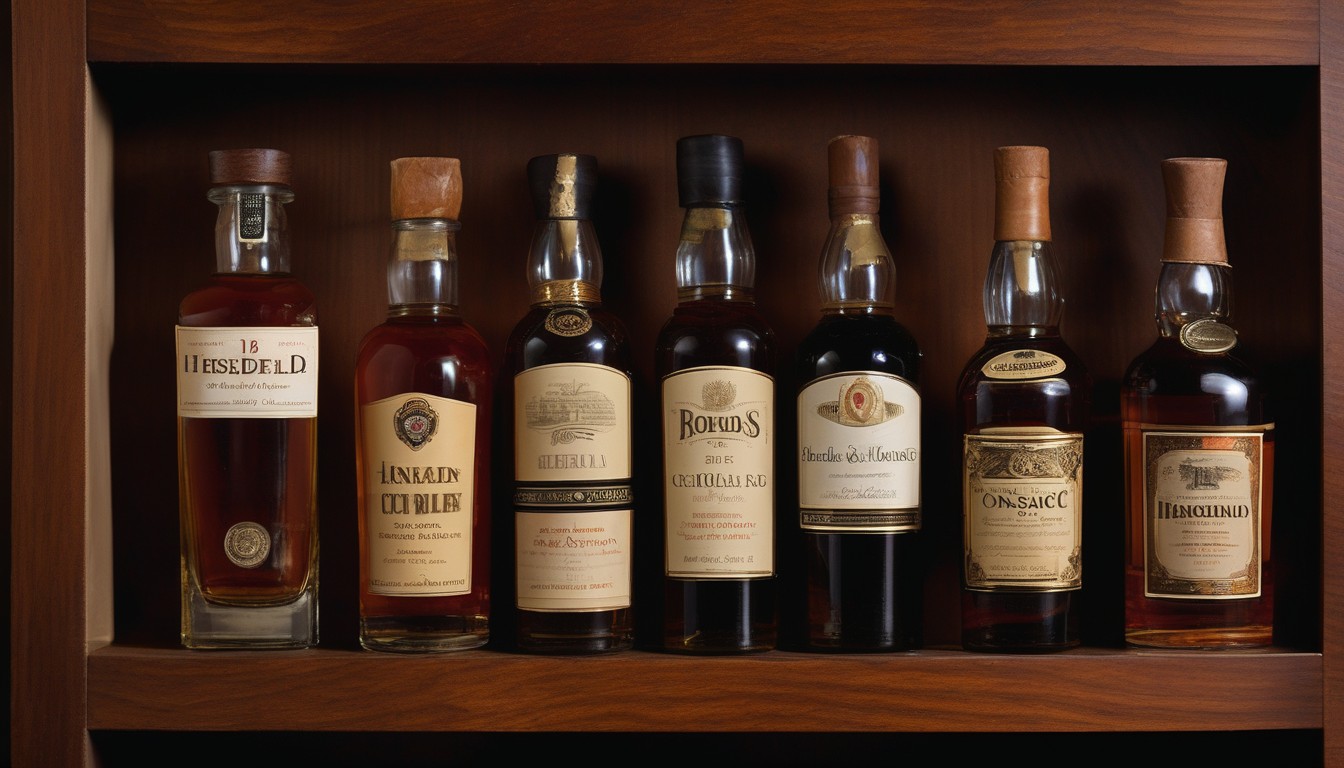
Final Thoughts
Scotch and cigars are two of the oldest luxury pleasures in the world, and their pairing tradition stretches back centuries—from London gentlemen's clubs to Edinburgh drawing rooms to the terraces of Caribbean plantations. There's a reason this combination endures: when done right, Scotch and a cigar together create a sensory experience that neither can achieve alone.
Start with the region-based framework in this guide, find the pairings that resonate with your palate, and then start exploring on your own. The landscape of Scotch is vast, the world of cigars is deep, and the intersection of the two is where some of the most interesting flavor experiences in the world happen.
Slainte.