When I first transitioned from the wine world to cigars, I was struck by how much specialized vocabulary exists in this hobby. Wine has its terroir, its tannins, its malolactic fermentation. Cigars have their own equally rich lexicon — and just like wine, understanding the language unlocks a deeper appreciation of what you're experiencing.
If this were a wine, I'd say learning cigar terminology is like learning the difference between "dry" and "tannic" — they're not the same thing, and knowing that changes how you taste.
This glossary covers everything from basic anatomy to advanced production terms. I've organized it by category rather than straight alphabetical, because understanding the context makes the terms stick better.
For a complete A-Z reference, see our Interactive Cigar Glossary with 120+ searchable, categorized terms — including expanded definitions and cross-references you won't find below.
Cigar Anatomy
Wrapper — The outermost leaf of the cigar. This is the most visible and most flavorful component, contributing up to 60-70% of the cigar's taste. If this were a wine bottle, the wrapper is the label, the cork, and the first impression all rolled into one.
Binder — The leaf between the wrapper and the filler. It holds the filler together and contributes to the burn characteristics and flavor. Think of it as the supporting cast — not the star, but essential to the performance.
Filler — The tobacco inside the cigar, making up the bulk of the blend. Can be "long filler" (whole leaves running the full length) or "short filler" (chopped tobacco, typically found in machine-made cigars).
Head — The capped, closed end of the cigar that you cut and put in your mouth.
Cap — The small piece of tobacco applied to the head to seal it. Most cigars have a single, double, or triple cap. Cuban cigars are famous for their triple cap, which creates the distinctive rounded shoulder.
Foot — The open end of the cigar that you light. On most cigars, the foot is exposed, showing the filler and binder.
Band — The decorative ring of paper around the cigar, typically displaying the brand name and logo. Removing or keeping the band is a matter of personal preference (and regional custom — Europeans tend to remove it, Americans tend to leave it on).
Shoulder — The curved transition point where the cap meets the body of the cigar. When cutting, you want to cut at or just above the shoulder.
Ring Gauge — The diameter of a cigar, measured in 64ths of an inch. A 50 ring gauge cigar is 50/64 of an inch in diameter (about 0.78 inches). Higher number = thicker cigar.
Cigar Shapes and Sizes (Vitolas)
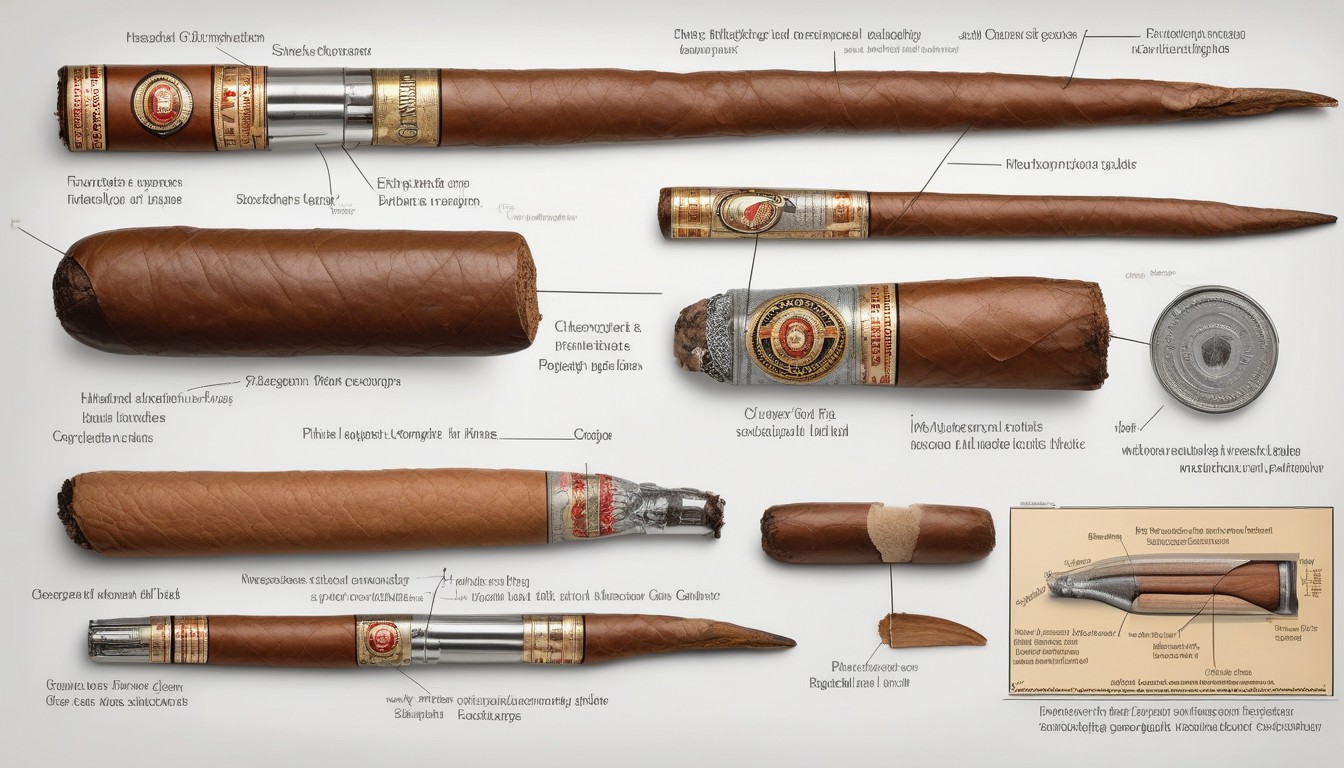
Vitola — The term for a cigar's size and shape. There are two main categories: parejos (straight-sided) and figurados (irregularly shaped).
Parejos (Straight-Sided)
Robusto — 5 x 50 (5 inches long, 50 ring gauge). The most popular vitola in the world. Perfectly balanced smoke time (about 45-60 minutes) with enough ring gauge for a full-flavored experience.
Toro — 6 x 50. A longer Robusto, offering more smoking time without changing the fundamental character. My personal go-to for evening smokes.
Corona — 5.5 x 42. The traditional benchmark vitola. Thinner ring gauge concentrates the wrapper's flavor influence. In the wine world, this would be the Burgundy glass — designed to focus and intensify.
Churchill — 7 x 47-48. Named for Winston Churchill, who was rarely seen without one. A long, elegant smoke lasting 90+ minutes.
Lancero — 7.5 x 38. A long, thin vitola beloved by purists. The thin ring gauge means the wrapper dominates the flavor profile. Many blenders say the Lancero is the truest expression of their blend.
Gordo — 6 x 60. A thick-ring-gauge cigar popular in recent years. The wide gauge means more filler, creating a cooler smoke with prominent filler flavors.
Petit Corona — 4.5 x 42. A shorter Corona, perfect for a 30-minute smoke.
Double Corona — 7.5 x 49-52. The big brother. A substantial commitment of time and tobacco.
Lonsdale — 6.5 x 42. Named after Lord Lonsdale. Elegant, thinner, wrapper-forward.
Figurados (Shaped)
Torpedo — A cigar with a pointed, tapered head. The tapered draw concentrates smoke and can intensify flavors. Usually around 6 x 52 at the widest point.
Belicoso — Similar to a Torpedo but shorter and with a less extreme taper. Typically 5-5.5 inches.
Perfecto — Tapered at both ends with a bulge in the middle. The Arturo Fuente Hemingway Short Story is a famous Perfecto. These are challenging to roll and smoke — the flavor profile changes as the ring gauge shifts along the cigar.
Pyramid — A wide foot that tapers to a point at the head. The changing ring gauge creates an evolving smoking experience.
Culebra — Three thin cigars braided together. Traditionally, they're unbraided and shared among three people. A conversation piece more than a serious smoke, but historically significant.
Diadema — A large cigar (8+ inches) with a tapered head. Sometimes called a "salomon." Rare and typically reserved for special blends.
Wrapper Types
Connecticut Shade — Grown under cheesecloth tents (shade) in the Connecticut River Valley (or Ecuador). Produces a light golden-brown wrapper with a creamy, mild flavor. The "blonde" of cigar wrappers.
Connecticut Broadleaf — Also grown in Connecticut but sun-grown, producing a thick, dark, flavorful wrapper. Used for many Maduro cigars. More robust than Connecticut Shade.
Habano — Cuban-seed tobacco, typically grown in Nicaragua, Ecuador, or Honduras. Produces a rich, flavorful wrapper with spicy, complex characteristics.
Corojo — Originally a Cuban wrapper variety, now primarily grown in Honduras and Nicaragua. Known for its reddish hue and peppery, complex flavor.
Maduro — Not a tobacco variety, but a processing method. Maduro means "mature" in Spanish. These wrappers undergo extended fermentation, resulting in a dark brown to almost black color with sweet, rich flavors — think dark chocolate, coffee, and dried fruit.
Oscuro — Even darker than Maduro, nearly black. The longest fermentation period. Bold, intense flavor.
Cameroon — Grown in the African nation of Cameroon. Distinctive for its "tooth" (small bumps on the surface) and a unique spicy-sweet flavor profile.
Sumatra — Originally from Sumatra, Indonesia, now grown in Ecuador and other regions. Produces a reddish-brown wrapper with a sweet, slightly spicy character.
Candela — A green wrapper created by quick-drying the tobacco to lock in chlorophyll. Was extremely popular in the U.S. in the 1960s-70s. Mild, grassy flavor. Also called "Double Claro."
Production Terms
Torcedor — A cigar roller. Master torcedores in Cuba and other countries undergo years of training. The best are national treasures.
Galera — The rolling room in a cigar factory where torcedores work.
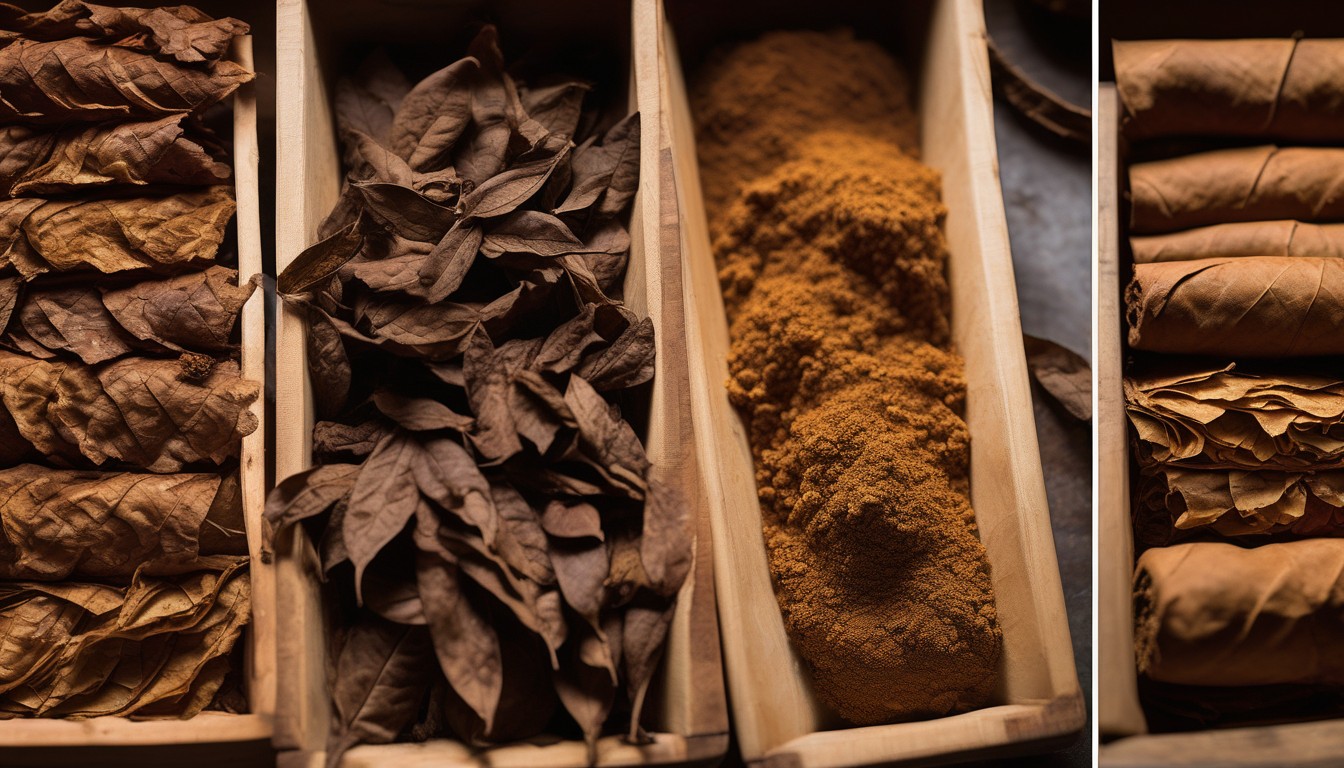
Pilón — A large pile of tobacco leaves stacked for fermentation. The natural heat generated by the packed leaves breaks down ammonia and harsh chemicals, developing flavor and smoothness.
Fermentation — The controlled decomposition process tobacco undergoes after harvesting. Multiple rounds of fermentation, lasting months to years, transform raw tobacco into smooth, flavorful cigar leaf.
Aging (Añejamiento) — After rolling, many premium cigars rest in the factory's aging room for months or years before release. This allows the blend components to marry. In wine terms, this is bottle aging — the individual elements harmonize.
Entubado — A filler bunching technique where each leaf is rolled into a tube (like a scroll), then bundled together. This creates air channels through the filler, resulting in an excellent draw. Padron is famous for using this technique.
Accordion — Another filler bunching technique where leaves are folded in an accordion pattern. Less labor-intensive than entubado but still produces good airflow.
Booking — The simplest filler technique, where leaves are stacked flat and rolled together. Can lead to draw issues if not done carefully.
Mold (Molde) — The wooden press used to shape cigars during the bunching process. After the filler is bunched in the binder, it's placed in a mold to achieve uniform shape.
Tasting Vocabulary
Body — The weight or fullness of the smoke on your palate. Ranges from mild to full. If this were a wine, body is like the difference between a Pinot Grigio (mild) and a Cabernet Sauvignon (full).
Strength — The nicotine potency. Distinct from body — a cigar can be full-bodied (rich flavor) but mild in strength (low nicotine), or vice versa. Understanding this distinction is crucial.
Complexity — Multiple distinct, layered flavors that you can identify. A complex cigar might start with cream and cedar, transition to leather and dark chocolate, and finish with espresso and black pepper.
Balance — How well the different flavors harmonize. A balanced cigar doesn't have any single flavor overwhelmingly dominating the others.
Finish — The flavors that linger on your palate after exhaling. A long finish is generally considered a sign of quality.
Retrohale — Pushing smoke out through your nose to engage the olfactory system. This reveals flavors and aromas that your tongue alone can't detect. Essential for serious tasting. Learn more in our guide on how to taste cigars like a pro.
Pepper — A common tasting note, often distinguished as black pepper (sharp, biting), white pepper (milder, aromatic), or red pepper (lingering heat).
Leathery — A broad tasting note describing rich, tannic, earthy flavors reminiscent of leather. More common in aged or full-bodied cigars.
Creamy — A smooth, rich mouthfeel with no sharp edges. Often associated with Connecticut wrappers and well-aged tobacco.
Earthy — Flavors reminiscent of soil, mushroom, or forest floor. Especially common in Cuban and Honduran tobacco.
Burn and Construction Terms
Canoeing — When one side of the cigar burns faster than the other, creating an uneven burn line. Usually caused by uneven lighting or wind. Can be corrected with a touch-up from your lighter.
Tunneling — When the filler burns faster than the wrapper, creating a hollow tube. Often caused by high humidity or smoking too slowly.
Draw — The resistance you feel when pulling air through the cigar. Should feel like sipping through a wide straw — slight resistance but not labored. Too tight = plugged. Too loose = overheating.
Plug — A tight spot in the cigar that restricts the draw. Can sometimes be fixed with a draw poker or by gently massaging the cigar.
Run — When the burn accelerates down one side, creating a crack in the wrapper. Often related to a vein in the wrapper or an internal construction issue.
Tooth — Small, raised bumps on the surface of a wrapper leaf. Indicates oiliness and flavor concentration. Cameroon wrappers are particularly known for their tooth.
Bloom/Plume — A white, crystalline coating that can appear on well-aged cigars. It's the crystallization of natural oils. Completely harmless and actually a sign of proper aging. Easily distinguished from mold (which is fuzzy and blue-green).
Cultural and Business Terms
Herf — An informal cigar gathering or meetup. "Let's herf this weekend" means "let's get together and smoke cigars."
BOTL/SOTL — Brother/Sister of the Leaf. A fellow cigar enthusiast. The cigar community is famously welcoming, and this term reflects that fraternal spirit.
Liga — Spanish for "blend." Used by some manufacturers in their naming. Liga Privada literally means "private blend."
Vuelta Abajo — The most famous tobacco-growing region in Cuba, located in the Pinar del Rio province. Considered the premier source of Cuban cigar tobacco.
Esteli — A major tobacco-growing region in Nicaragua, known for producing bold, full-flavored tobacco.
Jalapa — Another Nicaraguan tobacco region, typically producing sweeter, more aromatic tobacco than Esteli.
Puro — A cigar made entirely from tobacco of a single country of origin. A "Dominican puro" uses Dominican filler, binder, and wrapper.
Marca — A brand name or trademark under which cigars are marketed.
Vitolario — A brand's complete catalog of available sizes and shapes.
Factory Code — An identifier that indicates which factory produced a cigar. Useful for identifying the manufacturer behind different brands, as many brands share factories.
Storage Terms
Humidor — Any container designed to maintain cigars at the proper humidity level (65-72% RH). Ranges from small desktop units to walk-in rooms. For a complete storage guide, check our article on humidor basics.
Boveda — A brand name that's become synonymous with two-way humidity control packs. The most popular modern humidification solution.
Seasoning — The process of hydrating a new wooden humidor before use. The Spanish cedar lining must be saturated with moisture so it supports rather than steals humidity from your cigars.
Dry Boxing — Removing a cigar from the humidor and leaving it out for several hours to a full day before smoking. Useful when cigars are slightly over-humidified.
Tupperdor — An airtight plastic container (like Tupperware) used as a budget humidor. With a Boveda pack, it's one of the most effective storage solutions available.
Coolidor — A cooler converted into a large-capacity humidor. Popular for collections exceeding 100 cigars.
Putting It All Together
Knowing these terms won't make you a better smoker overnight, but it will make you a more informed one. When you read a review that says a cigar has "a tight draw, a peppery retrohale, and a Maduro wrapper with visible tooth," you'll know exactly what they're talking about.
More importantly, this vocabulary gives you the tools to communicate your own preferences. Walking into a cigar shop and saying "I want something medium-bodied with a Habano wrapper, maybe a Robusto or Toro vitola" will get you a much better recommendation than "I want something... good."
The cigar world rewards curiosity. Every term you learn opens a door to deeper understanding and greater enjoyment. And if you're just getting started, pair this glossary with our guides on the best cigars for beginners and how to cut, light, and smoke a cigar — you'll be speaking the language in no time.